Perlite Ultrafine Processing: New Zealand Case Study and Material Comprehensive Analysis
Source:lanya
Posted:2026-08-21
01 Customer Case: The Upgrade Path of Perlite Processing for a New Zealand Tech Company
A New Zealand-based tech company has long been engaged in high-value utilization of non-metallic minerals, with core materials being perlite and quartz sand.Previously, the company used a laboratory-scale ball mill, which suffered from low capacity, narrow fineness adjustment range, and inability to scale up production, limiting the enhancement of product added value.
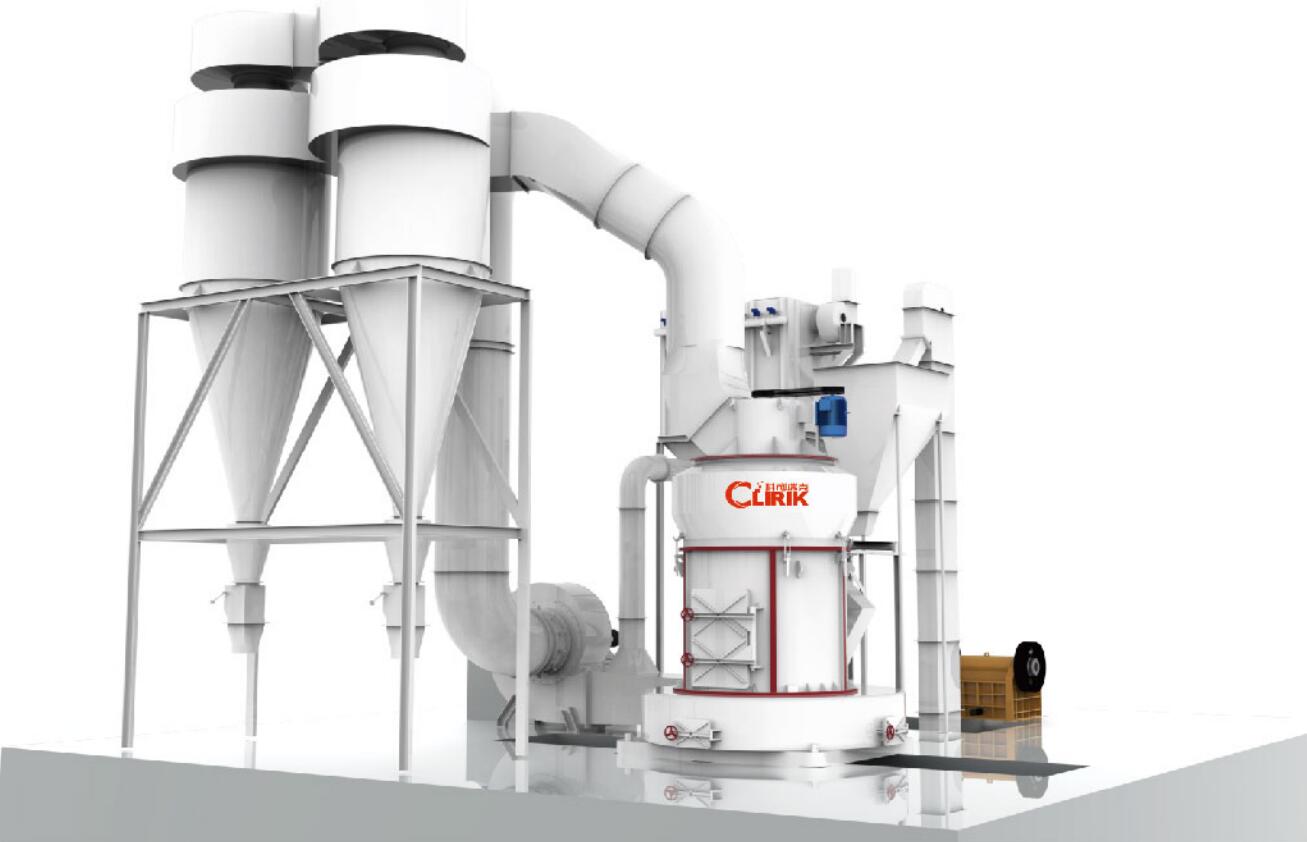
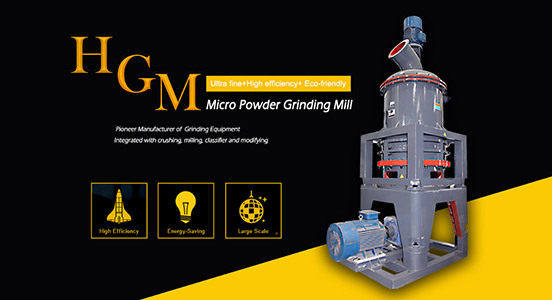
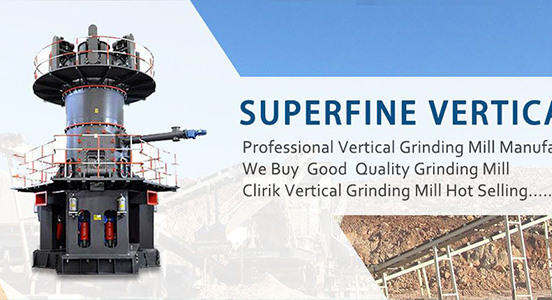
 After multiple rounds of global comparison and rigorous verification, the customer finally chose the CLIRIK HGM80A ultra-fine ring roller mill complete equipment.
The project materials have high silica content and high hardness, representing typical abrasive conditions. In response to this characteristic, we carried out comprehensive wear-resistant reinforcement treatment on the equipment to ensure long-term stable operation.
 At the same time, the project site had limited floor space and height restrictions; our technical team adopted a compact layout and steel-structure foundation solution to achieve efficient production within the confined space.
Currently, the pilot production line has been successfully commissioned, with finished product fineness reaching 800-1250 mesh and an output of about 1 ton per hour. It runs smoothly with stable quality. This project has successfully helped the customer achieve the transition from laboratory research to industrial production.
02 Perlite: A Non-metallic Mineral Worthy of Deep Processing
2.1 What is Perlite?
 Perlite is a volcanic glassy rock formed by rapid cooling of acidic lava. It is named for its perlitic (conchoidal) fracture structure. Perlite ores include three types: perlite, obsidian, and pitchstone.
When perlite is heated to 850-1150°C, its volume expands rapidly by 7-30 times, forming a lightweight porous material. This characteristic is the basis for many industrial applications of perlite.
2.2 Main Characteristics of Perlite
·Mohs hardness: 5.5-7·True density: 2.2-2.4 g/cm³
·Refractoriness: 1300-1380°C
·Expansion ratio: 7-30 times
·Main chemical composition: SiO₂ 68-74%, Al₂O₃ approx. 12%, H₂O 2.3-6.4%
Special attention: Perlite has a Mohs hardness of 5.5-7, which is a medium-high hardness mineral, posing high demands on the wear resistance of grinding equipment. This characteristic must be fully considered when selecting a mill.
2.3 Main Application Areas of Perlite
After being processed into powders of different fineness, perlite has a wide range of applications: ·Building materials: Expanded perlite is used as lightweight filler, concrete aggregate, and wall coatings. It can be used for thermal insulation of walls and roofs, reducing building energy consumption. It can also be used as an ingredient for various insulating glass, mineral wool, ceramics, etc.
·Chemical and light industry: Used as catalyst carrier, molecular sieves, filter aid, and filter aid. Perlite is commonly used in filtration in food processing such as brewing, juice and syrup production to remove fine particles and bacteria. It can also be used as functional filler in paints, rubber, and plastics.
·Agriculture and horticulture: Used as fertilizer retainer and soil conditioner. As a growing medium, it improves soil aeration and water retention, promoting plant growth.
·Other industrial fields: Used as abrasive for gems, jade, glass, etc. Used for cryogenic insulation tanks for storing liquefied natural gas and other cryogenic fluids. Used as density regulator for explosives, wastewater treatment, etc.
2.4 How to Choose Perlite Grinding Equipment?
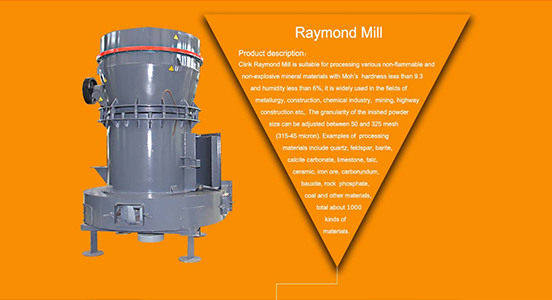
Perlite is hard (Mohs 5.5-7), and different application scenarios require vastly different fineness, from coarse powder for building aggregates to ultra-fine powder (3000 mesh) for high-end fillers. Based on the target fineness and capacity, different grinding equipment can be selected.(1) Raymond Mill (80-500 mesh)
 ·Product fineness: 80-500 mesh (approx. 180-25 microns) freely adjustable.
·Core advantages: Mature technology, stable operation, high cost-effectiveness, small footprint.
·Applicable scenarios: Building insulation materials, general chemical fillers, suitable for medium fineness requirements.
(2) HGM Ultrafine Mill (325-3000 mesh)
 ·Product fineness: 325-3000 mesh (approx. 44-5 microns) freely adjustable.
·Core advantages: Can achieve D97 ≤ 5μm in one pass. Under the same power, the output is more than double that of jet mills and ball mills. Grinding rollers and rings are made of special materials for long service life.
·Applicable scenarios: High-end coatings, precision ceramics, and other medium-to-high value-added fields.
(3) Jet Mill (500-5000 mesh)
 ·Product fineness: 500-5000 mesh (approx. 25-2.5 microns), especially good for 1-10 micron ultra-fine powders.
·Core advantages: Uses high-speed airflow to make particles collide with each other for size reduction, no grinding media, resulting in high product purity and no contamination. Narrow particle size distribution and good particle shape. Suitable for heat-sensitive and high-purity materials.
·Limitations: Higher energy consumption, relatively smaller single-machine capacity (usually from a few hundred kg to several tons per hour), higher equipment investment.
·Applicable scenarios: High-end functional materials, precision ceramics, electronic materials, pharmaceuticals, and other fields with extremely high requirements for purity and particle size distribution.
(4) Air Classifier Mill (ACM) (500-5000 mesh)
 ·Product fineness: 500-5000 mesh, suitable for D50 2-45μm.
·Core advantages: Integrates grinding and classification, narrow and precise particle size control; low temperature rise, suitable for heat-sensitive materials; capable of 24/7 operation.
·Precautions: Perlite is hard (Mohs 5.5-7) and abrasive. Wear-resistant reinforced models are recommended, with regular inspection and replacement of wear parts.
·Applicable scenarios: Non-metallic minerals, chemicals, pharmaceuticals, food, battery materials, etc.
(5) Crushing Pre-treatment Equipment
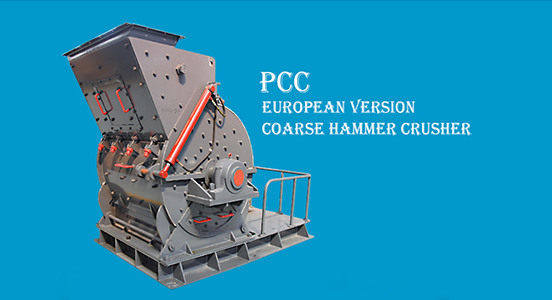
·Jaw Crusher: For primary crushing, large capacity, can crush large raw ore with feed size ≤ 800mm.·Hammer Crusher: For medium and fine crushing, can reduce material to uniform particles ≤ 50mm.
2.5 Frequently Asked Questions (FAQ) about Perlite Grinding

Q1: What is the biggest challenge in perlite grinding?
Perlite is hard (Mohs 5.5-7) and highly abrasive due to its 68-74% silica content. Choose equipment with reinforced wear-resistant parts.
Q2: What equipment is recommended for producing 800-1250 mesh perlite ultra-fine powder?
The HGM series ultra-fine ring roller mill. The HGM80A in New Zealand produces 800-1250 mesh at ~1 t/h with stable quality.
Q3: For producing 325-mesh perlite powder, should I choose a Raymond mill or an ultra-fine mill?
Raymond mill (80-500 mesh) is cost-effective for medium fineness. Choose ultra-fine mill (325-3000 mesh) if you plan to go finer (e.g., above 800 mesh).
Q4: When should a jet mill be used?
For ultra-fine powder above 500 mesh (especially 1-10 microns) with high purity and narrow particle size requirements (electronics, pharma, precision ceramics). Note: higher energy cost, lower capacity.
Q5: How does fineness of perlite powder affect its applications?
·Coarse powder (80-200 mesh): Building insulation materials, lightweight aggregates.
·Medium-fine powder (200-500 mesh): Chemical fillers, paints.
·Ultra-fine powder (above 500 mesh, especially above 800 mesh): High-end coatings, precision ceramics, pharmaceutical carriers, functional materials.
Q6: What should be paid attention to during perlite grinding?
Dust: wear masks to avoid inhaling fine powder
Wear: regularly inspect and replace grinding rollers, rings, and other wear parts
Related Newsmore >>
- CLIRIK Exhibition Preview: Join Us at CHINACOAT & SFCHINA 2026 in Guangzhou2026-09-15
- What to Consider Before Replacing Your Old Mill?2026-09-10
- Intro Investing in a non-metallic mineral powder plant has become one of the most attractive opportu2026-09-10
- Calcium Carbonate Masterbatch: What It Is and How to Use It2026-09-09
- CLIRIK Mid-Autumn Festival 2026 Holiday Preview2026-09-07
- Oyster Shell HGM Ultrafine Mill for Circular Economy2026-09-04