How to Set Up a Ground Calcium Carbonate (GCC) Grinding Plant
Source:lanya
Posted:2026-11-17
A practical guide to product quality, equipment selection, plant design and investment planning.
A GCC grinding plant turns natural carbonate rock into mineral powder. It can supply plastics, coatings, paper, rubber, adhesives and construction products.
Before buying equipment, answer three questions. Who will buy the powder? What quality do they require? Can the local ore meet that quality at a competitive cost?
This guide covers six key decisions. It also explains which data you should ask equipment suppliers to prove. Different buyers need different GCC grades. The finest powder is not always the most profitable product.
For plastics, buyers may focus on particle size, moisture and dispersion. Some grades need a surface coating. Coatings manufacturers may also test color, oil absorption and consistency.
Paper producers may check brightness and particle shape. Adhesive and sealant makers often care about moisture, surface chemistry and flow behavior. Construction buyers may place more weight on price and reliable supply.
Choose your target market first. Then ask potential customers for written specifications and sample-testing requirements.
D50 means that 50% of the measured particle volume is smaller than the stated size. D97 means that 97% is smaller. The method and dispersion conditions also matter.
ISO 13320:2020 describes particle-size analysis by laser diffraction. It is a useful reference when buyers and suppliers agree on a test procedure.
Ask customers to specify D50, D97, purity, whiteness and moisture. Add any application tests that affect real product performance.
Calcite-rich limestone and marble can both be used for GCC. The right feed depends on purity, color, mineral impurities and grinding behavior.
ISO 3262-5:2023 provides a reference for natural crystalline calcium carbonate used as an extender. It does not set one universal quality grade for every GCC market.
• Appearance: whiteness or brightness, using a named test method.
• Moisture and feed size: check the range across normal deliveries.
• Grinding behavior: run a test with representative ore. Record output, power and wear.
• Supply: confirm usable tonnage, quality variation and contract terms.
• Transport: calculate the delivered cost per tonne, not only the mine-gate price.
Avoid fixed rules for every project. For example, a 50 km transport limit or a single CaCO3 purity threshold may not match your market.
A better question is simple: can this ore produce the required powder at a price customers will pay? Dry and wet processing both have advantages. Neither method is always the best choice.
A dry line can produce powder directly. It usually combines a mill, air classifier and dust collection system. This route can be attractive when the target grade is practical to make as dry powder.
A wet line grinds mineral particles in water. Wet stirred-media milling can support some fine-grade products. But it also requires water handling and slurry control.
If buyers need dry powder, a wet line may need filtration and drying. These steps add equipment, energy use and cost.
 Research shows that grinding methods can affect particle shape and surface properties. Equal D97 values do not always mean equal product performance.
Wet line: ore preparation → wet grinding and classification → slurry control → slurry delivery or drying and packing.
Compare both routes using the same product specification. Measure accepted output and total power use. Include drying if the final product must be dry. The mill is one part of a production line. The classifier, fan, feeder, dust collector and controls also affect product quality and output.
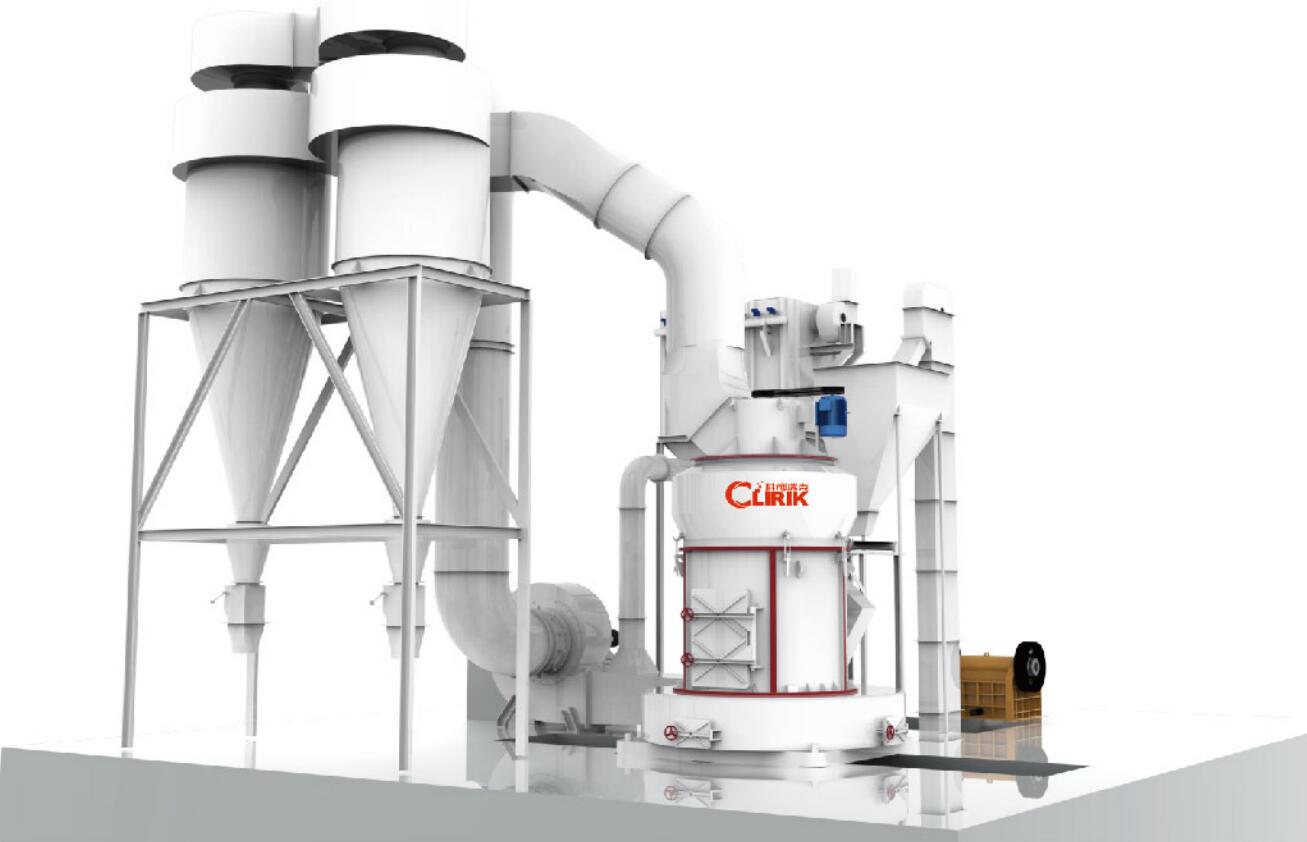
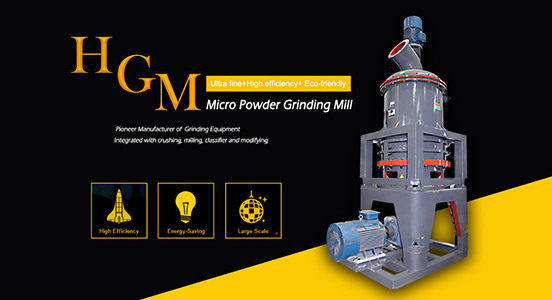
Ask for a proposal for the complete system. A headline mill capacity is not enough to assess plant performance. Clirik offers HGM ring-roller grinding mills for dry fine-powder production. The suitable model depends on ore properties, final particle size and required throughput.
Request a model-specific test. Check the D50 and D97 results, saleable tonnes per hour, power use and wear-part needs.
These figures refer to different configurations. They do not mean that one machine will reach maximum capacity at the finest grade.
Compare a suitable CLUM model with an HGM proposal at the same product quality and ore conditions.
Jet mills may suit special applications. However, gas consumption can make them expensive. Choose each process on tested performance, not a general ranking.
• Powder quality: D50, D97, moisture and whiteness. State the test method.
• Output: net tonnes per hour that actually meet the agreed product grade.
• Energy: total kWh per accepted tonne, with the measurement boundary defined.
• Operation: wear, maintenance needs and product consistency across the trial.
The best option is the one that meets the customer specification at a reliable total cost per tonne. Keep material flow simple. Put receiving and preparation before grinding. Place powder collection, packing and dispatch after the production system.
Leave space for equipment access, repairs, lifting, trucks and safe movement around the site.
Do not copy a plant area from another project. Site size depends on capacity, storage needs, building design, traffic and local regulations.
Dry powder handling needs enclosed transfer points, local dust extraction and suitable filtration. Workers may also need protection against respirable dust. This is especially important if the ore contains crystalline silica.
Electrical demand should come from the real equipment list and load study. Water and compressed-air needs should come from the process design.
Use a documented machinery risk assessment. ISO 12100 is a useful international reference. All permits and emission limits must also meet local requirements.
Add installation, engineering, permits, spare parts, contingency and working capital. Define what is included in every supplier quote.  The source presentation lists conflicting investment amounts for similar plant sizes. For that reason, this guide does not offer one fixed cost or payback period.
Example: a plant aims to sell 50,000 tonnes each year. Assume 300 operating days, 16 scheduled hours per day and an 80% effective operating rate.
The required output while running is about 13.0 t/h. This is an example, not a recommended capacity for every project.
Check whether the proposed equipment can produce 13.0 t/h at the target D97. Also allow for material losses, product rejection and future demand changes.
Example: the complete system uses 120 kWh per accepted tonne. If power prices rise by RMB 0.10/kWh, the cost rises by RMB 12/t.
The increase depends on actual energy use. It is not the same for every GCC plant.
Also estimate ore, labor, wear parts, repairs, packing, transport and fixed overhead. Keep depreciation, finance costs and taxes separate.
A finer grade may sell for more. But it may also reduce throughput and raise the power cost per tonne.
Use cash-flow analysis to estimate payback. Include total installed capital, working capital, tax and financing assumptions.
Timing varies by site and jurisdiction. Do not assume that every plant can be finished in 12–18 months.
Before full operation, confirm the product with real buyers. Technical completion is not the same as commercial acceptance.
• Raw material and a recent laboratory report.
• Maximum feed size, moisture and unwanted impurities.
• Target D50 and D97, with a measurement method.
• Product application, required whiteness and any coating needs.
• Target tonnes per hour and annual production.
• Site location, power supply and available plant area.
• Required scope: main mill, full grinding system or turnkey plant.
Clirik can use these details to discuss HGM or CLUM options and a suitable ore-testing plan. The final proposal should define output, quality and operating assumptions.
Start with the market and the ore, not the mill. Set a clear product specification. Then test a complete process that can meet it reliably.
The strongest investment decision uses measured product quality, realistic throughput and a transparent cost model.
For a preliminary GCC grinding plan, share your ore report, target D50/D97, production target and site details with Clirik.
A GCC grinding plant turns natural carbonate rock into mineral powder. It can supply plastics, coatings, paper, rubber, adhesives and construction products.
Before buying equipment, answer three questions. Who will buy the powder? What quality do they require? Can the local ore meet that quality at a competitive cost?
This guide covers six key decisions. It also explains which data you should ask equipment suppliers to prove.
1. Start with the Product and the Customer
Different buyers need different GCC grades. The finest powder is not always the most profitable product.For plastics, buyers may focus on particle size, moisture and dispersion. Some grades need a surface coating. Coatings manufacturers may also test color, oil absorption and consistency.
Paper producers may check brightness and particle shape. Adhesive and sealant makers often care about moisture, surface chemistry and flow behavior. Construction buyers may place more weight on price and reliable supply.
Choose your target market first. Then ask potential customers for written specifications and sample-testing requirements.
Use D50 and D97, not mesh alone
Terms such as “1250 mesh” or “2500 mesh” are common in sales. However, mesh is not a universal measure of ultrafine particle size.D50 means that 50% of the measured particle volume is smaller than the stated size. D97 means that 97% is smaller. The method and dispersion conditions also matter.
ISO 13320:2020 describes particle-size analysis by laser diffraction. It is a useful reference when buyers and suppliers agree on a test procedure.
Ask customers to specify D50, D97, purity, whiteness and moisture. Add any application tests that affect real product performance.
2. Check Raw Materials Before Designing the Plant
Good equipment cannot fix poor or inconsistent ore. Test samples from different parts of the deposit or supply chain.Calcite-rich limestone and marble can both be used for GCC. The right feed depends on purity, color, mineral impurities and grinding behavior.
ISO 3262-5:2023 provides a reference for natural crystalline calcium carbonate used as an extender. It does not set one universal quality grade for every GCC market.
What to test
• Chemistry: CaCO3 content and unwanted minerals, including quartz and iron-bearing minerals.• Appearance: whiteness or brightness, using a named test method.
• Moisture and feed size: check the range across normal deliveries.
• Grinding behavior: run a test with representative ore. Record output, power and wear.
• Supply: confirm usable tonnage, quality variation and contract terms.
• Transport: calculate the delivered cost per tonne, not only the mine-gate price.
Avoid fixed rules for every project. For example, a 50 km transport limit or a single CaCO3 purity threshold may not match your market.
A better question is simple: can this ore produce the required powder at a price customers will pay?
3. Choose Between Dry and Wet Grinding
Dry and wet processing both have advantages. Neither method is always the best choice.A dry line can produce powder directly. It usually combines a mill, air classifier and dust collection system. This route can be attractive when the target grade is practical to make as dry powder.
A wet line grinds mineral particles in water. Wet stirred-media milling can support some fine-grade products. But it also requires water handling and slurry control.
If buyers need dry powder, a wet line may need filtration and drying. These steps add equipment, energy use and cost.
Research shows that grinding methods can affect particle shape and surface properties. Equal D97 values do not always mean equal product performance.
Typical process flow
Dry line: ore receiving → crushing → controlled feeding → grinding → air classification → powder collection → optional surface treatment → packing.Wet line: ore preparation → wet grinding and classification → slurry control → slurry delivery or drying and packing.
Compare both routes using the same product specification. Measure accepted output and total power use. Include drying if the final product must be dry.
4. Select the Full Grinding System, Not Only the Mill
The mill is one part of a production line. The classifier, fan, feeder, dust collector and controls also affect product quality and output.Ask for a proposal for the complete system. A headline mill capacity is not enough to assess plant performance. Clirik offers HGM ring-roller grinding mills for dry fine-powder production. The suitable model depends on ore properties, final particle size and required throughput.
Request a model-specific test. Check the D50 and D97 results, saleable tonnes per hour, power use and wear-part needs.
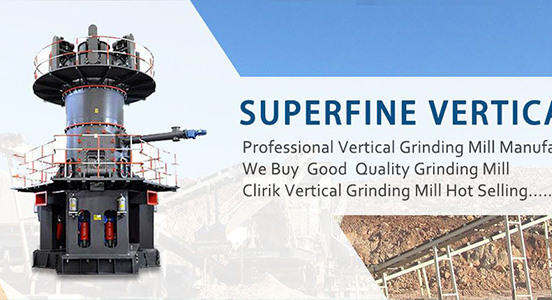
CLUM ultrafine vertical roller mill
Clirik also offers the CLUM vertical grinding series. Its product literature describes a wide range of fineness and capacity options.These figures refer to different configurations. They do not mean that one machine will reach maximum capacity at the finest grade.
Compare a suitable CLUM model with an HGM proposal at the same product quality and ore conditions.
Other process options
Ball mills with classifiers are a well-established option for some GCC duties. Stirred-media mills are another choice for fine grinding, especially in wet circuits.Jet mills may suit special applications. However, gas consumption can make them expensive. Choose each process on tested performance, not a general ranking.
 Ask suppliers to report these test results
• Powder quality: D50, D97, moisture and whiteness. State the test method.
• Output: net tonnes per hour that actually meet the agreed product grade.
• Energy: total kWh per accepted tonne, with the measurement boundary defined.
• Operation: wear, maintenance needs and product consistency across the trial.
The best option is the one that meets the customer specification at a reliable total cost per tonne.
5. Plan the Site, Utilities and Environmental Controls
Keep material flow simple. Put receiving and preparation before grinding. Place powder collection, packing and dispatch after the production system.Leave space for equipment access, repairs, lifting, trucks and safe movement around the site.
Do not copy a plant area from another project. Site size depends on capacity, storage needs, building design, traffic and local regulations.
Dry powder handling needs enclosed transfer points, local dust extraction and suitable filtration. Workers may also need protection against respirable dust. This is especially important if the ore contains crystalline silica.
Electrical demand should come from the real equipment list and load study. Water and compressed-air needs should come from the process design.
Use a documented machinery risk assessment. ISO 12100 is a useful international reference. All permits and emission limits must also meet local requirements.
6. Build a Cost and ROI Model from Real Data
A mill quotation is not the full project budget. Total investment may also include crushing, classifiers, fans, dust collection, buildings and electrical work.Add installation, engineering, permits, spare parts, contingency and working capital. Define what is included in every supplier quote.
The source presentation lists conflicting investment amounts for similar plant sizes. For that reason, this guide does not offer one fixed cost or payback period.
Calculate the required production rate
Required output (t/h) = Annual saleable tonnes ÷ (Operating days × Hours per day × Effective operating rate).Example: a plant aims to sell 50,000 tonnes each year. Assume 300 operating days, 16 scheduled hours per day and an 80% effective operating rate.
The required output while running is about 13.0 t/h. This is an example, not a recommended capacity for every project.
Check whether the proposed equipment can produce 13.0 t/h at the target D97. Also allow for material losses, product rejection and future demand changes.
Calculate power cost per tonne
Power cost per tonne = Measured kWh/t × Local electricity price per kWh.Example: the complete system uses 120 kWh per accepted tonne. If power prices rise by RMB 0.10/kWh, the cost rises by RMB 12/t.
The increase depends on actual energy use. It is not the same for every GCC plant.
Also estimate ore, labor, wear parts, repairs, packing, transport and fixed overhead. Keep depreciation, finance costs and taxes separate.
Test more than one business scenario
Build a base case for normal demand. Then test lower utilization, higher electricity prices, higher ore costs and a finer product grade.A finer grade may sell for more. But it may also reduce throughput and raise the power cost per tonne.
Use cash-flow analysis to estimate payback. Include total installed capital, working capital, tax and financing assumptions.
Plan the schedule with milestones
A realistic schedule includes ore testing, permitting, engineering, procurement, construction and commissioning.Timing varies by site and jurisdiction. Do not assume that every plant can be finished in 12–18 months.
Before full operation, confirm the product with real buyers. Technical completion is not the same as commercial acceptance.
7. Information to Send an Equipment Supplier
A good enquiry helps the supplier recommend the right process. It also makes quotations easier to compare.• Raw material and a recent laboratory report.
• Maximum feed size, moisture and unwanted impurities.
• Target D50 and D97, with a measurement method.
• Product application, required whiteness and any coating needs.
• Target tonnes per hour and annual production.
• Site location, power supply and available plant area.
• Required scope: main mill, full grinding system or turnkey plant.
Clirik can use these details to discuss HGM or CLUM options and a suitable ore-testing plan. The final proposal should define output, quality and operating assumptions.
8.Frequently Asked Questions
Is dry grinding always cheaper?
No. Costs depend on final particle size, ore properties and the delivery form. Compare complete process lines at equal product quality.Is “2500 mesh” enough for acceptance?
No. Agree on measured D50 and D97 values. Also record the test method and sample-dispersion conditions.Which mill is better: HGM or CLUM?
There is no universal winner. Compare specific models using the same feed and target product grade. Check output, energy, wear and installation needs.How long will the plant take to pay back?
It depends on total investment, sales, utilization and operating costs. Use site-specific quotations and a cash-flow model instead of a fixed estimate.9.Conclusion
Start with the market and the ore, not the mill. Set a clear product specification. Then test a complete process that can meet it reliably.
The strongest investment decision uses measured product quality, realistic throughput and a transparent cost model.
For a preliminary GCC grinding plan, share your ore report, target D50/D97, production target and site details with Clirik.
Related Newsmore >>
- How to Set Up a Ground Calcium Carbonate (GCC) Grinding Plant2026-11-17
- Shell Powder Grinding Mill: Selection Guide, Fineness & Cost per Ton2026-11-10
- CLIRIK to Attend 30th CHINACOAT & SFCHINA 2026 in Guangzhou2026-11-09
- Zeolite Ultrafine Grinding: Common Pain Points & HGM Mill Solution for Project2026-11-04
- GCC vs PCC: Key Differences, Applications & Equipment Guide2026-11-03
- CLIRIK Completes Shipment of HGM100 Ring Roller Mill and Powder Surface Modifier to India2026-11-02