GCC vs PCC: Key Differences, Applications & Equipment Guide
Ground calcium carbonate (GCC) and precipitated calcium carbonate (PCC) share the same chemical composition, yet they are produced by fundamentally different routes.
GCC is obtained by physically grinding and classifying natural ore, while PCC is synthesized through a chemical precipitation process involving calcination, slaking and carbonation of limestone.
This difference in preparation logic determines their divergence in bulk density, oil absorption, whiteness stability, cost structure and application positioning.
Selecting a grade on price or whiteness alone frequently leads to hidden costs in formulation or product performance.

A common conceptual confusion should be clarified first. The Chinese-market terms "heavy" and "light" calcium carbonate do not refer to the true density of the material itself.
True density is approximately 2.6–2.9 g/cm³ for GCC and 2.4–2.6 g/cm³ for PCC, a limited difference. What differs significantly is bulk density. GCC typically ranges from 0.8–1.3 g/cm³, while PCC ranges from 0.5–0.7 g/cm³.
At equal mass, PCC occupies a substantially larger volume. This property difference is the basis for understanding the application split that follows.
1. Comparison of Key Physical Properties
Calcium carbonate has many physical parameters, but four of them largely determine selection. The final column below is not a definition of the parameter, but the judgement it supports during selection.
|
Ground Calcium Carbonate (GCC) | Precipitated Calcium Carbonate (PCC) | Implication for Selection | ||||||
| Bulk density |
|
|
|
||||||
| Oil absorption | Lower, typically 40–60 mL/100g | Higher, typically 60–90 mL/100g | PCC requires more resin or oil wetting in organic systems, so plasticizer and solvent levels must be adjusted; this cost should be included in the total | ||||||
| Whiteness |
|
Chemically synthesized, usually 92%–95%, with better batch-to-batch consistency | For products sensitive to color consistency, such as high-grade coatings and light-colored plastics, the controllability of PCC whiteness is of practical value | ||||||
| Cost | Lower |
|
The cost advantage of GCC stems from a simpler process and widely available raw material; PCC cost comes mainly from the energy and equipment input of the chemical synthesis chain |

The selection logic can be summarized as follows: where cost carries the greatest weight, GCC is the default starting point; where whiteness stability, bulk or functionality weighs more, PCC or surface-modified GCC should be evaluated further.
2. Applications: Cost-Driven versus Function-Driven
Applications are better judged by the role calcium carbonate plays in the system than by a simple list of industries.GCC is suited to cost-driven filling. The core requirement is to reduce formulation cost without significantly sacrificing basic performance.
Typical applications include standard PVC pipes and profiles, putty powder, dry-mix mortar, basic rubber filling, mid- to low-end coatings and water-based latex paints.
In these systems GCC mainly performs volumetric filling, generally improves processing flow, and imposes a limited formulation adjustment burden.
PCC is suited to function-driven filling. The core requirement is to improve a specific property of the finished product through the filler itself.
It is commonly used in high-grade coatings and inks, high-end plastic films, toothpaste abrasives, and food-grade and pharmaceutical-grade applications.
In these systems PCC does more than fill: it contributes positively to whiteness, opacity and surface gloss.

In addition, surface-modified GCC is an important option between the two.
GCC treated with fatty acids or similar activating agents achieves improved dispersion and interfacial bonding in plastics, rubber and sealant systems, allowing higher loading levels and delivering better tensile and impact strength than unmodified GCC.
Where PCC cost is too high and standard GCC performance is insufficient, modified GCC should be the first option validated.
3. Preparation Methods and Equipment Selection
The equipment systems for GCC and PCC are not interchangeable. GCC quality depends on the precision of grinding and classification, while PCC quality depends mainly on the control of the carbonation reaction.For production lines built around grinding equipment, matching fineness ranges to the right mill is the central selection task.
3.1 Ground Calcium Carbonate: Physical Grinding, Equipment Selected by Fineness
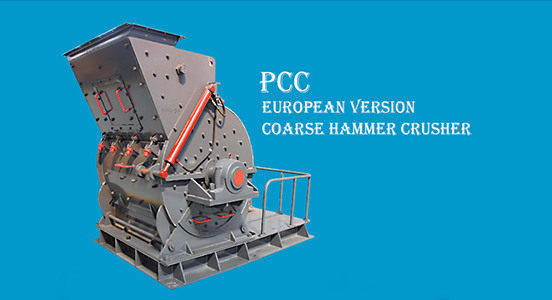
GCC is produced through crushing → grinding → classification → collection. Equipment selection mainly depends on target fineness and production capacity.
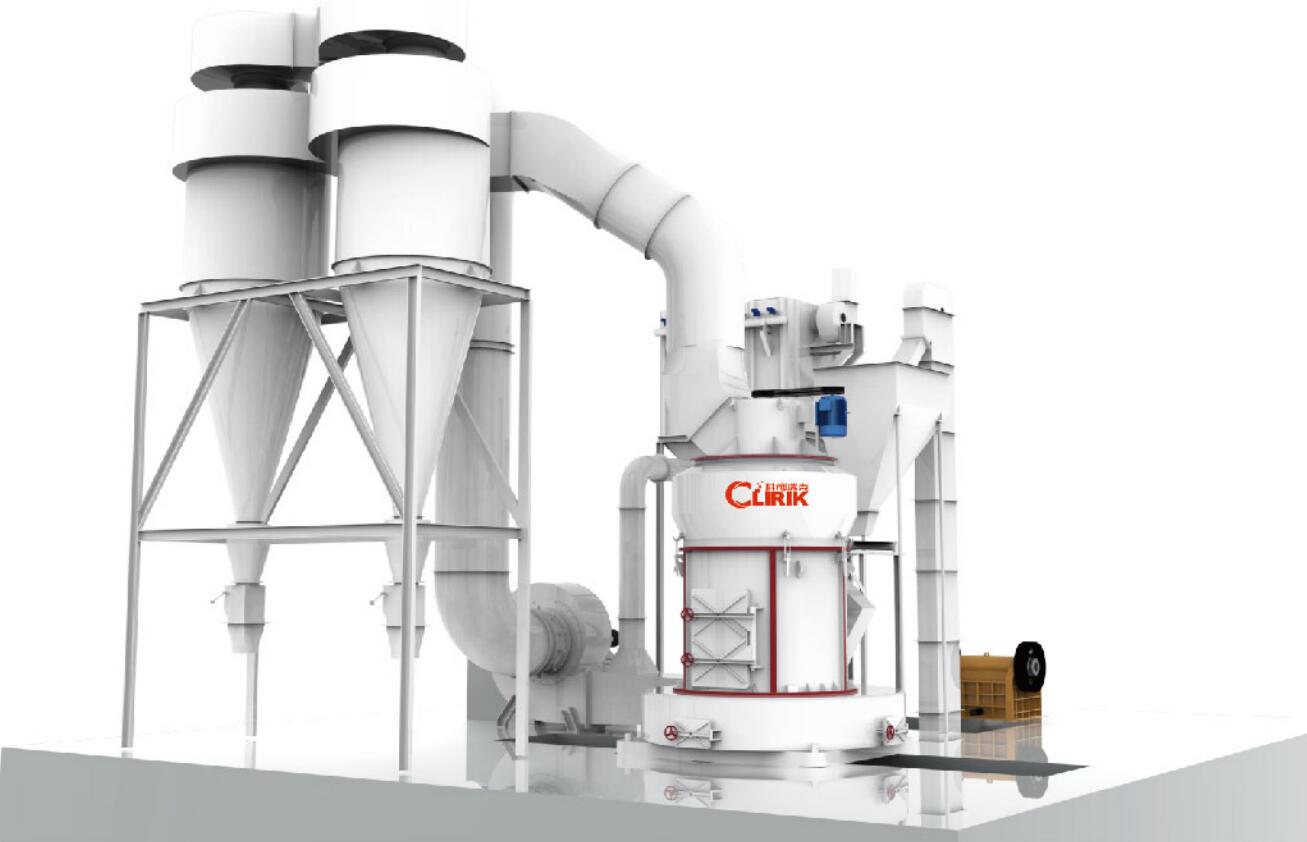
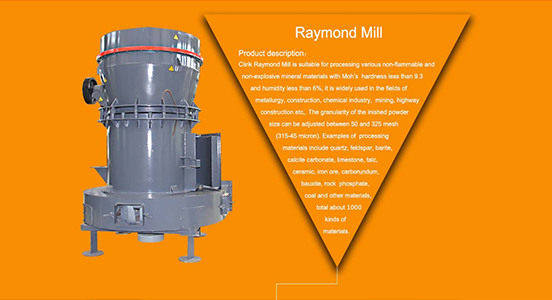
Up to 325 mesh: Raymond mills offer low investment, energy efficiency, and easy maintenance, making them suitable for small and medium-scale production.
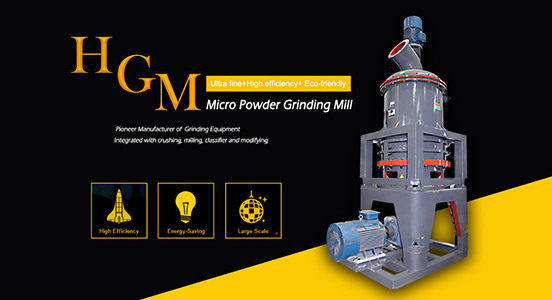
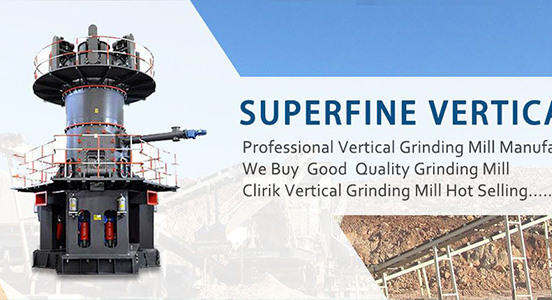
400–1250 mesh: Ring roller mills provide flexibility for smaller operations, while ultrafine vertical mills are better suited for high-capacity, continuous production.
1250–2500 mesh: Ultrafine vertical mills with secondary classification or ball mill–classifier systems are recommended. Classification accuracy is critical to particle size consistency and energy efficiency.
Above 2500 mesh: Wet grinding should be considered as dry processing efficiency declines.
Additionally, removing impurities from raw ore before grinding helps maintain powder whiteness and reduce production losses.

3.2 Precipitated Calcium Carbonate: Chemical Precipitation, Core in the Carbonation Reaction
PCC follows the carbonation route: limestone calcination → slaking → carbonation → dewatering → drying → milling and classification.The fineness and crystal form of PCC are largely formed during the carbonation reaction, and the core equipment of the line is the carbonation tower, not a grinding mill. Parameters such as carbonation temperature, milk of lime concentration, CO₂ concentration and gas flow rate, and stirring speed directly affect crystal form and particle size distribution. Equipment selection for a PCC line therefore centers on the tower type, gas distribution method and temperature control capability, with the associated slaking, filter-press dewatering and drying equipment configured around this reaction stage.
4. Selection Sequence
Step one: establish the cost floor. Where cost reduction is the primary objective, start from GCC and then match equipment to the target fineness among Raymond mill, ring roller mill and vertical mill. There is no need for a vertical mill below 325 mesh, and a Raymond mill should not be forced above 1250 mesh.Step two: identify the performance gap. Where the pain point in an existing formulation is whiteness stability, surface texture, bulk or reinforcement, evaluate PCC or modified GCC. Modified GCC is usually the intermediate option with the smallest cost increase and the fastest effect, and should be sampled for validation first.
Step three: run a sample trial. Calcium carbonate selection depends heavily on the actual application system, and the same powder may behave very differently in PVC pipe and PE film. A supplier sample trial is a necessary validation step. Confirm the target specification, whiteness requirement and particle size distribution range before deciding on a fineness direction or a modification direction; reversing this order can make production line adjustment costs higher than the order revenue.

5. Frequently Asked Questions
Q1: What is the difference between GCC and PCC density?
GCC has a higher bulk density (0.8–1.3 g/cm³) than PCC (0.5–0.7 g/cm³). At equal weight, PCC occupies more volume.
Q2: Can GCC replace PCC?
Not directly. Modified or ultrafine GCC may partially replace PCC, but application testing is required.
Q3: Is PCC cheaper than GCC?
No. GCC is generally more cost-effective due to its simpler production process.
Q4: What is modified GCC?
Modified GCC is surface-treated calcium carbonate that improves dispersion and compatibility, balancing cost and performance.
Q5: Which grinding mill is suitable for GCC?
Raymond mills suit up to 325 mesh; ring roller and ultrafine vertical mills suit 400–1250 mesh; advanced classification systems suit 1250–2500 mesh.
Q6: What is the key equipment for PCC production?
The carbonation tower, which controls particle size and crystal formation during chemical precipitation.
Q7: Is PCC suitable for food and pharmaceutical applications?
Yes, provided it meets the relevant purity, safety, and regulatory standards.

Related Newsmore >>
- GCC vs PCC: Key Differences, Applications & Equipment Guide2026-11-03
- CLIRIK Completes Shipment of HGM100 Ring Roller Mill and Powder Surface Modifier to India and Bangla2026-11-02
- CLIRIK Ships Two Sets of HGM125 Ultrafine Grinding Mills to India & South Africa2026-10-26
- Open vs Closed Circuit Raymond Mill: Design Differences & CLRM Series Solution2026-10-22
- CLIRIK Welcomes Global Customers for On-Site Factory Inspection & Technical Exchange2026-10-19
- Particle Size Distribution (PSD) Technical Guide2026-10-15