Grinding Barite for Oil Drilling: Why the Raymond Mill is the Industry Standard
Source:lanya
Posted:2026-09-16
When drilling deep into the earth's crust, the single most important property of a drilling fluid is its density. Without adequate density, formation pressures will overpower the column of mud, leading to a catastrophic blowout. For nearly a century, the oil and gas industry has relied on one mineral to provide that critical weight: barite.
While barite is mined across the globe, its journey from crude ore to API-spec weighting agent depends entirely on precise comminution. In this article, we examine why barite is indispensable to drilling operations, the international standards that govern its fineness, and why the Raymond Mill remains the definitive workhorse for processing this vital industrial mineral.1. What is Barite and Why Does It Dominate Drilling Mud?

Barite is a naturally occurring mineral composed primarily of barium sulfate (BaSO₄). Its defining physical characteristics—high specific gravity, chemical inertness, and relative softness—make it uniquely suited for oil and gas well drilling.
The oil and gas industry consumes approximately 80–90% of the world's barite production, almost exclusively as a weighting agent in drilling fluids. Its dominance stems from several inherent properties:
1.1 Exceptional Density
Barite's specific gravity typically ranges from 4.2 to 4.5 g/cm³, far exceeding that of most common rock-forming minerals. This high density allows a relatively small volume of barite powder to significantly increase the density of a water- or oil-based mud system.1.2 Chemical Inertness
Barium sulfate is notoriously insoluble and chemically unreactive. In a drilling fluid, barite functions only in a physical manner—it does not react with other additives, does not corrode drill pipe, and does not interfere with the complex chemistry of modern mud systems. This inertness ensures that the fluid's other properties (rheology, filtration control, shale inhibition) remain predictable and controllable.1.3 Minimal Abrasiveness
Compared to alternative weighting agents like hematite or ilmenite, barite is relatively soft (Mohs hardness of 3–3.5). This minimizes wear on pumps, drill string, and surface equipment, reducing maintenance costs and downtime.1.4 Cost-Effectiveness and Supply Scale
Barite is abundant. Major bedded deposits in China, India, and the United States supply the bulk of global demand, allowing for economies of scale that alternative weighting agents cannot match. While synthetic or iron-oxide substitutes exist, barite's combination of performance and price remains unchallenged for the vast majority of drilling applications.2. International Standards for Drilling-Grade Barite Powder
Not all ground barite is suitable for drilling. The American Petroleum Institute (API) Specification 13A, along with equivalent international standards like GB/T 5005 in China, sets strict requirements for fineness, density, and chemical purity. These standards exist to ensure that the weighting agent performs predictably in the extreme conditions of a wellbore.2.1 Key Physical Specifications
| Parameter | Standard Requirement | Practical Significance |
| Specific Gravity | ≥ 4.20 g/cm³ | Determines the maximum achievable mud weight. Lower-SG barite requires more volume to achieve the same density. |
| BaSO₄ Content | ≥ 90% (typically ≥92%) | Impurities (quartz, iron oxides) lower density and can adversely affect rheology. |
| Residue > 75 µm (200 mesh) | ≤ 3.0% by mass | Coarse particles settle rapidly, causing barite sag and potential stuck pipe. |
| Particles < 6 µm | ≤ 30% by mass | An excess of ultra-fine particles drastically increases viscosity and gel strengths, making the mud difficult to pump. |
| Water-Soluble Alkaline Earth Metals (as Calcium) | ≤ 250 mg/kg | Prevents unwanted chemical reactions and ensures compatibility with the fluid system. |
2.2 The Critical Role of Particle Size Distribution
The fineness requirements in API 13A are not arbitrary. They represent a delicate balance between two opposing forces:Too coarse: Barite settles out of suspension, particularly in high-angle or horizontal wells. This barite sag leads to density fluctuations, pressure spikes, and potential well control issues.
Too fine: While fine particles suspend better, they also have a vastly greater surface area. This increases viscosity, gel strengths, and the equivalent circulating density (ECD), potentially fracturing the formation.
The API standard essentially mandates a "just right" particle size distribution: fine enough to remain suspended, but coarse enough to avoid rheological overload. This is where the choice of grinding equipment becomes paramount.
3. Why the Raymond Mill is the Standard for Barite Grinding
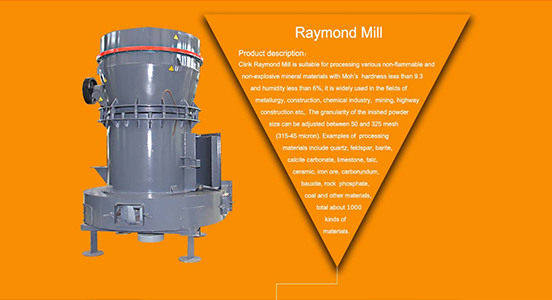
The Raymond Mill, also known as a pendulum mill or roller mill, has been the backbone of industrial mineral processing for over a century. While newer technologies exist, the Raymond Mill's unique characteristics make it exceptionally well-suited for producing API-grade barite powder.3.1 Fineness Range and Precision
A well-maintained Raymond Mill can produce product fineness ranging from 80 mesh to 500 mesh (approximately 180 µm to 25 µm). This range perfectly encompasses the sweet spot for drilling-grade barite.More importantly, the Raymond Mill's integrated air classifier allows operators to precisely control the top cut. By adjusting the classifier speed, producers can reliably meet the API requirement that less than 3% of the product exceeds 75 microns while simultaneously managing the generation of excessive ultra-fines.
3.2 The Raymond Mill Workflow

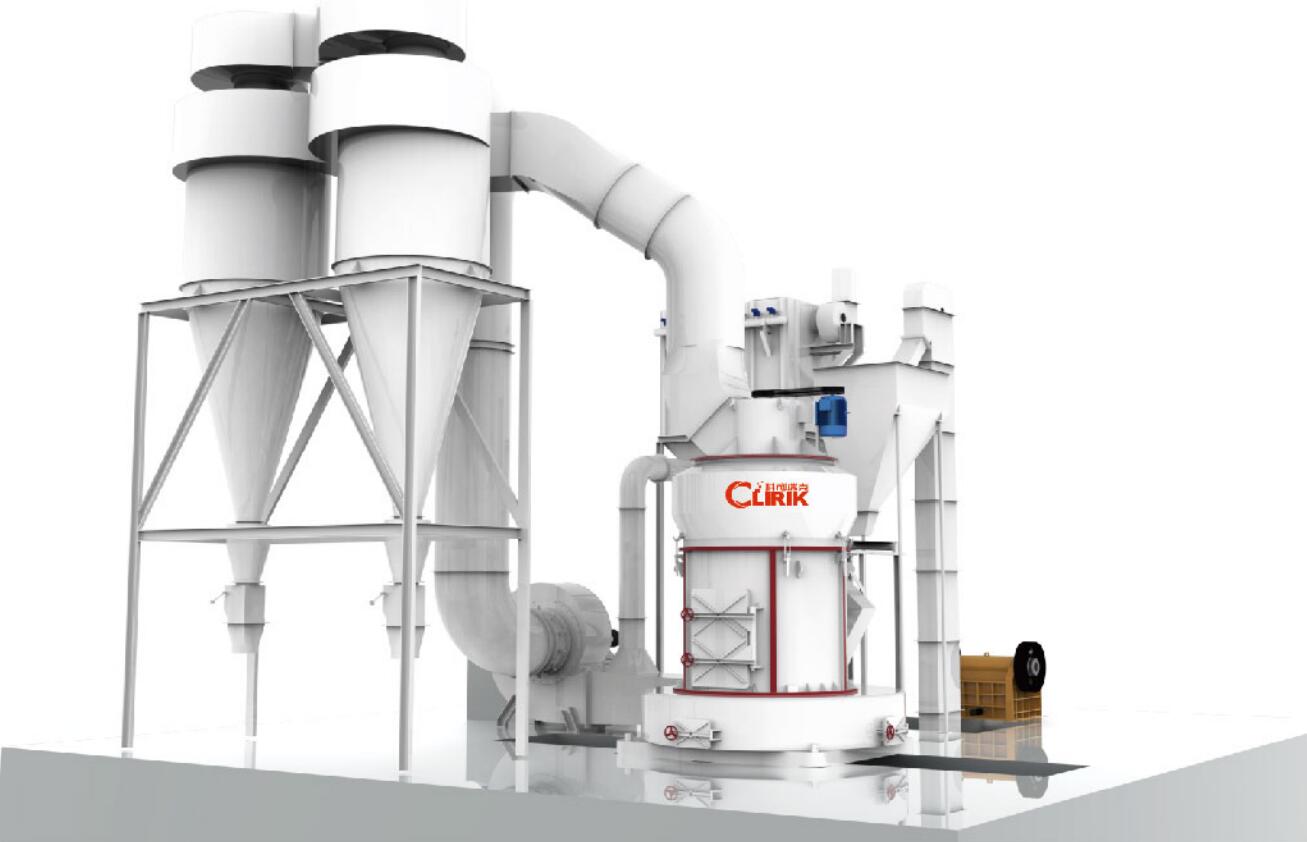
The grinding process in a Raymond Mill is a continuous cycle of crushing, grinding, classification, and collection. Here is how a barite feed is transformed into API-spec powder:
1. Crushing and Feeding: Run-of-mine barite is first crushed to a feed size typically less than 25–40 mm. A vibrating feeder then delivers this crushed material at a controlled rate into the mill's grinding chamber.
2. Grinding (The Pendulum Action): Inside the main mill, a central shaft rotates. Suspended from a spider arm at the top of this shaft are free-swinging rollers (the pendulums). As the shaft rotates, centrifugal force pushes the rollers outward against a stationary grinding ring. The raw barite is fed into the space between the rollers and the ring, where it is crushed and ground by the combined forces of rolling and attrition.
3. Air Classification: A powerful blower forces air upward through the mill housing. This air stream carries the ground particles up into the classifier, a rotating mechanical separator located at the top of the mill. The classifier's speed determines the cut point: fine particles pass through the blades, while coarse particles are rejected and fall back into the grinding zone for further size reduction.
4. Collection: The air stream, now laden with properly sized barite powder, exits the classifier and enters a cyclone collector. The powder is separated from the air stream and discharged through an airlock. The air itself is recirculated back to the blower, creating a closed-loop, negatively pressurized system that minimizes dust emissions.
3.3 Key Advantages for Barite Processing
Low Specific Energy Consumption: Compared to ball mills, the Raymond Mill consumes significantly less power per ton of product, especially in the 200–325 mesh range where barite is typically ground. This directly impacts production costs, a critical factor in the price-competitive barite market.Reliable Gradation Control: The adjustable air classifier provides a consistent, narrow particle size distribution. This predictability is essential for oilfield service companies who must formulate muds to exacting specifications.
Wear Life and Maintenance: While grinding high-SG barite does cause wear, the Raymond Mill's design is robust. Rollers and rings can be replaced independently, and modern units feature centralized lubrication systems that extend maintenance intervals.
Compact, Closed-Loop System: The entire grinding, classification, and collection system is integrated into a relatively compact footprint. The negative-pressure operation, combined with a properly sized dust collector, ensures compliance with modern environmental regulations.
4. Raymond Mill Models for Barite Processing: Fineness, Capacity, Power and Investment

The following table outlines the technical specifications of the latest Raymond Mill models from Shanghai Clirik Machinery Co., Ltd. (CLIRIK). These machines are designed for the efficient grinding of non-metallic minerals such as barite, and can reliably produce API-compliant drilling-grade barite powder.
| Model | Roller Qty (pcs) | Roller Size (mm) | Ring External Dia (mm) | Ring Height (mm) | Main Shaft Speed (r/min) | Feeding Size (mm) | Finished Size (mm) | Motor (kw) | Capacity (t/h) |
| CLRM9720 | 3 | Φ320*200 | 1077 | 200 | 145 | <20 | 80-500 | 45*15*37 | 7-1 |
| CLRM3220 | 4 | Φ320*200 | 1077 | 200 | 145 | <20 | 80-500 | 45*15*37 | 6-1 |
| CLRM1280 | 3 | Φ370*240 | 1280 | 240 | 125 | <20 | 80-400 | 75*15*55 | 12-3 |
| CLRM1300 | 4 | Φ410*280 | 1390 | 280 | 112 | <20 | 80-400 | 110*22*90 | 15-4 |
| CLRM1620 | 4 | Φ450*300 | 1620 | 300 | 102 | <20 | 80-400 | 160*30*132 | 20-8 |
| CLRM1700A | 4 | Φ510*300 | 1700 | 300 | 102 | <30 | 80-325 | 185*37*160 | 25-11 |
| CLRM1900A | 4 | Φ600*300 | 1900 | 300 | 92 | <35 | 80-325 | 250*45*220 | 32-13 |
| CLRM2200 | 4 | Φ650*300 | 2200 | 300 | 82 | <35 | 80-325 | 315*45*280 | 40-16 |
Investment and Operation Notes:
Capacity Note: The capacities listed are indicative and depend on feed size, grindability, target fineness, and moisture content. Barite is dense but relatively soft, and typically allows for higher throughput at a given fineness compared to harder materials like limestone.
Total Power: Includes the main mill, blower, classifier, and feeder motors. Electricity consumption is a major operational cost driver. Raymond mills generally offer favorable kWh/ton figures in the 200–325 mesh range.
Total Investment: Beyond the mill itself, a complete production line includes a jaw crusher, bucket elevator, storage silos, dust collection system, and electrical control panel. The specific configuration must be customized according to capacity and site conditions.
5. Conclusion: The Enduring Partnership of Barite and the Raymond Mill

Barite's role in oil and gas drilling is non-negotiable. The precise standards set by API 13A ensure that this mineral performs flawlessly under the extreme pressures and temperatures of modern wellbores. Meeting those standards, day in and day out, requires a grinding system that combines reliability, precision, and energy efficiency.
The Raymond Mill delivers on all three fronts. Its proven pendulum grinding mechanism, adjustable air classification, and robust construction make it the natural choice for processors committed to producing compliant, high-quality drilling-grade barite. Whether you are establishing a new barite processing plant or upgrading an existing line, the Raymond Mill remains the industry standard for a reason: it works, and it works consistently.
For specific capacity calculations, fineness optimization, or a complete barite grinding plant proposal, please contact the engineering team at Shanghai Clirik Machinery Co., Ltd. (CLIRIK). We provide full-scale testing and customized configurations for the oilfield minerals industry.
About Shanghai Clirik Machinery Co., Ltd. (CLIRIK)
Shanghai Clirik Machinery Co., Ltd. is a high-tech enterprise specializing in the research, development, manufacturing, and sales of industrial grinding equipment. Our Raymond mills, ultrafine mills, and vertical mills are widely used in non-metallic minerals, chemicals, building materials, and other industries. We welcome inquiries for grinding solutions for barite, calcite, limestone, and other materials.
Related Newsmore >>
- CLIRIK Mid-Autumn Festival & National Day 2026 Holiday Notice2026-09-20
- Open-Circuit vs Closed-Circuit Raymond Mill Lines2026-09-17
- Grinding Barite for Oil Drilling: Why the Raymond Mill is the Industry Standard2026-09-16
- CLIRIK Exhibition Preview: Join Us at CHINACOAT & SFCHINA 2026 in Guangzhou2026-09-15
- What to Consider Before Replacing Your Old Mill?2026-09-10
- Intro Investing in a non-metallic mineral powder plant has become one of the most attractive opportu2026-09-10