How to Plan a Non-Metallic Mineral Powder Processing Plant
1.Introduction
In the industrial minerals sector, investing in a non-metallic mineral powder processing plant is one of the most attractive opportunities available today. Ultrafine powders processed from calcium carbonate, talc, kaolin, barite and other minerals are consumed continuously by downstream industries including building materials, coatings, plastics, rubber, paper and chemicals. This is a capital-intensive business, however: individual projects typically require investment ranging from tens of thousands to hundreds of thousands of US dollars, with payback periods measured in years.What deserves real attention is this: when projects fail, the problem is rarely the equipment. It is almost always what happened — or what did not happen — before the equipment arrived.
We have seen projects where the mill was already installed and half of the electrical work was complete before the investor discovered that the raw ore had a brightness of only 91% and could not produce coating-grade powder. We have also seen production lines that ran smoothly until year three, when the operator had to buy raw material at a premium because only three years of ore reserves had been secured. Neither cost appeared during commissioning. Both were decided long before.

Before purchasing equipment, the following five considerations are worth examining one by one.
| Core content | Decision output | Consideration |
| Quality, reserves and location of the ore source | Project positioning and product grade | Mineral resources |
| Target industry and fineness requirements | Mill model and specifications | Market positioning |
| Crushing and drying requirements | Process flow and auxiliary equipment | Material characteristics |
| True cost and payback period |
Investment decision basis | Total cost of ownership |
| Regulatory thresholds and service support | Risk floor and long-term stability | Compliance and supplier |
2.Secure Your Mineral Resource First
A non-metallic mineral powder processing plant depends heavily on raw material supply. Whether you hold your own mining rights or purchase ore from outside, the following four items must be settled before construction begins.1)Grade and purity: raw ore brightness sets the ceiling on your product grade
The chemical composition of the raw ore determines which markets your finished powder can enter. Take calcium carbonate — the most widely consumed non-metallic mineral in the world — as an example. Raw ore brightness directly determines which tier of customer you can reach.
An ore body with 93% brightness cannot enter the high-end paper coating market, even with the most advanced mill installed. An ore body with 97% brightness, by contrast, can serve coatings, paper, and even food- and pharmaceutical-grade applications. The machine determines how fine you can grind. The ore determines how much you can charge.

Beyond brightness, the hardness profile of the material also needs to be verified. Quartz has a Mohs hardness of 7, far above the 3 of calcite. Material with a high quartz content places significantly higher demands on the wear resistance of grinding rollers and rings, which feeds directly into wear-part configuration and long-term operating cost.
| Viability of an ultrafine powder line |
Raw ore brightness | Typical accessible markets |
| Viable as a main line at 2500 mesh (≈5 μm) and finer | ≥97% | Paper coating, high-end industrial coatings, food and pharmaceutical grade |
| Focus on 800–2500 mesh (18–5 μm) |
95–97% | High-end coatings, PVC/PE profiles, sealants |
| Mid-range fineness recommended | 93–95% | General coatings, plastic fillers, paper filler |
| Ultrafine line not recommended | 90–93% | Rubber, plastic fillers, putty powder |
| Not suitable | <90% | Construction mortar, flue gas desulfurization, feed-grade calcium |
*Note: Brightness figures above follow common industry conventions. Actual specifications should be governed by the customer's technical agreement.*
2)Reserves: plan for ten years or more
Reserves should be planned to cover at least ten years. Mining licenses are renewed in phases, the stripping ratio changes year by year, and ore grade fluctuates. If only three to five years of reserves are secured, the risk materialises in year four: the operator is forced to buy ore from outside, the cost structure changes completely, and every earlier profitability calculation becomes void.3)Licences: mining rights, land use rights, extraction permits
All three are required, and all three must match the actual extraction area. A project with incomplete licences can be ordered to suspend operations even when the equipment is running perfectly.4)Location: one rule settles the decision
List inbound ore freight and outbound product freight as separate line items, and compare them against your selling price. When the two together begin to approach your gross margin, the site is already wrong.The industry convention is to pick one of two positions: build the plant next to the mine, or build it next to your largest customers. At minimum, you need to hold one end. A plant that holds neither will have its profit steadily consumed by freight.
3.Define Your Market Before Selecting Grinding Equipment
Market demand determines every technical specification. Before design work begins, you must establish who is buying your powder — this is the starting point for the entire selection process.Fineness requirements vary enormously across downstream industries, from roughly 200 mesh (74 μm) for construction fillers up to 2500 mesh (5 μm) and finer for high-end coatings, paper and plastics — a span of nearly two orders of magnitude. Three pieces of information are needed before selection: the target industry, the specific fineness and brightness requirements, and the required capacity.
| Downstream industry | Fineness | Particle size (d97) | Brightness (CaCO₃ reference) |
Recommended equipment |
| Construction mortar, putty powder |
200–325 mesh |
74–45 μm | ≥88% | YGM / CLRM Raymond mill |
| Plastic filler (pipe, profile) |
400–1250 mesh |
38–10 μm | ≥93% | HGM micro powder mill |
| Rubber, sealants |
800–1250 mesh | 18–10 μm | ≥93% | HGM micro powder mill |
| Coatings (architectural and industrial) |
1250–2500 mesh | 10–5 μm | ≥95% | HGM micro powder mill / CLUM ultrafine vertical mill |
| Paper filler | 1250–2000 mesh | 10–6.5 μm | ≥94% | HGM micro powder mill |
| Paper coating, high-end inks |
Above 2500 mesh | ≤5 μm | ≥96% | CLUM ultrafine vertical mill |
| Food and pharmaceutical grade |
Above 2500 mesh | ≤5 μm | ≥97% | CLUM ultrafine vertical mill |
Note: Mesh and micron figures follow common industry conversion. Minor differences exist between sieve standards, so d97 should govern final selection. The fineness ranges above are typical working ranges for each series; actual performance is subject to material testing and the technical proposal.
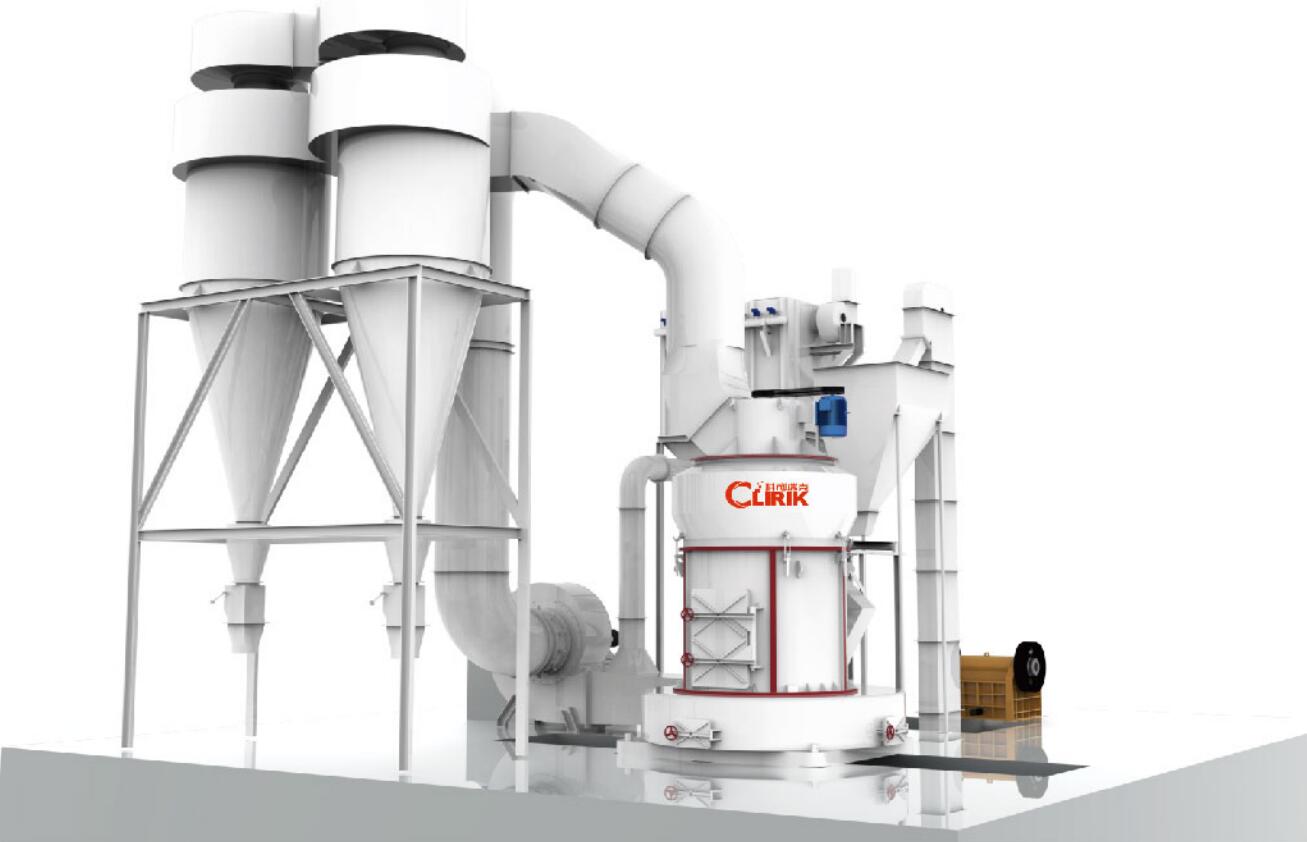
The equipment lines are positioned as follows:

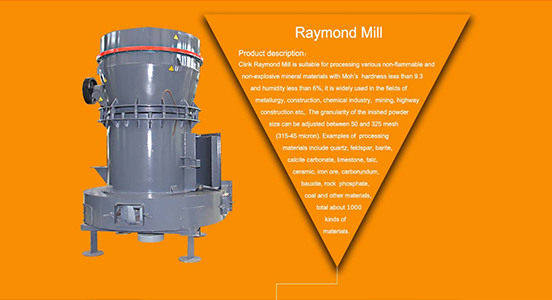
YGM / CLRM Raymond mill — two designations for the same class of Raymond mill. Suited to coarse to medium-fine powder, with high capacity and a well-proven structure. The standard choice for building materials, mortar and desulfurization projects.
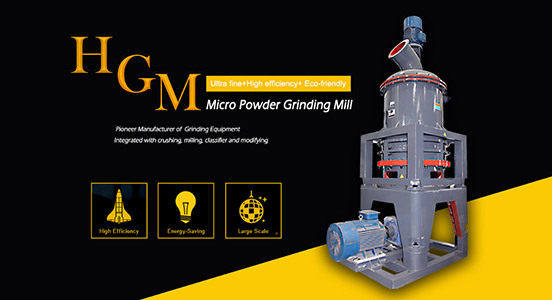
HGM micro powder mill — a wide adjustable fineness range covering 325–2500 mesh in a single unit. The most versatile option, well suited to projects with a diversified customer base.
CLUM ultrafine vertical mill— built for high-fineness demand, targeting 2500 mesh and finer. The key equipment for entering the paper coating and high-end coatings markets.
The principle: define the market first, then choose the machine. Once equipment is on site, its fineness ceiling defines the limits of your customer base.
4.Plan the Process Flow Around Material Characteristics
Material characteristics determine how long and how complex the processing flow needs to be. For the same capacity target, processing calcite and processing bentonite can require entirely different process designs.| Mineral | Mohs hardness | Feed moisture (3% threshold) |
Main uses | Recommended equipment |
| Calcite / marble | 3 | Usually below 3%, direct feed | Coatings, plastics, paper |
YGM / CLRM, HGM, CLUM |
| Talc | 1 | Usually below 3% | Plastics, coatings, paper, personal care |
HGM, CLUM |
| Kaolin | 2–2.5 | Often above 3% from wet processing, pre-drying required |
Ceramics, paper, coatings |
HGM, CLUM (with pre-drying) |
| Barite | 3–3.5 | Usually below 3% | Drilling mud, coatings, medical contrast agents |
HGM, CLUM |
| Bentonite | 1–2 | Often above 3%, pre-drying required |
Foundry, drilling, cat litter |
YGM / CLRM, HGM (with pre-drying) |
| Gypsum | 2 | Often above 3%, pre-drying required |
Building materials, cement retarder, desulfurization | YGM / CLRM |
Feed moisture has a design threshold of 3%. Moisture entering the mill should be held below 3%; above that level, pre-drying equipment must be installed. In the table above, the "pre-drying required" entries for kaolin, bentonite and gypsum are frequently the investment that gets overlooked. A front-end dryer plus its heat source system materially changes both project budget and energy structure. If the true material moisture is not disclosed during selection, the drying system has to be added after the equipment arrives — and both schedule and cost start over.
Three further process points:
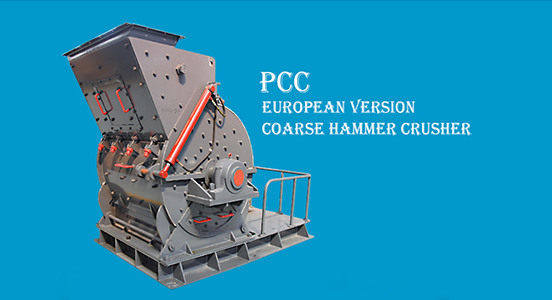
Feed size: oversized ore requires pre-crushing, sometimes two-stage crushing. Feed size beyond the mill's design limit directly affects output and operating stability.
Hardness and grindability: higher hardness means higher specific power consumption and faster wear-part consumption, which feeds directly into the operating cost calculation in Consideration 4.
Moisture: as above, the 3% threshold determines whether a front-end drying stage is required.
Grinding tests are the single most important verification step before selection. Before finalising the production line layout, send an actual ore sample to the mill manufacturer for a grinding test. It confirms three critical numbers in one pass: achievable fineness, actual capacity and specific power consumption. Those three numbers are far closer to reality than any specification sheet.
5.Calculate Total Cost, Not Just the Equipment Price
Many investors focus only on the initial equipment price when planning a non-metallic mineral powder processing plant. However, the purchase price alone does not reflect the full cost of building and operating a production line.
A reliable cost estimate should consider the complete process configuration, installation requirements, energy consumption, wear parts, maintenance, and expected production capacity. Depending on the raw material, additional equipment for pre-drying, dust collection, and environmental protection may also be required.

Before comparing supplier quotations, confirm that each proposal covers the same scope of supply. A quotation for the main grinding mill alone is not directly comparable to one that includes crushing, conveying, classification, dust collection, electrical controls, and packaging equipment. Clarifying the scope of supply helps investors understand the actual project budget and avoid overlooking necessary auxiliary systems.
Operating costs also deserve careful evaluation. Electricity consumption, wear-part replacement, routine maintenance, and unplanned downtime can all affect the long-term economics of a project. These costs should be assessed according to the actual mineral, target fineness, required capacity, and expected annual operating hours rather than relying solely on general estimates.
Where possible, request a grinding test using a representative sample of your raw material before finalizing the equipment selection. The test results can help assess achievable fineness, production capacity, and specific power consumption, providing a more practical basis for comparing technical proposals.
A sound investment decision should balance the initial investment with the expected operating costs over the equipment's service life. Rather than choosing the lowest quotation, investors should select a grinding solution that meets their production requirements and supports reliable, cost-effective long-term operation.
6.Take Compliance Seriously and Choose the Right Supplier
1)Environmental compliance: a threshold you have to cross
Compliance with environmental regulations is a threshold every non-metallic mineral powder processing plant must cross. Confirm the local requirements on dust, noise, solid waste handling and environmental impact assessment at the earliest stage of project preparation.
Ignore them, and even a profitable plant can be ordered to suspend operations and rectify. Remediation costs far more than upfront investment, and it interrupts customer supply. Compliance is not a cost. It is your licence to operate.
2)Supplier selection: can they support the project end to end?
Buying the equipment is only the beginning. What determines long-term stable production is the supplier's service chain. Use the checklist below.
|
Stage |
Capability required |
Value to you |
|
Pre-sales |
Project planning, |
Avoids mismatched selection; |
|
Pre-sales |
Material and grinding tests using your actual sample |
Verifies achievable fineness, capacity |
|
Pre-sales |
Process flow design and auxiliary equipment |
Avoids multi-vendor procurement |
|
After-sales |
Installation, commissioning and operator training |
Shortens ramp-up; |
|
After-sales |
Timely spare-part supply |
Reduces downtime losses; |
A specialist mill manufacturer such as Clirik typically provides one-stop support covering sample grinding tests, selection and plant design, installation and commissioning, operator training, and spare-part supply. Writing these services into the purchase contract is worth more than winning a few extra percentage points on price.
7.Frequently Asked Questions
1. How much does it cost to build a mineral powder processing plant?
Investment varies with capacity, fineness requirements and site conditions. Most projects require between tens of thousands and hundreds of thousands of US dollars. An accurate budget can only be provided once the supplier understands your mineral, target market and site conditions. We recommend completing a sample test before discussing pricing.
2. Which minerals can be processed?
This equipment is designed for non-metallic minerals such as calcium carbonate, talc, kaolin, barite, bentonite and gypsum. It is not suitable for grinding metallic ores such as iron ore or copper ore.
3. Which mill is the best choice?
There is no single "best" mill — only the best match. YGM and CLRM are the same class of Raymond mill, suited to coarse to medium-fine powder at high capacity. The HGM micro powder mill offers a wide adjustable fineness range and suits projects with a diversified product line. The CLUM ultrafine vertical mill is built for ultrafine powder at 2500 mesh and finer. The right choice depends on material characteristics, target fineness and required capacity.
4. Can I test my own mineral sample first?
Yes — and it is strongly recommended. Reputable suppliers provide sample grinding test services, so you can verify achievable fineness, capacity and specific power consumption before placing an order. Manufacturers such as Clirik offer sample testing.
5. Do I need environmental compliance approvals?
This depends on local regulations. Local authorities may impose mandatory requirements on dust and noise control or environmental impact assessment. We recommend reviewing the relevant rules early in project preparation, identifying the measures required, and including environmental facilities in your initial investment budget.
6. My ore brightness is not high enough. Can I still enter the high-end market?
Raw ore brightness sets the ceiling on product grade, so the more reliable approach is to align your market positioning with the actual grade and focus on mid-range products rather than stretching into ultrafine capacity. Refer to Table 2 in Consideration 1 for the market tiers your grade can reach.
8.Conclusion
A successful non-metallic mineral powder processing plant is built on sound pre-investment decisions: secure the ore source, define the target market, plan the process flow, calculate the true cost, and choose a supplier that can support you end to end.
The order of these five matters. The ore determines your product grade. The market determines your equipment selection. Material characteristics determine your process configuration. TCO determines whether the investment holds up. And the supplier determines whether all of it runs reliably over the long term.
Handle these five areas properly, and the plant will not only start up smoothly — it will generate stable, long-term profit.
If you already have an ore sample in hand, contact usto request a free material test and equipment selection proposal. Tell us your mineral type, target fineness and planned capacity, and we will use your own ore to show you what fineness is achievable and what configuration you need.
Related Newsmore >>
- Particle Size Distribution (PSD) Technical Guide2026-10-15
- CLIRIK Double Ninth Festival 2026 Message2026-10-12
- Calcium Carbonate Modification: Functions and Downstream Application Analysis2026-10-10
- Complete Production Line from Limestone Raw Material to Ultrafine Modified Powder2026-10-09
- CLIRIK 2026 National Day Holiday Notice2026-10-01
- A Complete Plant Configuration for Ultrafine Calcium Carbonate Processing2026-09-28