A Quantitative Comparison Raymond Mill vs. HGM Ring Roller Mill of Maintenance Downtime and Life-cyc
Source:clirikb
Posted:2026-08-13
Many procurement decisions focus only on wear part price and initial machine cost, while ignoring how internal structural complexity affects mean time between failures MTBF(Mean Time Between Failures), scheduled maintenance duration and unplanned shutdown losses.
(https://en.wikipedia.org/wiki/Mean_time_between_failures)
In fact, for grinding equipment running 6000 hours per year, every 1% drop in availability translates directly into lost output and revenue.
Based on field-measured data from calcite dry grinding lines (feed size ≤20mm, Mohs hardness 3, 325–1250 mesh finished powder), this article expands the analysis from two main dimensions: maintenance workload and equipment availability, and quantitative life-cycle maintenance cost calculation.

However, each hour of maintenance directly occupies effective production time, reduces annual output, and may affect customer order delivery.
For continuous production lines, equipment availability is a core operational indicator.
2\ Full re-tightening of all exposed fasteners in the grinding chamber to eliminate loosening risks;
3\ Shovel blade clearance calibration and wear measurement, with adjustment or replacement as needed;
4\ Grinding roller and grinding ring wear detection, requiring partial disassembly of the chamber.

Many of the above procedures require opening the grinding chamber and working in a narrow space, which is labor-intensive and time-consuming.
Calculated on the basis of 6000 hours of annual operation, the annual scheduled maintenance man-hours range from 216 to 288 hours, corresponding to an availability loss of approximately 3.6%–4.8%. Taking a 325-mesh calcite production line with an output of 4 tons per hour as an example, the annual lost output due to scheduled maintenance alone reaches 864–1152 tons.
Routine maintenance mainly includes:
1\ External lubrication point greasing, which can be completed without opening the grinding chamber;
2\ Wear level inspection through observation ports and operating current analysis, without frequent disassembly;
3\ No built-in shovel blade structure, eliminating the workload of blade clearance adjustment and replacement;
4\ No exposed fasteners in the grinding area, removing the need for full re-tightening.
Since most maintenance operations can be performed from the outside of the machine, the working efficiency is significantly improved and the shutdown time is greatly shortened.

the annual scheduled maintenance man-hours of HGM mills are 72–120 hours, and the availability loss is reduced to 1.2%–2.0%. Compared with traditional Raymond mills, availability is improved by 2.4–2.8 percentage points.
2\ Converted into actual production capacity:
taking 6 tons per hour of 325-mesh calcite powder as an example, HGM mills can produce 864–1008 tons more finished products per year only by reducing scheduled maintenance downtime. For high-margin ultrafine powder products, the corresponding revenue increase is even more significant.
According to real data analysis, initial purchase price accounts for less than 25% of the total life-cycle cost of grinding equipment.
The real long-term expenditure lies in wear parts consumption, maintenance labor, shutdown losses and spare parts management.
This section conducts a quantitative comparison based on the standard calcite 325-mesh grinding condition with 6000 hours of annual operation.

Technically speaking, although the initial purchase price of the HGM ring roller mill is higher than that of the traditional Raymond mill, the annual savings from the above three items can cover the purchase price difference within 2–3 years.
Over the 8–10 year service life of the equipment, the cumulative cost advantage on the operation and maintenance side is significant. For plants targeting medium and high-end ultrafine powder markets, the product quality premium brought by HGM further improves the return on investment.
The bearing-free grinding chamber design and integrated structure of the HGM ring roller mill reduce failure modes, improve equipment availability, and bring measurable output and cost benefits in long-term continuous operation.

(https://en.wikipedia.org/wiki/Mean_time_between_failures)
In fact, for grinding equipment running 6000 hours per year, every 1% drop in availability translates directly into lost output and revenue.
Based on field-measured data from calcite dry grinding lines (feed size ≤20mm, Mohs hardness 3, 325–1250 mesh finished powder), this article expands the analysis from two main dimensions: maintenance workload and equipment availability, and quantitative life-cycle maintenance cost calculation.
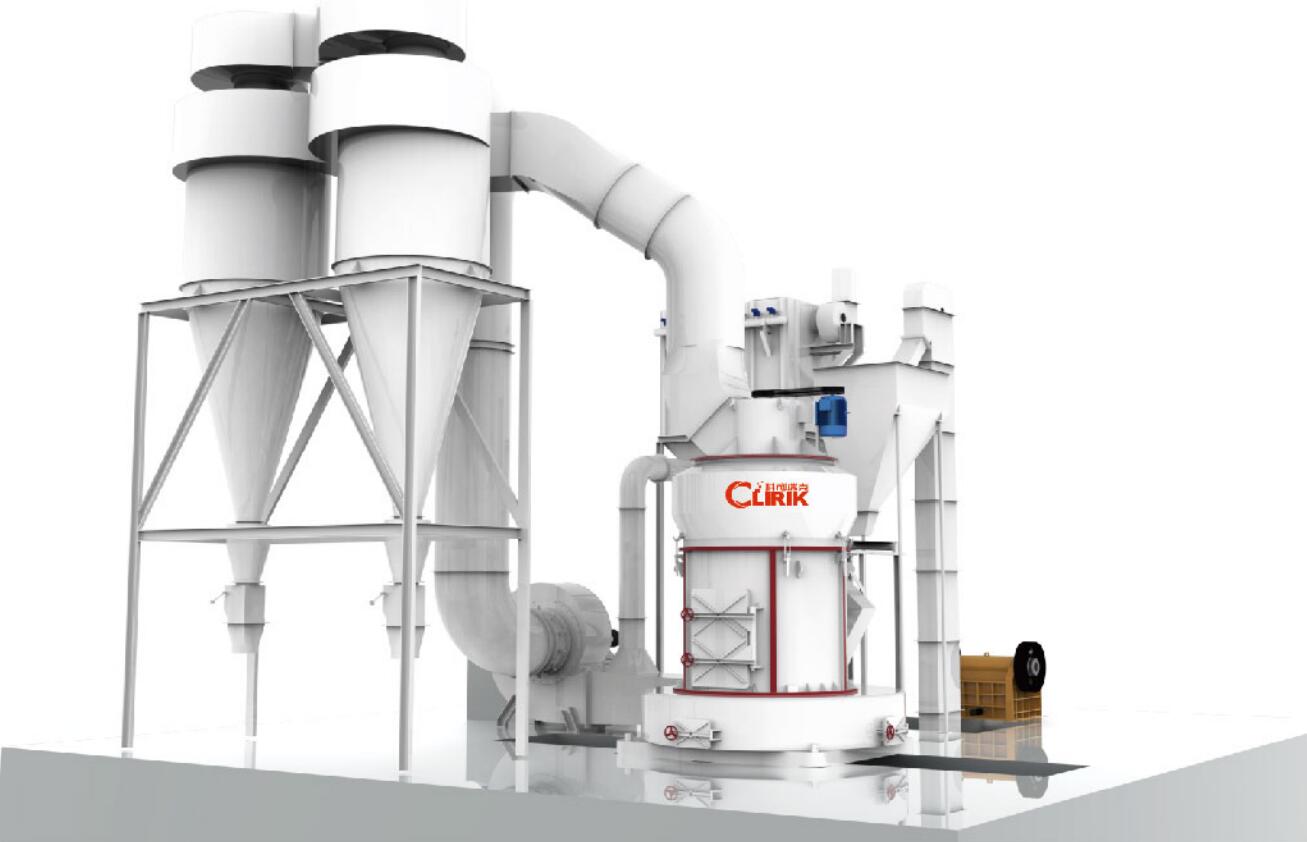
Grinding Equipment Selection Decision Evaluation Chart
1.Scheduled Maintenance Workload and Equipment Availability
It’s necessary to ensure long-term stable operation of grinding equipment.However, each hour of maintenance directly occupies effective production time, reduces annual output, and may affect customer order delivery.
For continuous production lines, equipment availability is a core operational indicator.
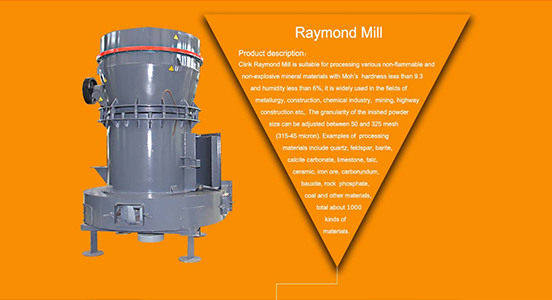
2.1Maintenance Burden of Raymond Mill (Common 4R type)
Due to large number of internal components and multiple sealing points, the monthly scheduled maintenance of Raymond mills take about 18–24 hours.A complete monthly maintenance procedure includes:
1\ Bearing lubrication for multiple positions, requiring removal of protective covers and grease replenishment at each lubrication point;2\ Full re-tightening of all exposed fasteners in the grinding chamber to eliminate loosening risks;
3\ Shovel blade clearance calibration and wear measurement, with adjustment or replacement as needed;
4\ Grinding roller and grinding ring wear detection, requiring partial disassembly of the chamber.
Comparison Of Maintenance Workload And Equipment Availability
Many of the above procedures require opening the grinding chamber and working in a narrow space, which is labor-intensive and time-consuming.
Calculated on the basis of 6000 hours of annual operation, the annual scheduled maintenance man-hours range from 216 to 288 hours, corresponding to an availability loss of approximately 3.6%–4.8%. Taking a 325-mesh calcite production line with an output of 4 tons per hour as an example, the annual lost output due to scheduled maintenance alone reaches 864–1152 tons.
| Parameter | Value / Details |
| Annual Operation Basis | 6000 hours |
| Scheduled Maintenance Man-hours | 216 to 288 hours |
| Availability Loss | 3.6% to 4.8% |
| Example Production Line | 325-mesh calcite with an output of 4 tons per hour |
| Annual Lost Output due to Scheduled Maintenance | 864 to 1152 tons |
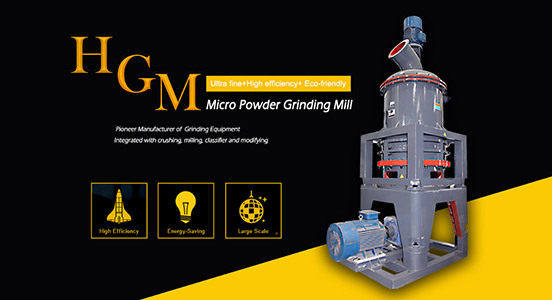
2.2Maintenance Efficiency of HGM Ring Roller Mill
Benefiting from simplified internal structure and optimized sealing design, the monthly scheduled maintenance of HGM ring roller mill takes only about 6–10 hours.Routine maintenance mainly includes:
1\ External lubrication point greasing, which can be completed without opening the grinding chamber;
2\ Wear level inspection through observation ports and operating current analysis, without frequent disassembly;
3\ No built-in shovel blade structure, eliminating the workload of blade clearance adjustment and replacement;
4\ No exposed fasteners in the grinding area, removing the need for full re-tightening.
Since most maintenance operations can be performed from the outside of the machine, the working efficiency is significantly improved and the shutdown time is greatly shortened.
Simplified Maintenance Procedure Of HGM Ring Roller Mill
Compared with some precise data:
1\ Under the same 6000-hour annual operating baseline:the annual scheduled maintenance man-hours of HGM mills are 72–120 hours, and the availability loss is reduced to 1.2%–2.0%. Compared with traditional Raymond mills, availability is improved by 2.4–2.8 percentage points.
| Metric | HGM Mills | Traditional Raymond Mills | Improvement |
| Annual Operating Baseline (hours) | 6000 | 6000 | Same |
| Annual Scheduled Maintenance Man-hours (hours) | 72–120 | 216–288 | Reduction inferred |
| Availability Loss (%) | 1.2%–2.0% | 3.6%–4.8% | 2.4–2.8 percentage points reduction |
2\ Converted into actual production capacity:
taking 6 tons per hour of 325-mesh calcite powder as an example, HGM mills can produce 864–1008 tons more finished products per year only by reducing scheduled maintenance downtime. For high-margin ultrafine powder products, the corresponding revenue increase is even more significant.
| Aspect | Details |
| Example Product | 325-mesh calcite powder at 6 tons per hour |
| Equipment | HGM mills |
| Additional Annual Production | 864–1008 tons |
| Key Factor | Reduced scheduled maintenance downtime |
| Revenue Impact for High-Margin Products | Even more significant increase for ultrafine powder products |
2.Quantitative Lifecycle Maintenance Cost Analysis
According to real data analysis, initial purchase price accounts for less than 25% of the total life-cycle cost of grinding equipment.
The real long-term expenditure lies in wear parts consumption, maintenance labor, shutdown losses and spare parts management.
This section conducts a quantitative comparison based on the standard calcite 325-mesh grinding condition with 6000 hours of annual operation.
Impact of Reduced Maintenance Downtime on HGM Mill Production
3.1Payback Period and Long-Term Economic Benefit
Further integrating wear part cost, maintenance labor and capacity loss, the total annual operating cost gap can be calculated as follows:1.Wear part expenditure:
HGM reduces replacement frequency by more than 60%, and the factory-direct supply model lowers unit part cost by 30%–50%. Annual wear part cost is reduced by 45%–55% compared with Raymond mills.2.Maintenance labor cost:
Maintenance man-hours are reduced by about two-thirds, and the corresponding labor expenditure is reduced proportionally.3.Shutdown loss:
Reduced scheduled and unscheduled downtime brings additional output and sales revenue. For high-value ultrafine powder products, this part of the benefit far exceeds the savings in parts and labor.Technically speaking, although the initial purchase price of the HGM ring roller mill is higher than that of the traditional Raymond mill, the annual savings from the above three items can cover the purchase price difference within 2–3 years.
Over the 8–10 year service life of the equipment, the cumulative cost advantage on the operation and maintenance side is significant. For plants targeting medium and high-end ultrafine powder markets, the product quality premium brought by HGM further improves the return on investment.
The bearing-free grinding chamber design and integrated structure of the HGM ring roller mill reduce failure modes, improve equipment availability, and bring measurable output and cost benefits in long-term continuous operation.
Grinding Equipment Selection Decision Evaluation
Grinding equipment selection should not be based solely on initial purchase price. It is necessary to incorporate MTBF, maintenance downtime, spare part supply stability and other lifecycle cost indicators into the evaluation system to make a more scientific investment decision.Related Newsmore >>
- A Quantitative Comparison Raymond Mill vs. HGM Ring Roller Mill of Maintenance Downtime and Life-cyc2026-08-13
- How to Choose a Pulverizer Machine? | Raymond Mill & Ultrafine Pulverizer2026-08-06
- How to Choose a Carbon Black Grinding Mill?2026-08-05
- CLIRIK Mid-Year Corporate Dynamic: After-Sales Service Skill Contest2026-08-04
- CLIRIK New Mineral Testing Lab Put Into Operation for Customer Ore Sample Analysis2026-07-30
- How to Grind Recycled Glass into High-Value Glass Powder | HGM Ultrafine Mill & Raymond Mill2026-07-21