How to Grind Recycled Glass into High-Value Glass Powder | HGM Ultrafine Mill & Raymond Mill
Source:nclirik
Posted:2026-07-21
Recycled glass powder is produced by crushing, drying, grinding, and classifying waste glass into different particle sizes.
Depending on the required fineness, Raymond mills are suitable for 50–400 mesh powders for construction materials, while ultrafine grinding mills can produce powders up to 3000 mesh for high-value industrial applications such as paints, plastics, and coatings.
The process transforms low-value waste into a high-performance industrial filler, offering a sustainable alternative to landfilling or remelting.

Why Recycle Waste Glass into Powder?
Every year, millions of tons of waste glass are generated globally. Sources include:- Bottles (soda-lime glass)
- Window glass (float glass)
- Tempered glass (automotive and furniture)
- Photovoltaic glass (solar panels)
- Industrial scrap (manufacturing rejects)
Why grinding is easier than remelting:
Remelting waste glass requires high temperatures, extensive cleaning, and strict color separation, which is energy-intensive and costly. Grinding, on the other hand, is a dry, mechanical process that consumes significantly less energy and accepts mixed or contaminated glass (after sorting).Adding value:
By grinding glass into fine powder, you transform a disposal liability into a revenue-generating product. Glass powder is increasingly used in:- Cement and Concrete (as a pozzolanic material)
- Ceramics (as a fluxing agent)
- Paints and Coatings (as a functional filler)
- Plastics and Rubber (for reinforcement)
- Adhesives and Artificial stone (for aesthetics and durability)
These are currently the fastest-growing markets for recycled glass powder.
Waste Glass Powder Production Process
The production of high-quality glass powder follows a strict, multi-step workflow to ensure purity and precise particle size distribution. The typical process flow is as follows:
Waste Glass
↓
Sorting (Remove metals, plastic, and organic impurities)
↓
Crushing (Reduce to <5mm particles using a CLIRIK Crusher)
↓
Drying (Remove moisture to prevent clogging)
↓
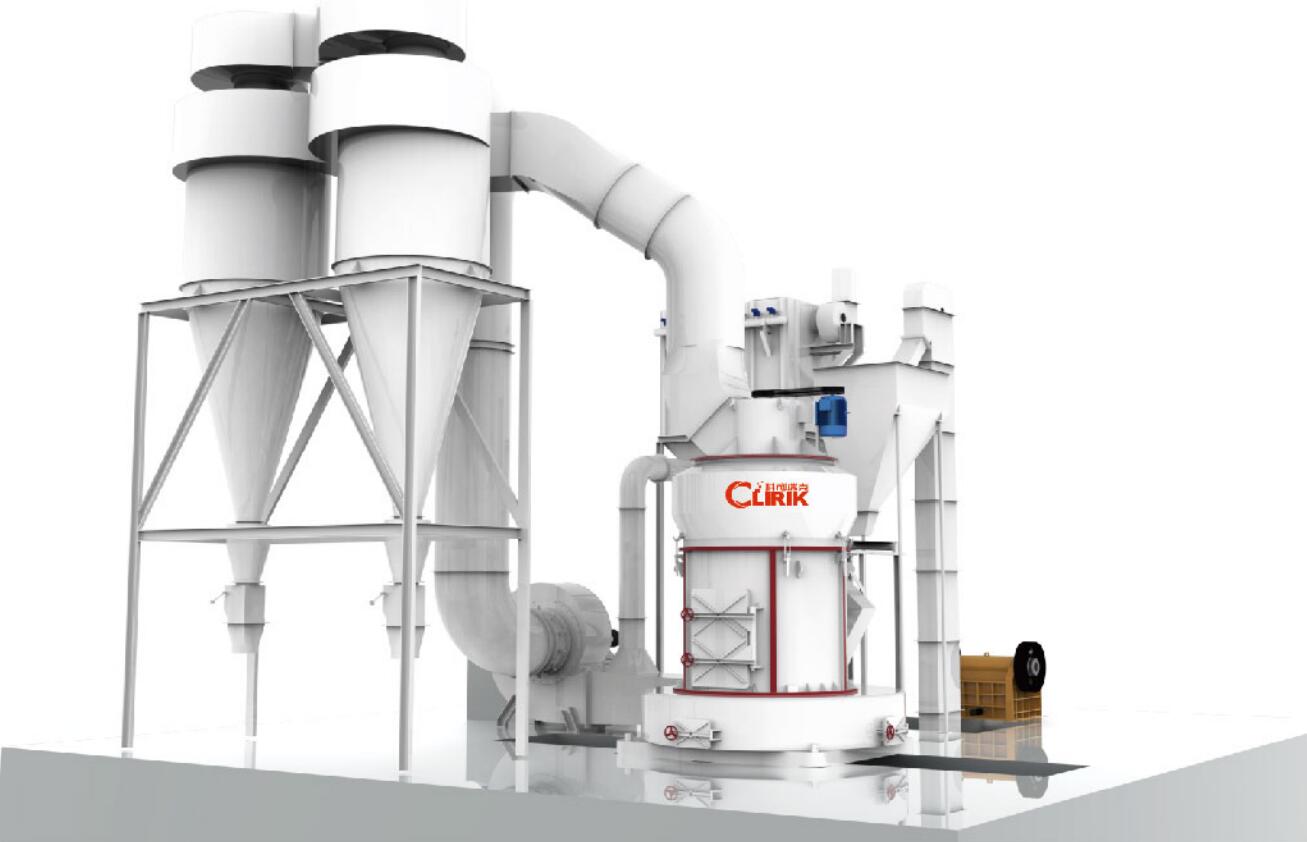
Grinding (CLRM Raymond Mill OR HGM Ultrafine Mill)
↓
Classification (Air classifier separates fine powder)
↓
Sorting (Remove metals, plastic, and organic impurities)
↓
Crushing (Reduce to <5mm particles using a CLIRIK Crusher)
↓
Drying (Remove moisture to prevent clogging)
↓
Grinding (CLRM Raymond Mill OR HGM Ultrafine Mill)
↓
Classification (Air classifier separates fine powder)
↓
Collection (Cyclone + Pulse Dust Collector)
↓
Packing (Automatic bagging)
Collection (Cyclone + Pulse Dust Collector)
↓
Packing (Automatic bagging)
Equipment naturally integrated:
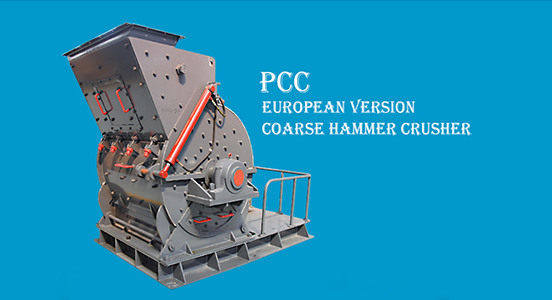
- Crusher: Reduces large glass fragments to feed size.
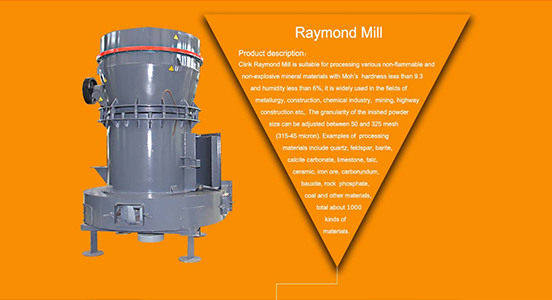
- CLRM Raymond Mill: Ideal for 50–400 mesh products.
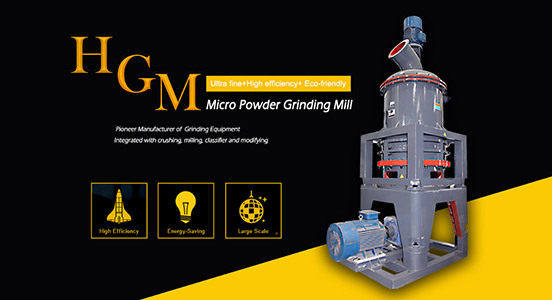
- HGM Ultrafine Grinding Mill: Produces 150–3000 mesh superfine powders.
- Powder Collector: Ensures high recovery rate and environmentally friendly operation.
Which Grinding Mill is Best for Recycled Glass?
Choosing the right mill depends on your target fineness, capacity requirements, and product value. Below is a direct comparison between CLIRIK’s two primary solutions for glass grinding.| Item | CLRM Raymond Mill | HGM Ultrafine Mill |
|---|---|---|
| Fineness | 50–400 mesh | 150–3000 mesh |
| Capacity | Higher (for coarse grinding) | Medium-High (for fine grinding) |
| Investment | Lower | Higher |
| Best Application | Cement, Ceramic, Building Materials | Paint, Coating, Plastic, High-end filler |
| Operating Cost | Low | Lower energy per ultrafine product |
| Product Value | Medium | High |
When to choose CLRM?
Choose the CLRM Raymond Mill if your goal is to produce glass powder for mass-market construction applications like cement additives or concrete admixtures where the required fineness is below 400 mesh. It offers the highest return on investment with minimal maintenance.
When to choose HGM?
Choose the HGM Ultrafine Mill if you are targeting high-margin industries like paint, rubber, or plastics requiring 800 mesh or finer. Although the initial investment is higher, the selling price per ton for 1500-mesh glass powder is significantly higher, yielding a faster ROI.
CLRM Raymond Mill for Glass Powder
The CLRM Raymond Mill is a classic, reliable choice for producing medium-fineness glass powder. It is engineered for high capacity and continuous operation.Ideal applications for CLRM Raymond Mill:
- Cement additive: 325 mesh for reactive pozzolanic material.
- Ceramic industry: 200 mesh for body mixes and glazes.
- Construction: 400 mesh for dry-mix mortars.
Key advantages:
- Low Investment: Most cost-effective entry-level solution.
- Simple Maintenance: Roller and ring replacement is straightforward.
- High Capacity: Produces more tons per hour for coarse grades compared to ultrafine mills.
Raymond Mill for 60-325 mesh glass powder grinding test:
HGM Ultrafine Grinding Mill for High-Value Glass Powder
For producers looking to maximize profit per ton, the HGM Ultrafine Grinding Mill is the industry standard. This mill unlocks the potential of glass powder as a premium functional filler.
Ideal fineness for HGM Ultrafine Mill:
800 mesh, 1000 mesh, 1250 mesh, 1500 mesh, 2000 mesh, and up to 3000 mesh.
High-value applications:
- Paints & Coatings: Improves abrasion resistance and weatherability.
- Plastics & Rubber: Enhances stiffness and reduces shrinkage.
- High-performance cement: Provides ultra-fine filling for specialized grouts.
Features that set HGM apart:
- High Precision: Equipped with an advanced multi-wheel air classifier.
- PLC Control: Fully automatic operation reduces labor costs.
- Multi-layer Grinding Rollers: Increases grinding efficiency for hard materials like glass.
- Energy Efficient: Lower specific energy consumption per ton of ultra-fine product.
Glass Powder Grinding Test with HGM80 Ultrafine Mill: 325 mesh 100% passed:
Recommended Glass Powder Sizes for Different Industries
To help you define your product specifications, here is the "answer" table that search engines and users love. Different industries require specific particle sizes to optimize performance.| Industry | Recommended Mesh | Application Notes |
|---|---|---|
| Cement | 200–325 | Pozzolanic activity increases with fineness. |
| Concrete | 325–600 | Reduces permeability and alkali-silica reaction. |
| Ceramic | 325–800 | Acts as a flux to lower firing temperatures. |
| Paint | 800–1500 | Provides gloss control and weather resistance. |
| Plastic | 800–2000 | Used as an anti-blocking agent and filler. |
| Rubber | 600–1250 | Improves tensile strength and dynamic properties. |
| High-end filler | 1250–3000 | Premium grade for sealants and specialty coatings. |
How to Choose Between Raymond Mill and Ultrafine Mill?
Making the right equipment decision is critical. Follow this simple logic flow to determine the best machine for your business.Decision Flow:
1.Define your product fineness.
- Need below 400 mesh? (e.g., Cement, Construction aggregate)
↓ YES → Choose CLRM Raymond Mill (Best cost-efficiency).
- Need over 800 mesh? (e.g., Premium Paints, Plastics)
↓ YES → Choose HGM Ultrafine Mill (Best value addition).
- In between? (e.g., Ceramics, Rubber)
↓ Consider CLRM for cost or HGM for flexibility.
2.Consider your budget.
- Limited initial capital? Go CLRM.
- Targeting high-profit niche markets? Go HGM.
Why Choose CLIRIK Glass Grinding Solutions?
CLIRIK has over 15 years of experience in the grinding mill industry, specializing in the production of Raymond mills and ultrafine grinding mills.
Why partner with CLIRIK?
✔ 15+ Years of Expertise: Deep knowledge of abrasive materials like glass.
✔ Customized Solutions: We design the system based on your input size, output size, and capacity.
✔ Factory Direct: Highest quality at the most competitive prices.
✔ Installation Support: Our engineers assist with on-site setup and commissioning.
✔ Trial Grinding: We test your samples to guarantee results before you buy.
✔ Global Projects: Successful installations in over 80 countries.
✔ Spare Parts: 24/7 availability to ensure your production line never stops.
FAQ (Frequently Asked Questions)
1. Can recycled glass be ground into powder?
Yes, recycled glass is highly grindable. Using specialized mills like Raymond mills or Ultrafine mills, glass can be ground into fine powders ranging from 50 mesh to 3000 mesh for various industrial uses.2. What is recycled glass powder used for?
It is used as a sustainable filler in cement, concrete, ceramics, paints, plastics, rubber, adhesives, and artificial stone. It improves durability, reduces porosity, and enhances surface finish.3. What mesh size is suitable for cement?
A fineness of 200 to 325 mesh is generally recommended for cement applications. This particle size allows for optimal pozzolanic reactivity and improves the overall strength of the cement.4. Can Raymond mill grind glass?
Yes, a Raymond mill is ideal for grinding glass to a fineness of 50 to 400 mesh. It is a robust and cost-effective solution for producing glass powder for the construction and ceramic industries.5. Can ultrafine mill produce 1500 mesh glass powder?
Absolutely. The HGM Ultrafine Grinding Mill is specifically designed to produce ultra-fine powders, with capabilities reaching 1500 mesh, 2000 mesh, and even 3000 mesh for high-end filler applications.6. Is glass difficult to grind?
Glass is an abrasive, brittle material. While it is not extremely hard, it requires specialized wear-resistant materials in the grinding chamber. CLIRIK mills are equipped with high-chromium alloy rollers and rings to handle glass effectively.7. What equipment is needed for a glass powder production line?
A complete line includes a crusher, feeder, dryer, grinding mill (Raymond Mill or Ultrafine Mill), air classifier, dust collector, and packing machine. CLIRIK provides integrated solutions for all these components.8. What is the capacity of a glass grinding mill?
Capacity varies depending on the fineness. The CLRM Raymond mill can produce 3-15 tons per hour for coarser powder, while the HGM Ultrafine mill can produce 0.4-12 tons per hour for very fine powders, depending on the model and mesh size.Related Newsmore >>
- CLIRIK Exhibition Preview: Join Us at CHINACOAT & SFCHINA 2026 in Guangzhou2026-09-15
- What to Consider Before Replacing Your Old Mill?2026-09-10
- Intro Investing in a non-metallic mineral powder plant has become one of the most attractive opportu2026-09-10
- Calcium Carbonate Masterbatch: What It Is and How to Use It2026-09-09
- CLIRIK Mid-Autumn Festival 2026 Holiday Preview2026-09-07
- Oyster Shell HGM Ultrafine Mill for Circular Economy2026-09-04