What to Consider Before Replacing Your Old Mill?
Source:clirikb
Posted:2026-09-24
Many powder plants running old equipment are not making good money.
They buy cheap raw material from elsewhere. They grind it on old ball mills or jet mills.
The output powder cannot hit D50 2–3 μm consistently.
Or it hits the spec but burns too much power. Margins shrink.
Some plants almost break even.

This article tells you why replacing your old mill is not about fancy new gear.
It is about protecting your profit.
We use a real magnesium hydroxide project to show the numbers.
You will see exactly how much money old equipment loses every year.
You will also see how a targeted upgrade changes the game.
They want consistent particle size, narrow distribution, high fine fraction and stable batch quality.
Cable manufacturers test every delivery.
One off-spec batch and they reject the whole truck.
Magnesium hydroxide flame retardant is a good example.

Cable rubber compounds need D50 between 2 and 3 microns.
Material below 3 microns must make up a high share.
If fine fraction is low, powder clumps in the rubber. Flame retardancy drops. Cable makers complain. Orders get cut.
Old equipment cannot deliver this consistently. A traditional ball mill runs too coarse at this fineness.
A jet mill reaches the spec but uses too much power. Plant owners sit on profitable orders.
They cannot fulfill them with quality. That is the core reason to upgrade.
They forget the old mill burns cash every year.
Let us break down four hidden drains.
Old ball mills and jet mills use a lot of electricity.
A conventional dry ball mill can use 110–160 kWh per ton at 1250 mesh.
A jet mill for D50 2–3 μm magnesium hydroxide uses even more.
At 0.6 CNY per kWh, power alone can eat 60–100 CNY per ton of powder.
For a 12,000-ton-per-year line, that is 720,000 to 1.2 million CNY in annual electricity cost.
A new HGM mill cuts this by 30–40%.
The savings drop straight to your bottom line.

Old mills break down more often. Pumps fail. Bearings wear. Seals leak.
These all will cause unexpected dreakdown.
Each breakdown means the line stops. Flame retardant orders run on tight schedules.
Downtime means late delivery. Late delivery means penalty fees.
Some old lines lose 10–15% of annual output to unplanned stops.
On a 12,000-ton line at 7,500 CNY per ton, that is 900 to 1,800 tons of lost sales. It adds up to millions in missed revenue.
Wear parts on old mills are a recurring expense.
Rollers, rings, liners and pipes need replacement every few months.
Repair costs creep up as the machine ages.
Industry experience shows repair bills first reach about 30% of a new machine price. Then they jump to 50% the next year.
Once annual repair cost exceeds half the price of a new equivalent mill, replacement makes financial sense.
Downstream customers reject batches. You cannot enter high-end flame retardant markets, neither enter high-end coating filler markets.
You are stuck selling low-grade powder at low margins.
This is the silent killer. You may not see a line item in your P&L.
But your average selling price sits 20–30% below what a quality producer gets.
Over a year, that gap is huge.
Let us look at a real project. It makes the numbers concrete.
The customer is based in the Greater Bay Area. They process synthetic magnesium hydroxide from salt lakes.
Finished powder goes to cable factories for rubber sheath flame retardant.
They spent two years researching equipment suppliers. They tested multiple machines.
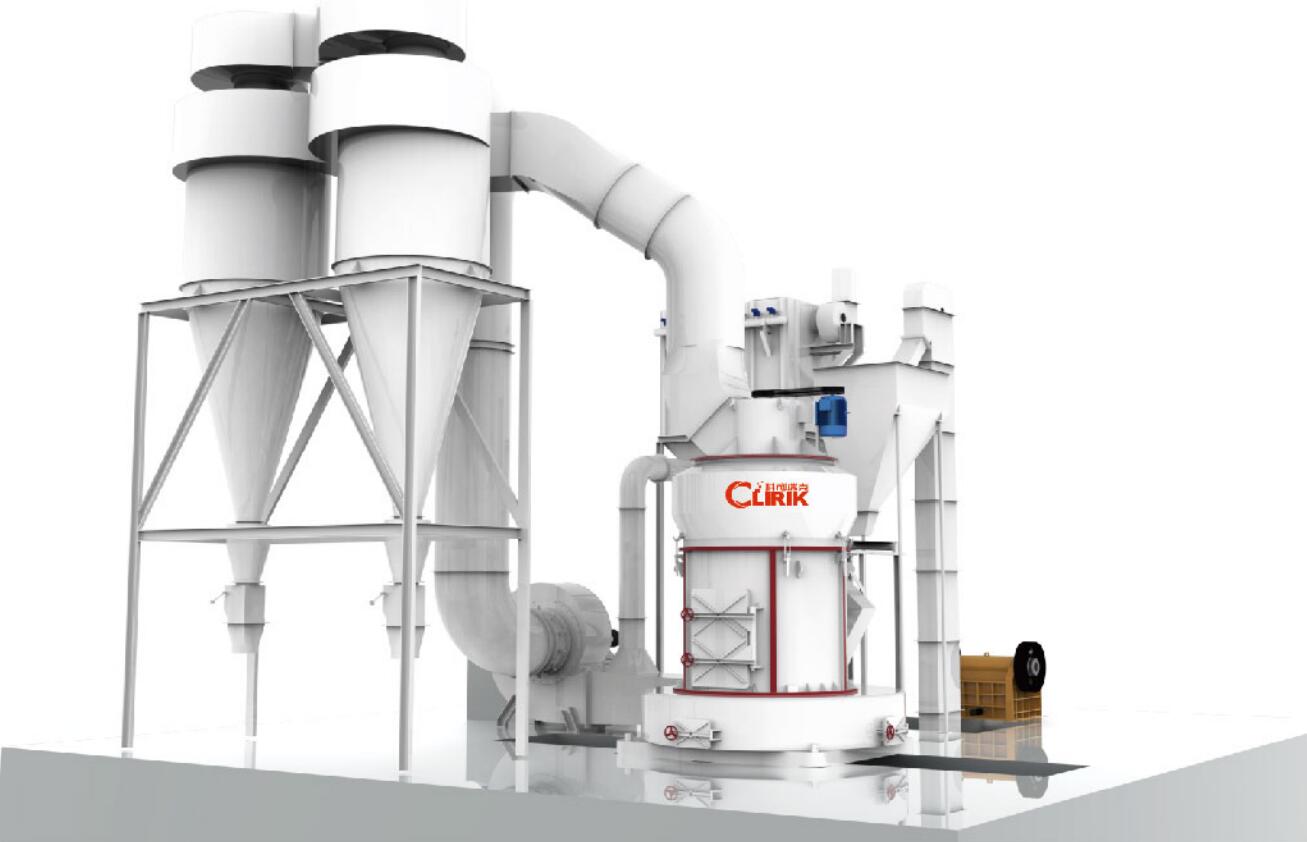
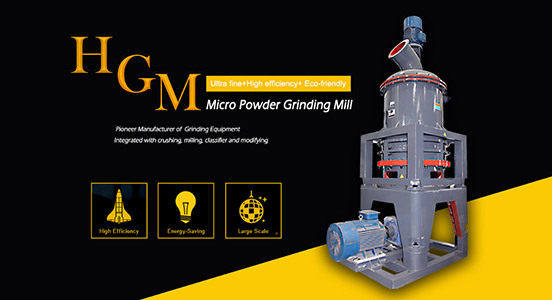
They finally chose an HGM100L with a three-rotor classifier setup. The line started production in July this year.
Equipment: HGM100L with three-rotor classifier, full variable-frequency drive.
Target fineness: D50 2–3 μm.
Rated output: 2 tons per hour.
Annual run time: roughly 6,000 hours (20 hours/day, 300 days/year).
This is not a huge plant.
But it is highly profitable because the equipment choice nails the cost structure.
They work. But they have two problems:

To reach the same annual tonnage, you need multiple jet mills running in parallel.
That means more capital. That means more floor space. That means more operators.
Electricity alone eats 30–40% of production cost.
Let us do the math. Annual output target: 12,000 tons.
Jet mill scenario:
1\ Output: 0.6 t/h
2\ Annual hours needed: 12,000 / 0.6 = 20,000 hours. You cannot run 20,000 hours on one line. You need 3–4 parallel jet mills.
3\ Power: ~150 kWh/t × 12,000 t = 1.8 million kWh/year
4\ Power cost: 1.8M × 0.6 = 1.08 million CNY/year
5\ Multiple mills mean higher maintenance, more operators, bigger floor space.

HGM scenario (actual project):
Output: 2 t/h
Annual hours: 6,000
Annual output: 12,000 tons on one line
Power: about 30% of jet mill level ≈ 45 kWh/t
Power cost: 45 × 12,000 × 0.6 = 324,000 CNY/year
The power saving alone is about 756,000 CNY per year.
Using traditional jet mill process, the investment barely makes sense. You spend years just paying back.
With HGM, the payback window is short. The margin stays healthy.
This is why the customer switched from the old equipment mindset to HGM. It is about real profit.
The right question is: how much more profit does the finished powder earn?
High-value functional fillers like flame retardant magnesium hydroxide sell at 7,000–8,000 CNY per ton.
Standard building filler sells at 300–500 CNY per ton.
The same ore can make either product. The equipment decides which market you enter.
An old ball mill can only produce 200–400 mesh coarse powder. You are stuck in the low-margin commodity market.
A new HGM mill produces D50 2–3 μm narrow-distribution powder. You enter the flame retardant market.
You enter the high-end filler market. The selling price jumps by 10x.

That is the real upgrade driver. It is not lower power bill alone.
It is the ability to make a product that commands premium prices.
The three-rotor classifier on this project lifts fine fraction below 3 μm by 5–10 percentage points.
That extra fine fraction directly improves dispersion in rubber.
Downstream cable customers get better flame retardancy.
They pay more. They stay loyal. The plant builds a moat in a niche market.
But, how is your old mill valued? Some suppliers give a token trade-in number.
The "discount" disappears after markup on the new machine. Ask for on-site assessment or a clear formula.
Who pays dismantling and transport? Old mills are heavy.
Rigging, lifting and hauling cost real money. Confirm who covers it.
Is there a minimum spend? Some trade-in deals only apply above a certain purchase amount.
A small upgrade may not qualify.
Can you stack discounts? Most suppliers do not allow trade-in credit plus other promotions.
Compare final out-the-door price. Do not compare the headline trade-in number.
Does warranty change? Some trade-in packages shorten warranty or exclude free service.
Get the warranty terms in writing.
Cheapest. Fastest.
Best when the machine is fundamentally sound.
But repair does not lift efficiency. Repair does not lift product grade. It keeps you in the old market.
Replace the classifier.
Upgrade the control cabinet. Keep the main mechanical structure.
Costs more than repair. Costs less than new. Good when you need a specific performance boost without full replacement.
Highest upfront cost.
Latest technology. Best efficiency. Best product quality.
Worth it when you want to enter a new product market.
Worth it when you need higher output. Worth it when your old machine costs too much to keep.
For the factual project above, replacement made sense.
The old jet mill route could not deliver the right cost structure.
A new HGM line changed the margin equation.
A cheap old-style mill costs more over 5 years. Count power.
Count maintenance. Count downtime. Count quality loss.
Mistake 2: Overestimate output. Brochure numbers are ideal.
Real output depends on material moisture. Real output depends on material hardness.
Real output depends on classifier tuning. Leave a safety margin.
Mistake 3: Ignore installation downtime.
Replacing a mill stops production. Plan around maintenance windows. Partial upgrades cause shorter stops.
Mistake 4: Forget future needs.
Pick a model with room to expand. If you add a second product line later, you will not need another full rebuild.
Mistake 5: Neglect supporting equipment.
A new main mill needs matching fan, dust collector and control system.
Old support gear can bottleneck the new machine. Budget for full-line compatibility.
In all, replacing an old mill is a profit decision. It is not an equipment purchase.
The old machine quietly drains money through high power. It drains money through downtime.
It drains money through maintenance. It drains money through missed premium.

If you are running old ball mills or jet mills on functional filler projects, run the numbers.
Compare annual power cost. Compare lost output. Compare missed premium.
Want a free profit assessment for your old mill and product plan?
Contact our technical team.
Send us your material, target fineness and current cost structure.
We will show you the upgrade math.
Also check power per ton, downtime hours and product grade.
If old equipment holds you back from premium markets, replacement brings real profit upside.
Power use is about 30% of jet mills. Product particle shape meets cable filler requirements.
Total capital cost is comparable but operating cost is far lower.
Partial upgrades like a new classifier can lift fineness somewhat. But ball mill structure and media loading limit efficiency at this fineness.
For high-value functional fillers, a purpose-built ultrafine ring roller mill usually gives better long-term returns.
In flame retardant or high-value filler projects, payback can be even shorter because of product premium.
If projected payback exceeds 5 years, re-check the plan.
Ask for on-site assessment, compare final total price, and confirm whether the trade-in stacks with other discounts.
High-value filler projects see the biggest profit jump.
If support equipment is old, a full-line upgrade delivers better performance and avoids bottlenecks.
They buy cheap raw material from elsewhere. They grind it on old ball mills or jet mills.
The output powder cannot hit D50 2–3 μm consistently.
Or it hits the spec but burns too much power. Margins shrink.
Some plants almost break even.
This article tells you why replacing your old mill is not about fancy new gear.
It is about protecting your profit.
We use a real magnesium hydroxide project to show the numbers.
You will see exactly how much money old equipment loses every year.
You will also see how a targeted upgrade changes the game.
1.The Market Shift: From Cheap Powder to High-Value Functional Filler
The downstream market has changed nowadays. Buyers no longer want just "powder."They want consistent particle size, narrow distribution, high fine fraction and stable batch quality.
Cable manufacturers test every delivery.
One off-spec batch and they reject the whole truck.
Magnesium hydroxide flame retardant is a good example.
Cable rubber compounds need D50 between 2 and 3 microns.
Material below 3 microns must make up a high share.
If fine fraction is low, powder clumps in the rubber. Flame retardancy drops. Cable makers complain. Orders get cut.
Old equipment cannot deliver this consistently. A traditional ball mill runs too coarse at this fineness.
A jet mill reaches the spec but uses too much power. Plant owners sit on profitable orders.
They cannot fulfill them with quality. That is the core reason to upgrade.
2.Why Your Old Mill Is Quietly Eating Your Profit
Plant owners usually look at the purchase price of a new mill.They forget the old mill burns cash every year.
Let us break down four hidden drains.
2.1Power Consumption: The Biggest Cash Drain
Old ball mills and jet mills use a lot of electricity.
A conventional dry ball mill can use 110–160 kWh per ton at 1250 mesh.
A jet mill for D50 2–3 μm magnesium hydroxide uses even more.
At 0.6 CNY per kWh, power alone can eat 60–100 CNY per ton of powder.
For a 12,000-ton-per-year line, that is 720,000 to 1.2 million CNY in annual electricity cost.
A new HGM mill cuts this by 30–40%.
The savings drop straight to your bottom line.
2.2Downtime and Lost Output
Old mills break down more often. Pumps fail. Bearings wear. Seals leak.
These all will cause unexpected dreakdown.
Each breakdown means the line stops. Flame retardant orders run on tight schedules.
Downtime means late delivery. Late delivery means penalty fees.
Some old lines lose 10–15% of annual output to unplanned stops.
On a 12,000-ton line at 7,500 CNY per ton, that is 900 to 1,800 tons of lost sales. It adds up to millions in missed revenue.
2.3Maintenance and Wear Parts
Wear parts on old mills are a recurring expense.
Rollers, rings, liners and pipes need replacement every few months.
Repair costs creep up as the machine ages.
Industry experience shows repair bills first reach about 30% of a new machine price. Then they jump to 50% the next year.
Once annual repair cost exceeds half the price of a new equivalent mill, replacement makes financial sense.
2.4 Quality Loss and Missed Premium
Old mills with poor classification have wide particle size distribution. Coarse particles sneak into the product.Downstream customers reject batches. You cannot enter high-end flame retardant markets, neither enter high-end coating filler markets.
You are stuck selling low-grade powder at low margins.
This is the silent killer. You may not see a line item in your P&L.
But your average selling price sits 20–30% below what a quality producer gets.
Over a year, that gap is huge.
3.One Real Case: Magnesium Hydroxide Project
Let us look at a real project. It makes the numbers concrete.
The customer is based in the Greater Bay Area. They process synthetic magnesium hydroxide from salt lakes.
Finished powder goes to cable factories for rubber sheath flame retardant.
They spent two years researching equipment suppliers. They tested multiple machines.
They finally chose an HGM100L with a three-rotor classifier setup. The line started production in July this year.
3.1Project Basics
Material: synthetic magnesium hydroxide (flame retardant grade).Equipment: HGM100L with three-rotor classifier, full variable-frequency drive.
Target fineness: D50 2–3 μm.
Rated output: 2 tons per hour.
Annual run time: roughly 6,000 hours (20 hours/day, 300 days/year).
This is not a huge plant.
But it is highly profitable because the equipment choice nails the cost structure.
3.2What the Old Approach Would Have Cost
The customer looked at conventional jet mills first. Jet mills can reach D50 2–3 μm.They work. But they have two problems:
1\ First, output is low.
A jet mill at this fineness typically runs 0.5–0.7 tons per hour.To reach the same annual tonnage, you need multiple jet mills running in parallel.
That means more capital. That means more floor space. That means more operators.
2\ Second, power use is brutal.
Jet mills compress huge air volumes. Power consumption can hit 150 kWh per ton or more.Electricity alone eats 30–40% of production cost.
Let us do the math. Annual output target: 12,000 tons.
Jet mill scenario:
1\ Output: 0.6 t/h
2\ Annual hours needed: 12,000 / 0.6 = 20,000 hours. You cannot run 20,000 hours on one line. You need 3–4 parallel jet mills.
3\ Power: ~150 kWh/t × 12,000 t = 1.8 million kWh/year
4\ Power cost: 1.8M × 0.6 = 1.08 million CNY/year
5\ Multiple mills mean higher maintenance, more operators, bigger floor space.
HGM scenario (actual project):
Output: 2 t/h
Annual hours: 6,000
Annual output: 12,000 tons on one line
Power: about 30% of jet mill level ≈ 45 kWh/t
Power cost: 45 × 12,000 × 0.6 = 324,000 CNY/year
The power saving alone is about 756,000 CNY per year.
3.3Profit Gap Before and After Upgrade
Now look at the full profit picture. Same finished product price. Same annual output. Different equipment.| Item | Old Jet Mill Route | HGM Three-Rotor Mill | Gap |
| Annual output | 12,000 t (needs 3–4 parallel units) | 12,000 t (one line) | Same output, fewer machines |
| Output per line | 0.6 t/h | 2 t/h | 3.3x per line |
| Specific power | ~150 kWh/t | ~45 kWh/t | 70% power cut |
| Annual power cost | ~1,080,000 CNY | ~324,000 CNY | Save 756,000 CNY/year |
| Capital equipment cost | High (3–4 jet mills) | One HGM line | Comparable total price |
| Operators needed | More (multiple lines) | 2–3 per line | Lower labor |
| Floor space | Large | Compact | Lower rent/construction |
| Fine fraction below 3 μm | Meets spec | +5–10% higher than natural | Better downstream performance |
| Estimated gross margin | Thin (10–15%) | Stronger (25–35%) | Much healthier business |
Using traditional jet mill process, the investment barely makes sense. You spend years just paying back.
With HGM, the payback window is short. The margin stays healthy.
This is why the customer switched from the old equipment mindset to HGM. It is about real profit.
4.What Drives Customers to Switch: Product Value, Not Equipment Price
Many plant owners compare new mills by sticker price.The right question is: how much more profit does the finished powder earn?
High-value functional fillers like flame retardant magnesium hydroxide sell at 7,000–8,000 CNY per ton.
Standard building filler sells at 300–500 CNY per ton.
The same ore can make either product. The equipment decides which market you enter.
An old ball mill can only produce 200–400 mesh coarse powder. You are stuck in the low-margin commodity market.
A new HGM mill produces D50 2–3 μm narrow-distribution powder. You enter the flame retardant market.
You enter the high-end filler market. The selling price jumps by 10x.
That is the real upgrade driver. It is not lower power bill alone.
It is the ability to make a product that commands premium prices.
The three-rotor classifier on this project lifts fine fraction below 3 μm by 5–10 percentage points.
That extra fine fraction directly improves dispersion in rubber.
Downstream cable customers get better flame retardancy.
They pay more. They stay loyal. The plant builds a moat in a niche market.
5.Trade-In Policy: Details to Check Before Signing
Once you decide to upgrade, trade-in offers seem as if sort of attractive.But, how is your old mill valued? Some suppliers give a token trade-in number.
The "discount" disappears after markup on the new machine. Ask for on-site assessment or a clear formula.
Who pays dismantling and transport? Old mills are heavy.
Rigging, lifting and hauling cost real money. Confirm who covers it.
Is there a minimum spend? Some trade-in deals only apply above a certain purchase amount.
A small upgrade may not qualify.
Can you stack discounts? Most suppliers do not allow trade-in credit plus other promotions.
Compare final out-the-door price. Do not compare the headline trade-in number.
Does warranty change? Some trade-in packages shorten warranty or exclude free service.
Get the warranty terms in writing.
6.Repair, Rebuild, or Replace?
Not every old mill needs full replacement. You have three paths.1\ Repair.
Fix broken parts only.Cheapest. Fastest.
Best when the machine is fundamentally sound.
But repair does not lift efficiency. Repair does not lift product grade. It keeps you in the old market.
2\ Rebuild.
Overhaul key systems.Replace the classifier.
Upgrade the control cabinet. Keep the main mechanical structure.
Costs more than repair. Costs less than new. Good when you need a specific performance boost without full replacement.
3\ Replace.
Buy a new line.Highest upfront cost.
Latest technology. Best efficiency. Best product quality.
Worth it when you want to enter a new product market.
Worth it when you need higher output. Worth it when your old machine costs too much to keep.
For the factual project above, replacement made sense.
The old jet mill route could not deliver the right cost structure.
A new HGM line changed the margin equation.
7.Common Mistakes to Avoid
Mistake 1: Only compare purchase price.A cheap old-style mill costs more over 5 years. Count power.
Count maintenance. Count downtime. Count quality loss.
Mistake 2: Overestimate output. Brochure numbers are ideal.
Real output depends on material moisture. Real output depends on material hardness.
Real output depends on classifier tuning. Leave a safety margin.
Mistake 3: Ignore installation downtime.
Replacing a mill stops production. Plan around maintenance windows. Partial upgrades cause shorter stops.
Mistake 4: Forget future needs.
Pick a model with room to expand. If you add a second product line later, you will not need another full rebuild.
Mistake 5: Neglect supporting equipment.
A new main mill needs matching fan, dust collector and control system.
Old support gear can bottleneck the new machine. Budget for full-line compatibility.
In all, replacing an old mill is a profit decision. It is not an equipment purchase.
The old machine quietly drains money through high power. It drains money through downtime.
It drains money through maintenance. It drains money through missed premium.
If you are running old ball mills or jet mills on functional filler projects, run the numbers.
Compare annual power cost. Compare lost output. Compare missed premium.
Want a free profit assessment for your old mill and product plan?
Contact our technical team.
Send us your material, target fineness and current cost structure.
We will show you the upgrade math.
FAQ
Q1: How do I know when to replace my old grinding mill?
When annual repair cost exceeds 50% of a new equivalent mill price, replacement usually makes sense.Also check power per ton, downtime hours and product grade.
If old equipment holds you back from premium markets, replacement brings real profit upside.
Q2: What makes HGM better than a jet mill for ultrafine flame retardant powder?
HGM ring roller mills deliver several times more output per line than jet mills at the same D50 2–3 μm.Power use is about 30% of jet mills. Product particle shape meets cable filler requirements.
Total capital cost is comparable but operating cost is far lower.
Q3: Can I retrofit an old ball mill to produce D50 2–3 μm powder?
Partial upgrades like a new classifier can lift fineness somewhat. But ball mill structure and media loading limit efficiency at this fineness.For high-value functional fillers, a purpose-built ultrafine ring roller mill usually gives better long-term returns.
Q4: What is a realistic payback period for a mill upgrade?
For mineral powder equipment, 2–3 years is solid.In flame retardant or high-value filler projects, payback can be even shorter because of product premium.
If projected payback exceeds 5 years, re-check the plan.
Q5: Does trade-in value really save money?
It depends on how the old mill is valued and whether the new price is inflated.Ask for on-site assessment, compare final total price, and confirm whether the trade-in stacks with other discounts.
Q6: What materials are good candidates for an HGM upgrade?
Calcium carbonate, talc, barite, magnesium hydroxide, aluminum hydroxide and other non-metallic minerals producing 800–2500 mesh functional powders.High-value filler projects see the biggest profit jump.
Q7: How long does installation and commissioning take?
Modular HGM lines typically take 2–3 months from order to production, including civil works coordination.Q8: Should I replace just the main mill or the whole line?
If your classifier, dust collector and control system are modern, you can start with the main unit.If support equipment is old, a full-line upgrade delivers better performance and avoids bottlenecks.
Related Newsmore >>
- CLIRIK Double Ninth Festival 2026 Message2026-10-12
- Calcium Carbonate Modification: Functions and Downstream Application Analysis2026-10-10
- Complete Production Line from Limestone Raw Material to Ultrafine Modified Powder2026-10-09
- CLIRIK 2026 National Day Holiday Notice2026-10-01
- A Complete Plant Configuration for Ultrafine Calcium Carbonate Processing2026-09-28
- What to Consider Before Replacing Your Old Mill?2026-09-24