A Complete Plant Configuration for Ultrafine Calcium Carbonate Processing
Source:yutao
Posted:2026-09-28
1. Introduction for 2500 mesh plant
"2500 mesh" is trade shorthand for approximately D97 ≤ 5 µm. In dry-ground calcium carbonate (GCC) processing, a ring roller mill plus a classifier is the most cost-effective route to 5 µm: lower power and capital cost than jet milling, and far better fineness control than Raymond mills or standard vertical mills.This guide covers which industries need 2500 mesh, what the powder is like, feed requirements, the five variables that hold 5 µm, the standard line configuration, optional add-ons, and FAQs.
2. Who Needs 2500 Mesh Calcium Carbonate?
Buyers pay a premium for 2500 mesh for three reasons only:Surface quality — gloss, fewer white specks, opacity
Mechanical performance — dispersion and interfacial bonding
Processing needs — thin walls, fine filaments, flow at high filler loading
Where the goal is purely cost reduction through filling, 1250 mesh is usually cheaper and performs better.
| Industry | Typical products |
| PVC profiles and pipes | High-gloss and light-colored parts |
| Filled and color masterbatch | PP/PE compounds |
| Coatings | Extender pigment |
| Powder coatings | Extruded powders |
| Rubber, adhesives, sealants | NBR, EPDM, silicone, PU |
| Paper and inks | Coating, filler |
Where 2500 mesh is not needed:
Standard PVC pipes and fittings — 1250 mesh coated GCC is sufficient
Putty and dry-mixed mortar — 325–800 mesh
General rubber filling — 800–1250 mesh

Before deciding to produce ultrafine 2500 mesh powder, ask your downstream customer for their acceptance spec first — to confirm whether this fineness is genuinely required.
3. Properties of 2500 Mesh Calcium Carbonate Powder
Two suppliers can both label their product "2500 mesh" and still deliver powder that performs twice as differently. Mesh constrains only one point near D97; what actually drives performance is D50, distribution width, particle shape, whiteness and surface treatment.| Property | Typical range | Influence |
| D97 | ≤ 5.0 µm | Coarse particles cause white specks |
| D50 | 2.5 ± 0.5 µm | Overall fineness drives oil absorption, dispersion, gloss |
| D100 (top cut) | ≤ 12–15 µm | The real source of white specks |
| Distribution width (D90−D10)/D50 | 1.5–2.5 | Narrower suits powder coatings and sealants |
| BET surface area | ~2–5 m²/g | Linked to oil absorption and surface-treatment dosage |
| Whiteness R457 | 92–96 | Practical ceiling for light-colored products |
| Fe₂O₃ | ≤ 0.05–0.3% | Affects whiteness, and reflects wear-part loss |
| Moisture | ≤ 0.3% | Dispersion, bubbles, storage caking |
| Bulk density | 0.4–0.7 g/cm³ | Conveying and packing — ultrafines entrain a lot of air |
4. Feed Requirements
The two most underestimated variables in ultrafine grinding are feed size and feed moisture. Dry lines tolerate moisture across a far narrower band than most operators assume.| Item | Target | Reason |
| Mineral | Calcite > marble > limestone | Natural differences in whiteness and purity |
| CaCO₃ content | ≥ 90% (≥ 98.5% for high whiteness) | Sets the ceiling on product purity |
| SiO₂ / quartz | As low as possible | Determines wear-part life |
| Feed size | ≤ 10–30 mm after crushing | Oversize overloads the classifier and destabilises fineness |
| Feed moisture | ≤ 3%, lower is better | Causes mill build-up, bag clogging and falling air volume |
| Ore source stability | Re-test after any mine change | The number-one cause of fineness suddenly becoming unachievable |

5. The Dry Ring Roller Mill Route
The ring roller mill is a closed-loop, single-pass dry circuit: feed → grinding → classification → coarse return → collection. Reaching 5 µm depends not on grinding pressure, but on classifier speed resolution and feed stability.
How it works: the main shaft drives the roller carrier, and the rollers press against a fixed grinding ring under centrifugal or hydraulic force. Material falls onto the scraper plate and is thrown between the rollers and the ring, where it is crushed by compression and shear. The air stream lifts the powder, the classifier returns coarse particles to the mill, and fines pass into the collection section.
Five variables that hold 5 µm:
| Variable | Target | Consequence |
| Classifier speed and resolution | VFD-adjustable, resolution around ±0.3 µm | Fineness drift, unstable batches |
| Feed rate stability | Variable-speed feeding, interlocked with the classifier | A 10% swing moves fineness |
| Grinding pressure, roller/ring clearance | Per the manufacturer's schedule | Fineness stalls, or wear spikes |
| Air volume, mill temperature | Air matched to load; mill below about 100 °C | Mill build-up, agglomeration, whiteness loss |
| Feed size and moisture | ≤ 10–30 mm, moisture ≤ 3% | Classifier overload, bag clogging |
Quick field diagnosis: raise the classifier speed. If fineness improves and output falls proportionally, the classifier is working and the mill is the bottleneck. If fineness barely moves, the fault lies in the classifier (wear, insufficient speed resolution) or inside the mill (build-up, wear, low air volume).
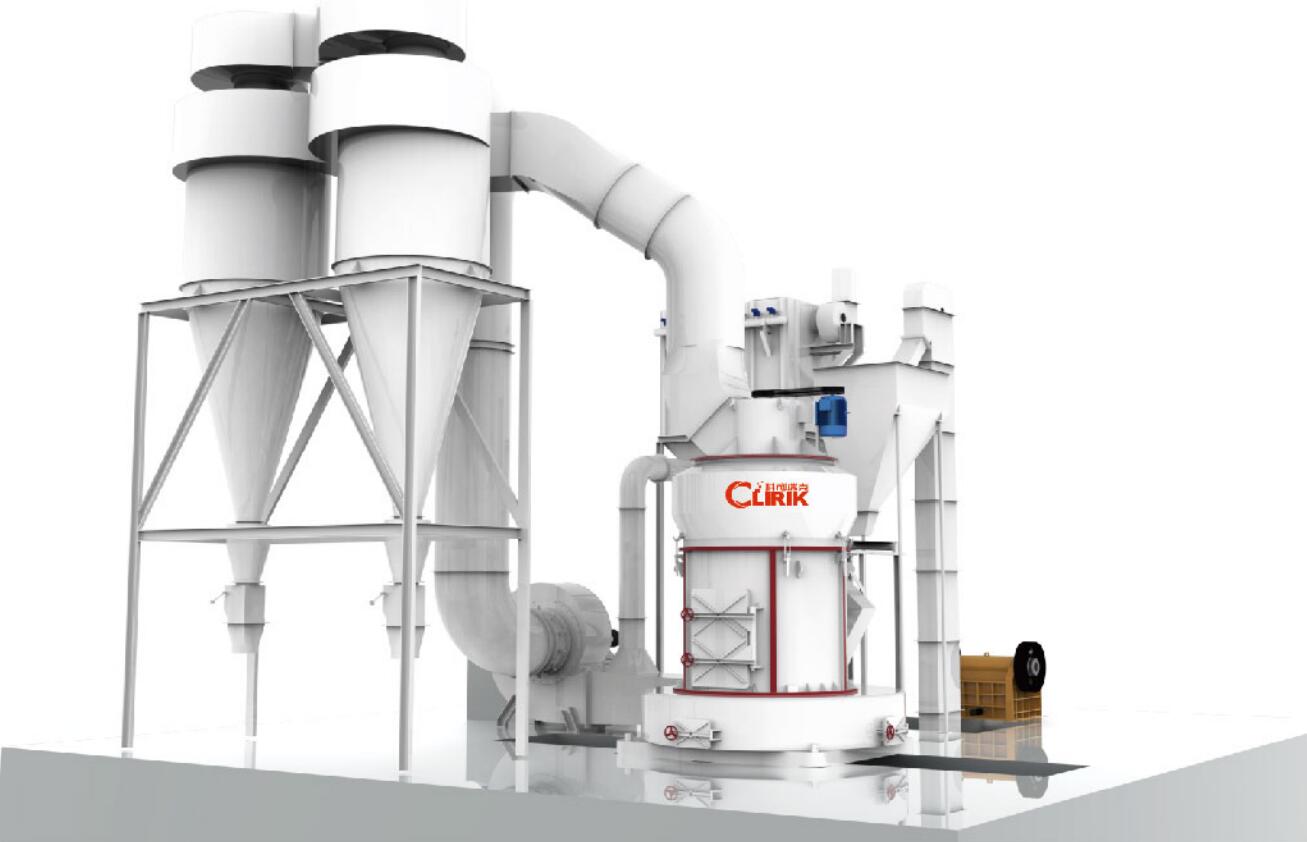
6.Clirik's Complete 2500 mesh plant Configuration
| Main equipment | Usage |
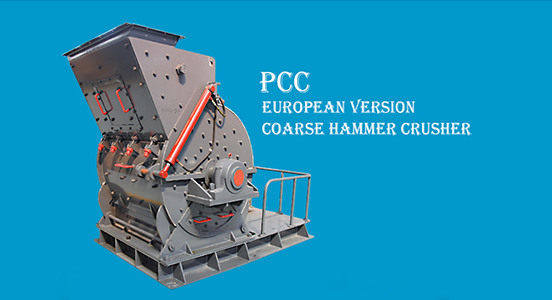
| Jaw / hammer crusher | Crush lump ore down to 10–30 mm |
| Bucket elevator | Transfer material to the silo |
| Storage silo | Store and homogenise feed ahead of the mill |
| Feeder | Meter material into the mill |
| Ring roller mill | Grind small particles into powder |
| Turbo classifier | Decides whether 2500 mesh is repeatable — the control point |
| Cyclone collector | Collect finished powder |
| Pulse bag filter | Final dedusting and emission compliance; condensation blinding is the main cause of downtime |
| Main fan (mounted after the filter) | Holds the whole system under negative pressure |
| PLC control panel | Interlocks and keeps the equipment above running as one line |

Read it as a single material flow: crushing → bucket elevator to silo → feeding → grinding → classification → collection and dedusting → conveying, all under negative pressure. Every item does exactly one job, and only two of them actually move the fineness — feed rate and classifier speed.
Some practical notes. Keep the stockyard rainproof and hold feed moisture at about 3% or below, otherwise fineness and output drop together. Set the bag filter's air-to-cloth ratio at 0.8–1.2 m/min with PTFE-laminated bags, and keep system temperature above dew point to prevent bag blinding.
Output typically comes in three bands — 1, 3 and 10 t/h:
The real value of a 1 t/h line is test data, not profit: it establishes your own ore's D97/D50 curve before you commit capital. And 5 µm D97 rarely exceeds 3 t/h on a single mill, so 10 t/h almost always means parallel units — which multiplies the complexity of dust collection, conveying and control.
7. Optional Add-Ons
The standard line above already covers the whole process from crushing to powder collection. Everything below is optional.| Add-on | Benefit |
| Surface treatment unit (stearic acid dosing, heated mixer, cooling) |
Sell coated rather than raw powder |
| Classifier upgrade: single-head to multi-head | Higher output at the same fineness |
| Secondary classification system | Lower top cut (D100), narrower distribution, fewer complaints |
| Iron removal equipment | Whiteness, uniform coating |
| Hot-air furnace, drying | High feed moisture, humid climate |
| Packing machine | Weight accuracy |
| Additional silo | Bulk storage without packing immediately |
8. FAQ
Is 2500 mesh the same as 5 microns?As trade shorthand, roughly — which is why contracts should state D97 ≤ 5 µm plus a D50 value, rather than a mesh number.
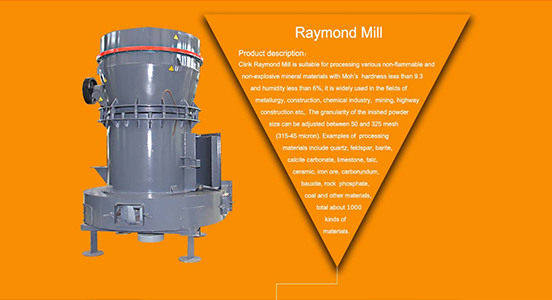
Can a Raymond mill reach 2500 mesh?
Raymond mills are mainly suited to 80–425 mesh. For a 2500 mesh project, a ring roller mill or an ultrafine vertical mill is a better fit.
What power consumption should I expect?
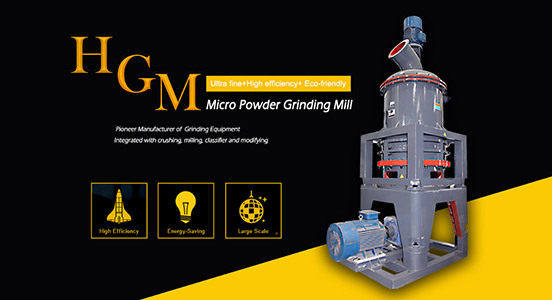
With our standard HGM80 configuration and a D97 ≤ 5 µm target, system power consumption is typically around 160 kWh/t. Always ask whether a quoted figure refers to the mill alone or to the whole system.
Why does my 2500 mesh powder still show white specks in PVC?
Check D100 and agglomerates first, rather than D97 alone; then check iron removal, moisture and dispersion.
How long do rollers and rings last?
It depends on ore hardness and composition. Ore with a high silica content tends to accelerate wear on mill wear parts.
9. Conclusion
2500 mesh is not a bill of materials — it is the chained result of four decisions: fineness definition, route selection, classifier and feed stability, and drying and packing reliability. Get the order wrong and no amount of equipment will hold a stable 5 µm. Send us your target output, D97/D50 and ore test report, and we will quote a configuration with a clearly defined scope of supply.Related Newsmore >>
- A Complete Plant Configuration for Ultrafine Calcium Carbonate Processing2026-09-28
- What to Consider Before Replacing Your Old Mill? Profit-Driven Equipment Upgrade2026-09-24
- CLIRIK Mid-Autumn Festival & National Day 2026 Holiday Notice2026-09-20
- Open-Circuit vs Closed-Circuit Raymond Mill Lines2026-09-17
- Grinding Barite for Oil Drilling: Why the Raymond Mill is the Industry Standard2026-09-16
- CLIRIK Exhibition Preview: Join Us at CHINACOAT & SFCHINA 2026 in Guangzhou2026-09-15