Complete Production Line from Limestone Raw Material to Ultrafine Modified Powder
Source:lanya
Posted:2026-10-09
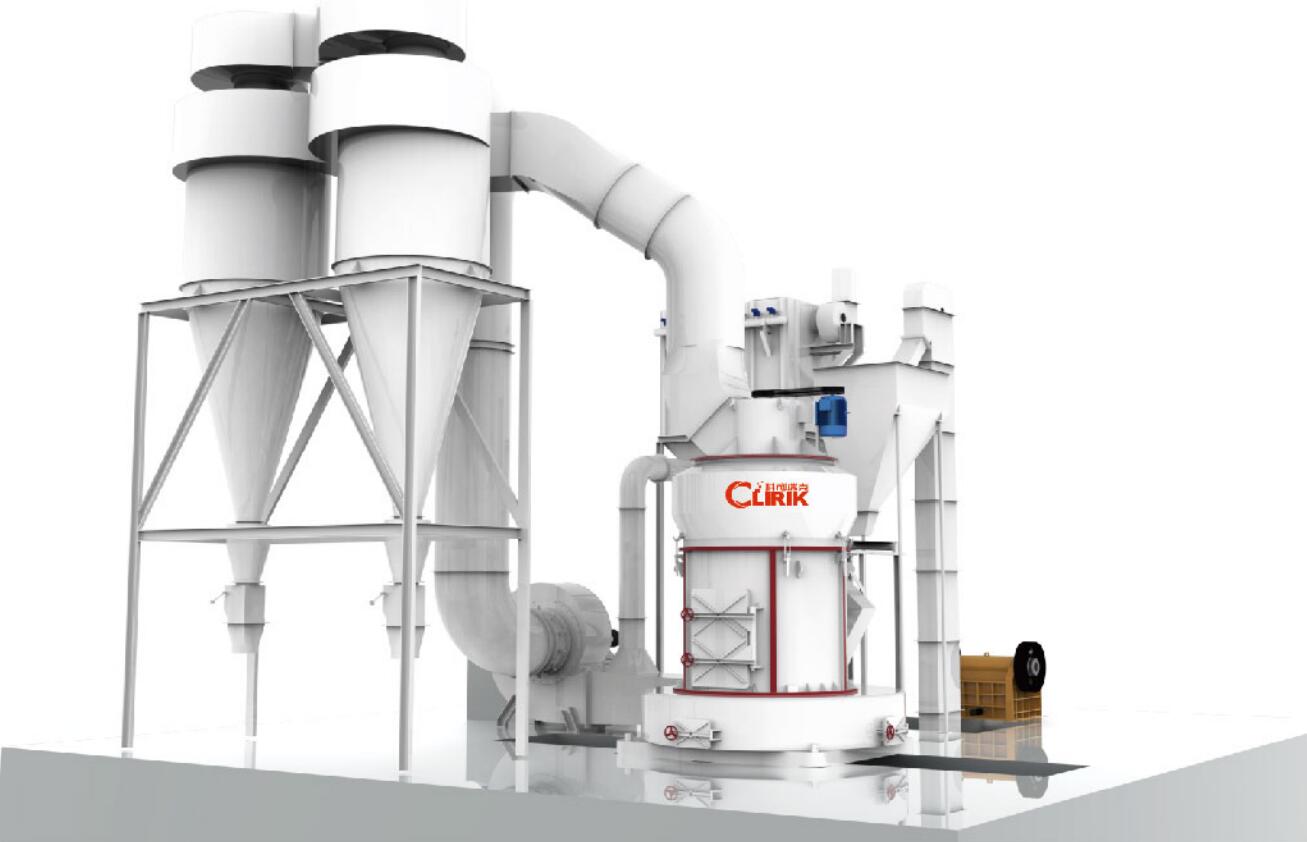
The demand for ultrafine modified powder continues to grow in applications such as PP woven bag fillers, plastic masterbatch, and coatings. Producing qualified ultrafine modified powder from limestone raw material is not achievable with a single grinding mill; it involves a complete process including crushing, grinding, classification, surface modification, dust removal, and packaging. Based on the Egypt PP woven bag filler project, this article systematically analyzes the process flow and key control points of a limestone ultrafine modified powder production line, and introduces the integrated dry process of HGM Micro Powder Grinding Mill + CLG Powder Surface Coating Machine from Shanghai Clirik Machinery Co., Ltd.

This article follows the sequence of raw material, grinding, classification, modification, dust removal and packaging, and whole-line control, analyzing the key equipment and process control points at each stage.
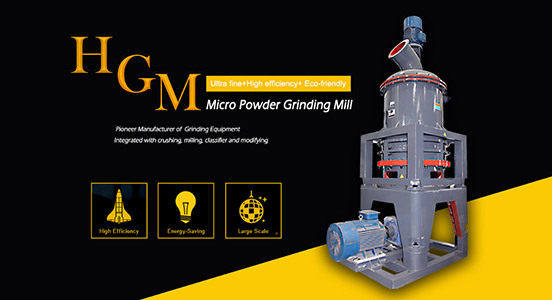
The HGM Micro Powder Grinding Mill is the core equipment of the ultrafine modified powder production line. It is suitable for small-capacity, ultrafine powder processing and can stably achieve a fineness of D98 12μm. The equipment is equipped with a classification system with adjustable fineness. The residual heat generated during grinding creates conditions for subsequent stearic acid coating, making it an important part of the integrated dry process.
The HGM Micro Powder Grinding Mill has been verified in the Egypt PP woven bag filler project. Combined with the CLG Powder Surface Coating Machine, it can stably produce ultrafine modified powder that meets the filling requirements of PP resin.
For large-capacity projects, the CLUM Vertical Roller Mill can be evaluated. The CLUM mill integrates grinding, classification, and conveying. Its advantages include uniform particle size distribution and uniform particle shape, making it suitable for large-scale ultrafine powder production lines. The specific selection should be comprehensively determined based on raw material quality, target particle size, capacity requirements, and modification needs.
Both the masterbatch and coating industries require narrow particle size distribution and uniform, stable particle size. A narrow particle size distribution ensures uniform filling in masterbatch and stable product strength, and also ensures uniform dispersion in coatings and smooth film formation. Therefore, the production line needs to be equipped with a high-precision classification system to stably control fineness indicators such as 10 microns and D98 12μm.
In the Egypt project, two sets of HGM100L-II + CLG600 modification units operate simultaneously. Each unit is independently equipped with a classification system and a modification system, allowing individual setting and adjustment of fineness and modification parameters without interference, flexibly adapting to different batches and different application requirements.

The entire production line requires closed negative pressure dust removal to ensure a safe working environment and operational safety. The finished product collection and packaging stages should be moisture-proof and contamination-proof. Before packaging, indicators such as activation degree, fineness, and whiteness can be tested to ensure the finished powder meets downstream application requirements.

1. Introduction: Core Stages of an Ultrafine Modified Powder Production Line
The core of ultrafine modified powder production is to process limestone raw material through grinding, classification, and surface modification into functional fillers that meet downstream application requirements. Taking PP woven bag filler as an example, the finished powder needs to reach a fineness of D98 12μm and possess good whiteness, dispersibility, and compatibility. This requires the production line to have not only stable grinding and classification capabilities but also an efficient surface modification system, along with closed negative pressure dust removal and automated control throughout the process.This article follows the sequence of raw material, grinding, classification, modification, dust removal and packaging, and whole-line control, analyzing the key equipment and process control points at each stage.
2. Raw Material: Limestone Quality Requirements and Pretreatment
2.1 Raw Material Quality Requirements
The quality of limestone raw material directly determines the basic performance of the finished powder. For producing ultrafine modified powder, the raw material is generally required to meet the following conditions:- High purity: High calcium carbonate content and low impurities ensure stable product performance after filling;
- High whiteness: Raw material whiteness plays a decisive role in the whiteness of the finished powder. The Egypt project uses raw material with a whiteness of 93.5;
- Stable composition: Small batch-to-batch grade fluctuations facilitate stable production line control.
2.2 Pretreatment Before Grinding
Before entering the mill, limestone raw material needs to undergo crushing, impurity removal, and homogenization:- Crushing to a suitable feed size to ensure stable mill operation;
- Controlling feed moisture; excessive moisture affects grinding efficiency and subsequent modification;
- Impurity removal and homogenization to reduce the impact of impurities on whiteness and finished product quality.
2.3 Raw Material Inspection Points
Before production, raw materials should be inspected, mainly including:- Whiteness testing;
- Calcium carbonate content analysis;
- Particle size and moisture measurement;
- Assessment of the impact of wear parts on whiteness.
3. Grinding: Selection of HGM Micro Powder Grinding Mill and CLUM Vertical Roller Mill
3.1 HGM Micro Powder Grinding Mill
The HGM Micro Powder Grinding Mill is the core equipment of the ultrafine modified powder production line. It is suitable for small-capacity, ultrafine powder processing and can stably achieve a fineness of D98 12μm. The equipment is equipped with a classification system with adjustable fineness. The residual heat generated during grinding creates conditions for subsequent stearic acid coating, making it an important part of the integrated dry process.
The HGM Micro Powder Grinding Mill has been verified in the Egypt PP woven bag filler project. Combined with the CLG Powder Surface Coating Machine, it can stably produce ultrafine modified powder that meets the filling requirements of PP resin.
3.2 CLUM Vertical Roller Mill
For large-capacity projects, the CLUM Vertical Roller Mill can be evaluated. The CLUM mill integrates grinding, classification, and conveying. Its advantages include uniform particle size distribution and uniform particle shape, making it suitable for large-scale ultrafine powder production lines. The specific selection should be comprehensively determined based on raw material quality, target particle size, capacity requirements, and modification needs.
3.3 Key Grinding Control Points
- Feed moisture control to ensure grinding efficiency and powder flowability;
- Stable mill operating parameters to avoid fineness fluctuations;
- Classifier speed matched to target fineness;
- Wear part wear management to ensure stable whiteness.
4. Classification: Particle Size Distribution Control and High-Precision Classification
Both the masterbatch and coating industries require narrow particle size distribution and uniform, stable particle size. A narrow particle size distribution ensures uniform filling in masterbatch and stable product strength, and also ensures uniform dispersion in coatings and smooth film formation. Therefore, the production line needs to be equipped with a high-precision classification system to stably control fineness indicators such as 10 microns and D98 12μm.
In the Egypt project, two sets of HGM100L-II + CLG600 modification units operate simultaneously. Each unit is independently equipped with a classification system and a modification system, allowing individual setting and adjustment of fineness and modification parameters without interference, flexibly adapting to different batches and different application requirements.
5. Modification: CLG Powder Surface Coating Machine Coating Process
5.1 Role of the CLG Powder Surface Coating Machine
The CLG Powder Surface Coating Machine mainly performs surface coating modification on the ultrafine limestone powder produced by the HGM mill. Through high-speed mixing and the introduction of a modifier, a uniform coating layer is formed on the powder surface, effectively solving the agglomeration problem of ultrafine powder and significantly improving the compatibility and dispersibility of the powder with PP resin. It is a key process for ensuring the quality of finished woven bags.5.2 Key Process Parameters
- Powder temperature entering the coating machine: 85–110°C;
- Moisture of material entering the coating machine: ≤0.5%;
- Modifier addition amount: precisely controlled by loss-in-weight feeding;
- Regular inspection and replacement of internal mixing components of the coating machine.
5.3 Advantages of the Integrated Dry Process
The integrated dry process of HGM ultrafine mill combined with CLG Powder Surface Coating Machine can utilize the residual heat generated during grinding for stearic acid coating without additional heating, making it more energy-efficient than secondary modification of purchased powder. At the same time, the powder is under integrated control from grinding to modification, ensuring stable and controllable quality, and avoiding quality fluctuations and cost losses caused by transportation, storage, and secondary processing of purchased powder.6. Dust Removal and Packaging: Closed Negative Pressure and Finished Product Collection
The entire production line requires closed negative pressure dust removal to ensure a safe working environment and operational safety. The finished product collection and packaging stages should be moisture-proof and contamination-proof. Before packaging, indicators such as activation degree, fineness, and whiteness can be tested to ensure the finished powder meets downstream application requirements.
7. Whole-Line Control: Key Process Parameters and Automation
The core of whole-line control is to stabilize process parameters at each stage, mainly including:- Regular calibration of the loss-in-weight feeding system to ensure stable modifier addition ratio;
- Stable mill feed flow to avoid modification effect fluctuations;
- Powder temperature maintained in the 85–110°C range;
- Online monitoring of fineness, whiteness, and activation degree;
- Independent setting and adjustment of two units to flexibly adapt to different batches and applications.
8. Frequently Asked Questions
Q1: Can I use only the HGM Micro Powder Grinding Mill without the CLG Powder Surface Coating Machine and supply directly to a PP factory?
No. Unmodified ultrafine powder is highly prone to agglomeration and cannot be uniformly dispersed in PP resin. Direct use will cause rough surface, reduced strength, and unstable quality of the finished woven bags. Therefore, surface treatment by the CLG Powder Surface Coating Machine is necessary before the powder can meet the requirements for PP woven bag filler.Q2: Will the whiteness decrease significantly after modification?
No. Whiteness mainly depends on the quality of the raw ore and the wear degree of wear parts. Under the premise of reasonable equipment selection and proper wear part management, grinding and modification have minimal impact on whiteness, and the finished powder whiteness can remain stable.Q3: If the powder temperature is too low and it enters the CLG Powder Surface Coating Machine directly, will the modification effect be affected?
Yes. Stearic acid dry coating requires the powder to maintain a process temperature of 85–110°C. If the mill discharge temperature is too low, the modifier cannot fully melt, and the coating activation rate decreases. It is recommended to utilize the residual heat of the mill discharge or equip an auxiliary heating system to ensure the powder entering the coating machine reaches the process temperature.Q4: What are the main reasons for unstable modifier addition ratio and fluctuating activation degree?
Common reasons include: loss-in-weight feeding equipment failure or inaccurate calibration, powder feed flow fluctuation, unstable powder feed temperature, and wear of internal mixing components of the coating machine. It is necessary to regularly calibrate the loss-in-weight feeding system, stabilize the mill feed flow, maintain powder temperature in the 85–110°C range, and regularly check the wear of the coating machine mixing blades.Q5: For large-capacity projects, should I choose HGM or CLUM Vertical Roller Mill?
For small-capacity projects, the HGM Micro Powder Grinding Mill is preferred; for large-capacity projects, the CLUM Vertical Roller Mill can be evaluated. The CLUM mill has certain advantages in particle size uniformity and particle shape uniformity. The specific selection should be comprehensively determined based on raw material quality, target particle size, capacity requirements, and modification needs.
9. Conclusion: Value of Clirik's Complete Line Solution
From limestone raw material to ultrafine modified powder, a complete production line requires the coordination of grinding, classification, modification, dust removal, and control. Shanghai Clirik Machinery Co., Ltd. provides the integrated dry process of HGM Micro Powder Grinding Mill + CLG Powder Surface Coating Machine, utilizing residual grinding heat for stearic acid coating. It is suitable for PP woven bag filler, plastic masterbatch, coatings, and other application scenarios. If you are planning an ultrafine calcium carbonate or limestone powder grinding and modification project, please contact us. We will provide suitable equipment selection and complete line solutions based on raw material quality, target particle size, capacity requirements, and modification needs.Related Newsmore >>
- Complete Production Line from Limestone Raw Material to Ultrafine Modified Powder2026-10-09
- CLIRIK 2026 National Day Holiday Notice2026-10-01
- A Complete Plant Configuration for Ultrafine Calcium Carbonate Processing2026-09-28
- What to Consider Before Replacing Your Old Mill? Profit-Driven Equipment Upgrade2026-09-24
- CLIRIK Mid-Autumn Festival & National Day 2026 Holiday Notice2026-09-20
- Open-Circuit vs Closed-Circuit Raymond Mill Lines2026-09-17