Open vs Closed Circuit Raymond Mill: Design Differences & CLRM Series Solution
Source:clirikb
Posted:2026-10-22
What is the real difference between open-circuit and closed-circuit Raymond mills?
Open and closed circuit describe how air moves through the system.
The choice depends on material flammability, workshop cleanliness requirements and heat control needs.
This guide breaks down both designs in plain language.
It compares their pros and cons across real operating factors.
It uses CLIRIK CLRM series Raymond mill as a real example of optimized closed-circuit design.

It has four core parts.
1\ Grinding rollers and a grinding ring crush large feed particles.
2\ A classifier separates fine powder from oversized coarse particles.
3\ A dust collection system captures qualified fine product.
4\ A return system sends hot air back into the grinding zone for reusing and heating.

That return system is the defining difference between the two circuit types.
In a closed circuit, cleaned air recirculates back into the mill.
In an open circuit, air vents out after dust collection and fresh air pulls in.
Everything else about the basic grinding mechanism stays the same.
Grinding rollers crush and shear the material.
Airflow carries ground material up to the classifier.
Qualified fine powder moves on to the product collector.
An open-circuit system removes the closed-loop components.

Open circuit specialties:
1\ It takes out the cyclone return loop.
2\ It removes the return air duct.
3\ No hot air circulates back to the mill.
The system keeps the main grinding unit, built-in classifier impeller, dust collector, and high-pressure induced draft fan.
Air flows straight in and straight out.
The rear fan pulls air continuously.
The whole line runs under negative pressure from feed to grinding to collection.
Fresh room-temperature air flows into the chamber.
After one pass, qualified powder travels with the air to the end-point collector.
Cleaned air vents outside. No hot air or airflow returns to the main unit.
Coarse particles discharge out of the system.
Temperature rises moderately inside the chamber.
Fresh incoming air keeps this rise within an acceptable range.
It does not drop to very low levels.
For heat-sensitive or flammable materials, this steady air exchange reduces fire or explosion risk.
Material processing temperature stays fully controlled. This is why open circuit fits heat-sensitive materials.

It handles flammable or explosive dust safely.
Closed-circuit systems can also be fitted with explosion-proof components.
But for highly flammable materials, open circuit is still the recommended choice.
Continuous fresh air dilution prevents heat and dust concentration buildup.
Even with a dust collector, small amounts of fine dust can escape with the exhaust air.
Workshop dust levels are higher than with a properly sealed closed circuit.
Extra end-of-pipe filtration is often needed to meet strict environmental standards.

The main grinding unit.
The classifier.
The cyclone collector.
The pulse dust collector.
The return air duct.
The whole air loop is fully sealed.
Raw material enters the mill. Grinding rollers crush it. Airflow carries material up to the classifier.
Qualified fine powder passes through. It goes to the dust collector and becomes finished product.
Coarse particles fail the classification cut. Centrifugal force flings them outward.
They slide down the wall and go back to the mill inlet. They get ground again.
This loop keeps running until particles reach target fineness.
The classifier keeps sending failures back. Only qualified powder graduates.
Almost no dust leaks out.
Workshop environment stays clean.
Environmental compliance is easy to achieve.
This is the biggest advantage over open circuit.
No need to constantly heat or cool large volumes of fresh air.
The fan works against lower resistance.
Unit power consumption per ton is 15–30% lower than open circuit.
Long-term operating cost is significantly lower.
No need for extra large end-of-pipe filtration.
Total equipment cost is lower than open circuit.
Published industry data confirms these advantages.
For the same production scale, closed circuit delivers lower operating cost and better dust control.
Heat accumulation. Hot air keeps circulating. Heat accumulates inside the chamber.
In summer, continuous production can push chamber temperature to 70–80°C. Material gets warm.
For heat-sensitive or flammable materials, this heat creates safety risk.
How to manage heat in closed circuit:
1\ Fit explosion-proof motors and components for flammable materials.
2\ Monitor chamber temperature continuously.
3\ For highly flammable materials, switch to open circuit design.
Closed Circuit Is More Eco-Friendly
A properly configured closed-circuit line uses a qualified pulse dust collector. Sealed pipework keeps dust inside. Field tests show closed circuit easily meets current emission standards. Dust-free operation is achievable.
The real difference between open and closed circuit is operating cost. Closed circuit is cheaper to run long-term. Power is 15–30% lower per ton. Wear parts last longer. Open circuit burns more energy. Cartridge replacement costs add up over time. For 90% of conventional non-metallic ore projects, closed circuit is the better economic choice.
Open circuit is not "greener". It is specialized. It exists for materials that closed circuit cannot safely or stably handle.
Do not blindly pick open circuit just because it sounds "cleaner". If you grind conventional ore, closed circuit with pulse dust collection meets environmental rules and costs less.

First, higher collection efficiency. Two cyclones handle higher air volume than a single unit. The system captures more fine powder. Product yield rises.
Second, lower pressure drop. Air splits between two cyclone barrels. Each cyclone sees less flow. The fan does not work as hard. Energy per ton drops.
Third, more stable operation. If one cyclone needs maintenance, the other keeps running. Production does not stop completely.
The grinded powder are carried by the airflow from the blower to the classifier to be classified, the particles which meet the fineness enter cyclone collector through pipe.
And are separated and collected there.
They are discharged at the discharging valve to become finished products;the airflow is sucked to the blower by return pipe on the top of cyclone collector.
The whole airflow system is a sealed circulation, and is circulated under positive and negative air pressure.
Compared with the previous mill the grind pressure increased 10%, grinding area up 15-20%. Optimized the roller layout escalated the efficient grinding space.
Triple vibrating damping for working stability
Triple damping to resist the vibrating transmit in the main unit base, volute airflow house, unit body, grinding part Be sure the stable grinding condition.
New type impeller of classifier with VFD
Equipped the new cage type impeller for classifier, adjust the speed freely by VFD, enlarge the output size range to 80-425 mesh
Grinding device adopts superimposed multistage seal, prolong the lubricating cycle.
Environmental compliance is easier.
If you are planning a powder line and need help choosing between open and closed circuit, contact our technical team. Send us your material type, target fineness and output requirements. We will recommend the right CLRM configuration for your project.
Open and closed circuit describe how air moves through the system.
The choice depends on material flammability, workshop cleanliness requirements and heat control needs.
This guide breaks down both designs in plain language.
It compares their pros and cons across real operating factors.
It uses CLIRIK CLRM series Raymond mill as a real example of optimized closed-circuit design.
1.What a Raymond Mill Actually Does?
A Raymond mill grinds ore, limestone, calcite, barite and similar non-metallic minerals into fine powder.It has four core parts.
1\ Grinding rollers and a grinding ring crush large feed particles.
2\ A classifier separates fine powder from oversized coarse particles.
3\ A dust collection system captures qualified fine product.
4\ A return system sends hot air back into the grinding zone for reusing and heating.
That return system is the defining difference between the two circuit types.
In a closed circuit, cleaned air recirculates back into the mill.
In an open circuit, air vents out after dust collection and fresh air pulls in.
Everything else about the basic grinding mechanism stays the same.
2.Open Circuit: Built for Heat-Sensitive and Explosive Materials
2.1How It Works
Raw material feeds into the grinding chamber.Grinding rollers crush and shear the material.
Airflow carries ground material up to the classifier.
Qualified fine powder moves on to the product collector.
An open-circuit system removes the closed-loop components.
Open circuit specialties:
1\ It takes out the cyclone return loop.
2\ It removes the return air duct.
3\ No hot air circulates back to the mill.
The system keeps the main grinding unit, built-in classifier impeller, dust collector, and high-pressure induced draft fan.
Air flows straight in and straight out.
The rear fan pulls air continuously.
The whole line runs under negative pressure from feed to grinding to collection.
Fresh room-temperature air flows into the chamber.
After one pass, qualified powder travels with the air to the end-point collector.
Cleaned air vents outside. No hot air or airflow returns to the main unit.
Coarse particles discharge out of the system.
2.2Pros of Open Circuit
1\ Controlled temperature rise.
Friction from grinding produces some heat.Temperature rises moderately inside the chamber.
Fresh incoming air keeps this rise within an acceptable range.
It does not drop to very low levels.
For heat-sensitive or flammable materials, this steady air exchange reduces fire or explosion risk.
Material processing temperature stays fully controlled. This is why open circuit fits heat-sensitive materials.
2\ Compatible with explosion protection.
Open circuit works well with explosion-proof motors, venting panels and nitrogen inerting systems.It handles flammable or explosive dust safely.
Closed-circuit systems can also be fitted with explosion-proof components.
But for highly flammable materials, open circuit is still the recommended choice.
Continuous fresh air dilution prevents heat and dust concentration buildup.
2.3Cons of Open Circuit
1\ Higher dust emission risk.
Open circuit discharges tail air to the outside.Even with a dust collector, small amounts of fine dust can escape with the exhaust air.
Workshop dust levels are higher than with a properly sealed closed circuit.
Extra end-of-pipe filtration is often needed to meet strict environmental standards.
2\ Higher energy per ton.
The rear high-pressure induced draft fan runs at full load all the time. No hot air gets recycled. Reactive losses are high. Unit power consumption is higher. Over long continuous production, the energy bill is noticeably higher.3\ Higher initial investment.
Open circuit needs a large cartridge dust collector and a high-power fan. Upfront equipment cost is higher than closed circuit. Replacement costs keep adding up over time.| Item | Closed Circuit | Open Circuit |
| Air path | Sealed loop, hot air returns | Straight through, fresh air only |
| Dust leakage risk | Possible if seals age | Near-zero under negative pressure |
| Standard explosion-proof option | Not available | Full explosion-proof kits supported |
| Initial investment | Lower | Higher |
| Best suited materials | Conventional non-metallic minerals | Heat-sensitive, flammable dust-forming materials |
3.Closed Circuit: Air Goes Back
3.1How It Works
A closed-circuit system includes five main units.The main grinding unit.
The classifier.
The cyclone collector.
The pulse dust collector.
The return air duct.
The whole air loop is fully sealed.
Raw material enters the mill. Grinding rollers crush it. Airflow carries material up to the classifier.
Qualified fine powder passes through. It goes to the dust collector and becomes finished product.
Coarse particles fail the classification cut. Centrifugal force flings them outward.
They slide down the wall and go back to the mill inlet. They get ground again.
This loop keeps running until particles reach target fineness.
The classifier keeps sending failures back. Only qualified powder graduates.
3.2Pros
1\ Very low dust emission.
The fully sealed loop runs under negative pressure.Almost no dust leaks out.
Workshop environment stays clean.
Environmental compliance is easy to achieve.
This is the biggest advantage over open circuit.
2\ Lower energy consumption.
Air recirculates within the system.No need to constantly heat or cool large volumes of fresh air.
The fan works against lower resistance.
Unit power consumption per ton is 15–30% lower than open circuit.
Long-term operating cost is significantly lower.
3\ Lower initial investment.
No need for an oversized induced draft fan.No need for extra large end-of-pipe filtration.
Total equipment cost is lower than open circuit.
Published industry data confirms these advantages.
For the same production scale, closed circuit delivers lower operating cost and better dust control.
3.3Cons and How to Manage Them
Closed circuit has two notable pain points.Heat accumulation. Hot air keeps circulating. Heat accumulates inside the chamber.
In summer, continuous production can push chamber temperature to 70–80°C. Material gets warm.
For heat-sensitive or flammable materials, this heat creates safety risk.
How to manage heat in closed circuit:
1\ Fit explosion-proof motors and components for flammable materials.
2\ Monitor chamber temperature continuously.
3\ For highly flammable materials, switch to open circuit design.
Closed Circuit Is More Eco-Friendly
A properly configured closed-circuit line uses a qualified pulse dust collector. Sealed pipework keeps dust inside. Field tests show closed circuit easily meets current emission standards. Dust-free operation is achievable.
The real difference between open and closed circuit is operating cost. Closed circuit is cheaper to run long-term. Power is 15–30% lower per ton. Wear parts last longer. Open circuit burns more energy. Cartridge replacement costs add up over time. For 90% of conventional non-metallic ore projects, closed circuit is the better economic choice.
Open circuit is not "greener". It is specialized. It exists for materials that closed circuit cannot safely or stably handle.
4.Which Material Goes Where
4.1Choose Closed Circuit
Pick closed circuit for conventional non-metallic ore. Calcite, limestone, talc, kaolin, barite, ground calcium carbonate. These materials have no low-temperature or explosion-proof requirements. The core goal is stable high output, low per-ton cost, long continuous production. Closed circuit is mature, reliable, energy-saving and produces good-quality powder. It fits building-material fillers, plastic fillers, ordinary coating powder.4.2Choose Open Circuit
Pick open circuit for heat-sensitive or flammable materials. Carbon black, activated carbon, coal powder, sulfur. These materials degrade or cake when hot. Some can explode if dust accumulates. Open circuit keeps the chamber cool. It supports full explosion protection. It removes the safety risk at the source.Do not blindly pick open circuit just because it sounds "cleaner". If you grind conventional ore, closed circuit with pulse dust collection meets environmental rules and costs less.
5.CLRM Series Design: Built Around Closed Circuit
Now let us look at how we design CLIRIK Raymond mills. The CLRM series is built from the ground up for closed-circuit operation at first. You do not bolt a return loop onto a basic mill. The whole system is designed as one integrated closed-circuit unit.
5.1Integrated Double Cyclone Design
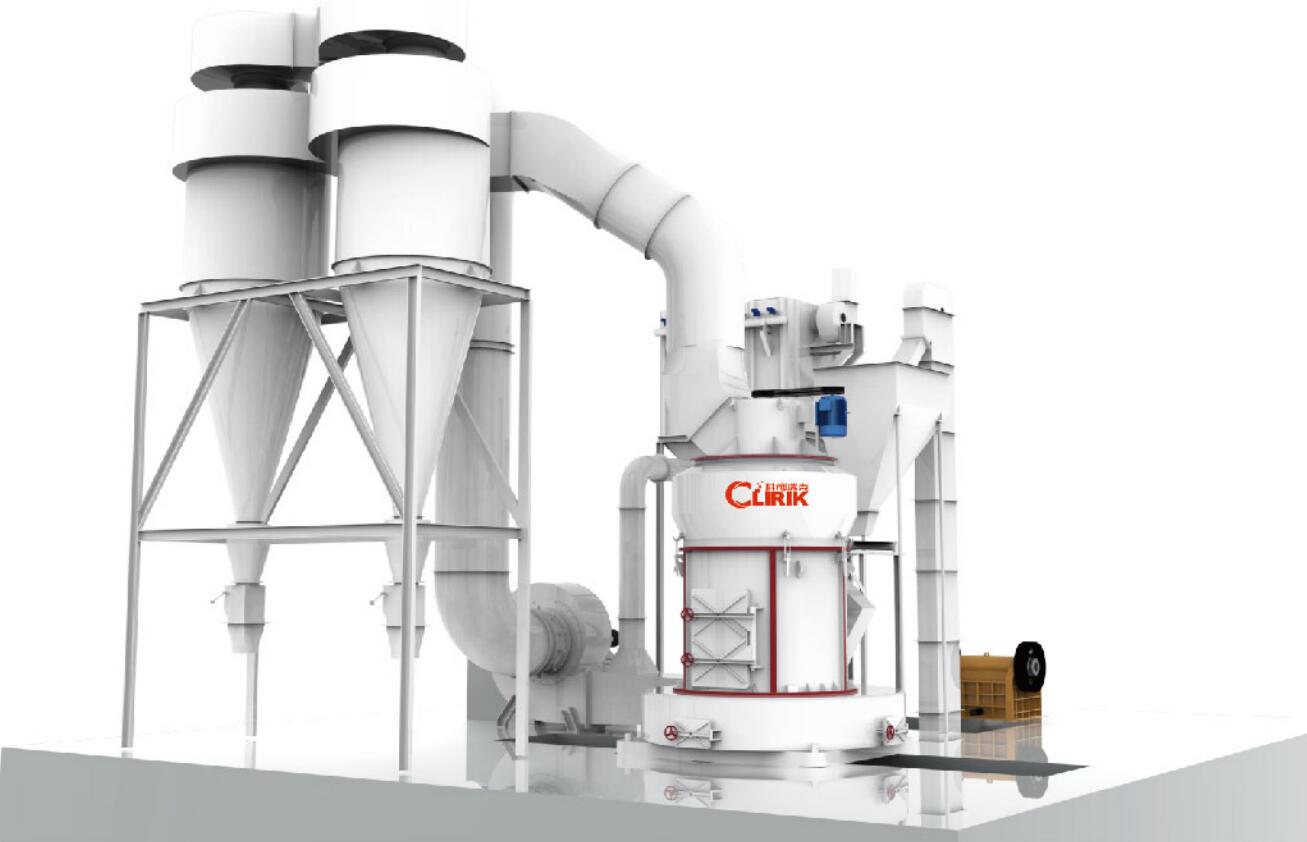
The CLRM1620 general arrangement uses a double-cyclone configuration. Two cyclone dust collectors work in parallel. This design delivers three key advantages.First, higher collection efficiency. Two cyclones handle higher air volume than a single unit. The system captures more fine powder. Product yield rises.
Second, lower pressure drop. Air splits between two cyclone barrels. Each cyclone sees less flow. The fan does not work as hard. Energy per ton drops.
Third, more stable operation. If one cyclone needs maintenance, the other keeps running. Production does not stop completely.
5.2Working Principle of CLRM Mill
Big materials are crushed by jaw crusher to the required particle sizes, and carried by bucket elevator to the storage hopper, and are fed evenly and continuously by vibrating feeder into the main unit for grinding.The grinded powder are carried by the airflow from the blower to the classifier to be classified, the particles which meet the fineness enter cyclone collector through pipe.
And are separated and collected there.
They are discharged at the discharging valve to become finished products;the airflow is sucked to the blower by return pipe on the top of cyclone collector.
The whole airflow system is a sealed circulation, and is circulated under positive and negative air pressure.
5.3Working Features of CLRM Mill
Optimized grinding part, increase grinding efficiencyCompared with the previous mill the grind pressure increased 10%, grinding area up 15-20%. Optimized the roller layout escalated the efficient grinding space.
Triple vibrating damping for working stability
Triple damping to resist the vibrating transmit in the main unit base, volute airflow house, unit body, grinding part Be sure the stable grinding condition.
New type impeller of classifier with VFD
Equipped the new cage type impeller for classifier, adjust the speed freely by VFD, enlarge the output size range to 80-425 mesh
Grinding device adopts superimposed multistage seal, prolong the lubricating cycle.
5.4Sealed Negative-Pressure Layout
The whole CLRM system runs under negative pressure. No dust leaks out.Environmental compliance is easier.
5.5Why This Design Matters
The CLRM design removes the three biggest closed-circuit pain points. It reduces blockage risk with shorter internal return paths. Plant owners get all the benefits of closed circuit without the usual drawbacks.If you are planning a powder line and need help choosing between open and closed circuit, contact our technical team. Send us your material type, target fineness and output requirements. We will recommend the right CLRM configuration for your project.
FAQ
Q1: Does closed circuit produce finer powder than open circuit?
No. Powder fineness is determined by the classifier, not the circuit type. An open circuit with a high-precision classifier can also produce fine powder. Open and closed circuit describe air circulation mode, not fineness level.Q2: What materials must use open circuit grinding?
Heat-sensitive materials and flammable/explosive materials such as coal, sulfur, carbon black and some chemical powders. Closed circuit builds up heat and creates fire or explosion risk. Open circuit draws in fresh cool air continuously to control temperature.Q3: Is the CLRM Raymond mill open or closed circuit?
The CLRM series comes factory-configured as closed circuit. It also has reserved ports for open-circuit retrofit to fit different material requirements later.Q4: Is open circuit better for environmental compliance?
No. A properly sealed closed circuit with pulse dust collection meets strict emission standards. Open circuit discharges tail air that may carry fine dust and often needs extra end-of-pipe treatment.Q5: Is closed circuit more expensive to build?
Actually no. Closed circuit uses return air circulation and does not need an extra high-power make-up fan. Total capital cost is lower and running electricity cost is also lower.Related Newsmore >>
- Open vs Closed Circuit Raymond Mill: Design Differences & CLRM Series Solution2026-10-22
- CLIRIK Welcomes Global Customers for On-Site Factory Inspection & Technical Exchange2026-10-19
- Particle Size Distribution (PSD) Technical Guide2026-10-15
- CLIRIK Double Ninth Festival 2026 Message2026-10-12
- Calcium Carbonate Modification: Functions and Downstream Application Analysis2026-10-10
- Complete Production Line from Limestone Raw Material to Ultrafine Modified Powder2026-10-09