How Ultrafine Grinding Mills Address Structural Imbalance in Ground Calcium Carbonate Industry?
Source:clirikb
Posted:2026-08-20
We have based on the latest industrial data of the global GCC market to analyzes the deep-seated performance of capacity mismatch.
We will also dissects the adaptability shortcomings of traditional calcium carbonate grinding equipment, and sorts out the technical characteristics and selection logic of the new generation of calcium carbonate grinding mills represented by the CLIRIK HGM ultrafine grinding mill.
It provides practical reference for powder production enterprises in production line upgrading and equipment procurement.

Plastics account for more than 40% of total demand, while coatings, adhesives & sealants, and papermaking remain the other core application scenarios.

Beneath the huge total volume, the problem of structural imbalance in production capacity is extremely prominent:
Such products have low technical barriers and severe homogenization.
Market prices have been under pressure for years, with gross profit per ton generally less than 50 yuan.
A large number of small and medium-sized enterprises are operating on the edge of break-even.
Affected by fluctuations in traditional building materials demand, many small and medium-sized production lines operate at low utilization rates, and the pressure of market clearing continues to increase.
The domestic nominal ultrafine GCC capacity is about 8.6 million tons per year, but the actual output in the first half of 2026 was only 3.987 million tons, with an overall capacity utilization rate of only 46.4%.
This figure does not mean that ultrafine powder capacity is surplus.
The reality is that most so-called ultrafine production lines can only stably produce products of around 800 mesh.
They cannot achieve long-term stable mass production of narrow-distribution ultrafine powder above 1250 mesh, nor can they support stable surface activation modification processes.
The effective capacity that can truly meet the strict indicators of degradable plastics, high-end silicone sealants and water-based industrial coatings accounts for less than 30% of the total nominal capacity.
The huge difference in profitability further amplifies the impact of structural mismatch.
At present, the gross profit per ton of 1250-mesh dry-method activated GCC can reach 150–250 yuan, and the profit margin of 2500-mesh high-purity functional powder is even higher.
This drives a large number of calcium carbonate enterprises to launch production line technological transformation, and directly boosts the market demand for high-end calcium carbonate grinding mills represented by HGM ultrafine series.

According to Dataintelo’s 2025 Global GCC Market Report, the global ground calcium carbonate market size reached 24.07 billion US dollars in 2025, and is expected to grow to 36.9 billion US dollars by 2034, with a compound annual growth rate of about 4.8%.
The Asia-Pacific region accounts for 46.5% of the global market share by virtue of its manufacturing foundation and resource endowment.
Public investment plans of global GCC industry leaders Omya and Imerys show that between 2024 and 2026, 42% of their new project investments are directed to micronized grinding production lines and surface coating modification lines.
Instead of simply expanding general powder capacity, they customize functional GCC products with differentiated particle size distribution, activation degree and oil absorption value according to the specific indicators of downstream plastics, coatings and sealant customers.
Behind this transformation is a clear market signal: in European and North American markets, the average annual price increase of general-purpose GCC products is less than 2%, and market growth has largely stagnated.
In contrast, customized functional powders for different scenarios achieve a compound annual price growth rate of 6%–8%, with significantly higher customer loyalty and premium capacity.
Meanwhile, circular economy policies in Europe and mine resource control policies in North America push local enterprises to use quarry tailings and low-grade limestone to produce high-value-added ultrafine fillers, putting forward stricter requirements on raw material adaptability, impurity control capability and energy consumption level of calcium carbonate grinding mills.

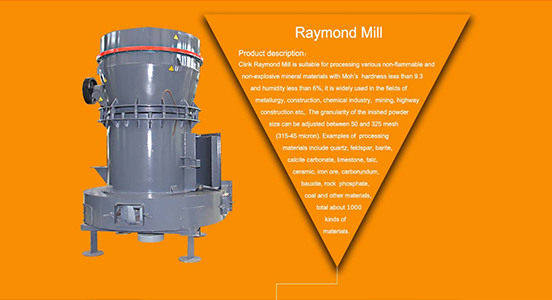
Traditional general grinding equipment such as Raymond mills have mature technology and stable operation in coarse powder production below 400 mesh.
However, when the fineness rises above 1250 mesh, output will decline sharply, with wide particle size distribution and ineffective removal of coarse particles.
It is difficult to meet the “zero tolerance” requirement for large particles in degradable plastics and high-end sealants.
In China, a large number of nominal ultrafine production lines can only stably produce 800-mesh products in practice, which is essentially limited by the classification capability of equipment.
Relying only on the grinding host cannot achieve precise particle size cutting.
Only with a high-precision classification system can narrow-distribution ultrafine powder be produced stably.
This is exactly the core structural advantage of the HGM ultrafine calcium carbonate grinding mill over traditional Raymond mills.

Traditional grinding production lines mostly operate as independent single machines, and grinding and surface modification are two separate processes.
Ultrafine calcium carbonate has large specific surface area and high surface energy.
After grinding, it is very prone to secondary agglomeration through cooling, transportation and storage links.
In the subsequent modification process, the modifier can only coat the outer surface of agglomerates, and internal particles cannot be effectively activated.
As a result, the activation uniformity of finished products is insufficient, which cannot meet the performance requirements of high-end polymer fillers.
This means that upgrading only the grinding host cannot fully realize the product upgrade to functional powder.
Equipment supply must extend from single-machine equipment to whole-line process solutions.
The HGM calcium carbonate grinding mill system supports integrated configuration of grinding and online modification, which directly solves this industry pain point.
Traditional Raymond mills are suitable for 50–400 mesh coarse GCC products. The HGM ultrafine calcium carbonate grinding mill covers 150–3000 mesh, and can stably produce 800–2500 mesh narrow-distribution ultrafine GCC for high-end applications.
2\ What are the advantages of HGM ultrafine mill for calcium carbonate processing?
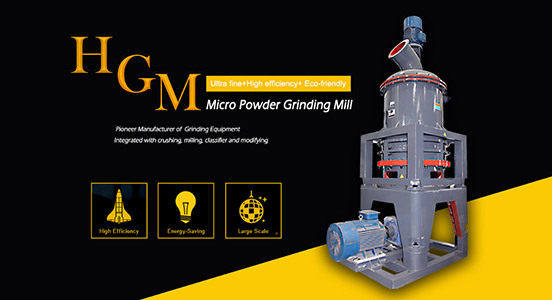
The HGM mill adopts closed-circuit grinding with built-in cage classifier, achieving precise particle size control. It supports grinding-modification integration, has 20–30% lower energy consumption than traditional lines, and features fully enclosed environmental protection structure and intelligent batch stability control.
3\ How much energy does an HGM calcium carbonate grinding mill consume per ton?
For 1250-mesh calcite GCC production, the unit power consumption of the HGM ultrafine mill is 75–90 kWh/t, which is significantly lower than the 110–140 kWh/t of traditional old production lines.
We will also dissects the adaptability shortcomings of traditional calcium carbonate grinding equipment, and sorts out the technical characteristics and selection logic of the new generation of calcium carbonate grinding mills represented by the CLIRIK HGM ultrafine grinding mill.
It provides practical reference for powder production enterprises in production line upgrading and equipment procurement.
1.Global GCC Capacity Mismatch: From Total Volume Expansion to Structural Upgrading
The core contradiction of the current global GCC market is no longer insufficient total supply, but the dislocation between capacity structure and demand structure. This feature appears simultaneously in domestic and overseas markets, with differences in development stage and manifestation.1.1 Domestic Market: Contrast Between Nominal Overcapacity and Effective Capacity Shortage
China is the world’s largest producer and consumer of ground calcium carbonate. According to data from the China Non-Metallic Minerals Industry Association, China’s total GCC output reached approximately 23.99 million tons in 2025, with an overall market size close to 30 billion yuan.Plastics account for more than 40% of total demand, while coatings, adhesives & sealants, and papermaking remain the other core application scenarios.
Beneath the huge total volume, the problem of structural imbalance in production capacity is extremely prominent:
1\ Severe excess of low-end supply:
Ordinary 200–400 mesh GCC capacity accounts for more than 60% of total capacity.Such products have low technical barriers and severe homogenization.
Market prices have been under pressure for years, with gross profit per ton generally less than 50 yuan.
A large number of small and medium-sized enterprises are operating on the edge of break-even.
Affected by fluctuations in traditional building materials demand, many small and medium-sized production lines operate at low utilization rates, and the pressure of market clearing continues to increase.
2\ Significant gap in high-end effective supply:
Ultrafine functional GCC with D97 ≤ 5μm (approximately 2500 mesh) is listed as an encouraged industry in the national Catalogue for the Guidance of Industrial Structure Adjustment, and market demand is growing rapidly, but supply capacity has not kept pace.The domestic nominal ultrafine GCC capacity is about 8.6 million tons per year, but the actual output in the first half of 2026 was only 3.987 million tons, with an overall capacity utilization rate of only 46.4%.
This figure does not mean that ultrafine powder capacity is surplus.
The reality is that most so-called ultrafine production lines can only stably produce products of around 800 mesh.
They cannot achieve long-term stable mass production of narrow-distribution ultrafine powder above 1250 mesh, nor can they support stable surface activation modification processes.
The effective capacity that can truly meet the strict indicators of degradable plastics, high-end silicone sealants and water-based industrial coatings accounts for less than 30% of the total nominal capacity.
The huge difference in profitability further amplifies the impact of structural mismatch.
At present, the gross profit per ton of 1250-mesh dry-method activated GCC can reach 150–250 yuan, and the profit margin of 2500-mesh high-purity functional powder is even higher.
This drives a large number of calcium carbonate enterprises to launch production line technological transformation, and directly boosts the market demand for high-end calcium carbonate grinding mills represented by HGM ultrafine series.
1.2 Overseas Market: Leading Enterprises Take the Lead, Functional Powder Becomes Core Growth Driver
The structural differentiation trend at the global level is highly consistent with the domestic market, and overseas leading enterprises started their transformation earlier.According to Dataintelo’s 2025 Global GCC Market Report, the global ground calcium carbonate market size reached 24.07 billion US dollars in 2025, and is expected to grow to 36.9 billion US dollars by 2034, with a compound annual growth rate of about 4.8%.
The Asia-Pacific region accounts for 46.5% of the global market share by virtue of its manufacturing foundation and resource endowment.
Public investment plans of global GCC industry leaders Omya and Imerys show that between 2024 and 2026, 42% of their new project investments are directed to micronized grinding production lines and surface coating modification lines.
Instead of simply expanding general powder capacity, they customize functional GCC products with differentiated particle size distribution, activation degree and oil absorption value according to the specific indicators of downstream plastics, coatings and sealant customers.
Behind this transformation is a clear market signal: in European and North American markets, the average annual price increase of general-purpose GCC products is less than 2%, and market growth has largely stagnated.
In contrast, customized functional powders for different scenarios achieve a compound annual price growth rate of 6%–8%, with significantly higher customer loyalty and premium capacity.
Meanwhile, circular economy policies in Europe and mine resource control policies in North America push local enterprises to use quarry tailings and low-grade limestone to produce high-value-added ultrafine fillers, putting forward stricter requirements on raw material adaptability, impurity control capability and energy consumption level of calcium carbonate grinding mills.
2. Insufficient Fineness Upper Limit and Particle Size Distribution Control
Traditional general grinding equipment such as Raymond mills have mature technology and stable operation in coarse powder production below 400 mesh.
However, when the fineness rises above 1250 mesh, output will decline sharply, with wide particle size distribution and ineffective removal of coarse particles.
It is difficult to meet the “zero tolerance” requirement for large particles in degradable plastics and high-end sealants.
In China, a large number of nominal ultrafine production lines can only stably produce 800-mesh products in practice, which is essentially limited by the classification capability of equipment.
Relying only on the grinding host cannot achieve precise particle size cutting.
Only with a high-precision classification system can narrow-distribution ultrafine powder be produced stably.
This is exactly the core structural advantage of the HGM ultrafine calcium carbonate grinding mill over traditional Raymond mills.
3. Single-Machine Process Cannot Match Modification Requirements of Functional Powder
Traditional grinding production lines mostly operate as independent single machines, and grinding and surface modification are two separate processes.
Ultrafine calcium carbonate has large specific surface area and high surface energy.
After grinding, it is very prone to secondary agglomeration through cooling, transportation and storage links.
In the subsequent modification process, the modifier can only coat the outer surface of agglomerates, and internal particles cannot be effectively activated.
As a result, the activation uniformity of finished products is insufficient, which cannot meet the performance requirements of high-end polymer fillers.
This means that upgrading only the grinding host cannot fully realize the product upgrade to functional powder.
Equipment supply must extend from single-machine equipment to whole-line process solutions.
The HGM calcium carbonate grinding mill system supports integrated configuration of grinding and online modification, which directly solves this industry pain point.
FAQ
1\ What fineness of GCC powder can a calcium carbonate grinding mill produce?Traditional Raymond mills are suitable for 50–400 mesh coarse GCC products. The HGM ultrafine calcium carbonate grinding mill covers 150–3000 mesh, and can stably produce 800–2500 mesh narrow-distribution ultrafine GCC for high-end applications.
2\ What are the advantages of HGM ultrafine mill for calcium carbonate processing?
The HGM mill adopts closed-circuit grinding with built-in cage classifier, achieving precise particle size control. It supports grinding-modification integration, has 20–30% lower energy consumption than traditional lines, and features fully enclosed environmental protection structure and intelligent batch stability control.
3\ How much energy does an HGM calcium carbonate grinding mill consume per ton?
For 1250-mesh calcite GCC production, the unit power consumption of the HGM ultrafine mill is 75–90 kWh/t, which is significantly lower than the 110–140 kWh/t of traditional old production lines.
Related Newsmore >>
- CLIRIK Exhibition Preview: Join Us at CHINACOAT & SFCHINA 2026 in Guangzhou2026-09-15
- What to Consider Before Replacing Your Old Mill?2026-09-10
- Intro Investing in a non-metallic mineral powder plant has become one of the most attractive opportu2026-09-10
- Calcium Carbonate Masterbatch: What It Is and How to Use It2026-09-09
- CLIRIK Mid-Autumn Festival 2026 Holiday Preview2026-09-07
- Oyster Shell HGM Ultrafine Mill for Circular Economy2026-09-04