Calcium Carbonate Grinding Mill: Equipment Iteration and Selection Logic
Source:clirikb
Posted:2026-08-27
Ground calcium carbonate (GCC) is the most widely used inorganic mineral filler in the global manufacturing system.
A calcium carbonate grinding mill is the core industrial equipment that converts limestone and calcite ore into powder products of different grades.
In the early stage of industry development, the evaluation criteria for grinding equipment were highly unified: higher output and lower procurement cost meant stronger equipment competitiveness.
However, as the global GCC industry enters a stage of structural differentiation, the mismatch between excess low-end general powder capacity and insufficient high-end functional powder supply continues to intensify, rendering the traditional equipment evaluation system ineffective.
Energy Consumption and Environmental Indicators Fail to Meet Compliance Requirements
Old dry production lines generally have a unit power consumption of 110–140 kWh/t when producing 1250-mesh GCC.
Against the background of rising domestic energy costs and narrowing profit margins, high energy consumption directly erodes enterprise profits.
For powder enterprises exporting to Europe, production energy consumption is a hard access indicator for product eco-credentials.
Non-compliant energy consumption will directly lead to loss of downstream supply chain qualification.
In addition, the dust emission problem of some open old production lines cannot meet increasingly strict environmental protection standards, becoming a risk point for enterprise compliance operation.
The core direction is shifting from “simply grinding ore finer” to “stably producing functional powder”.
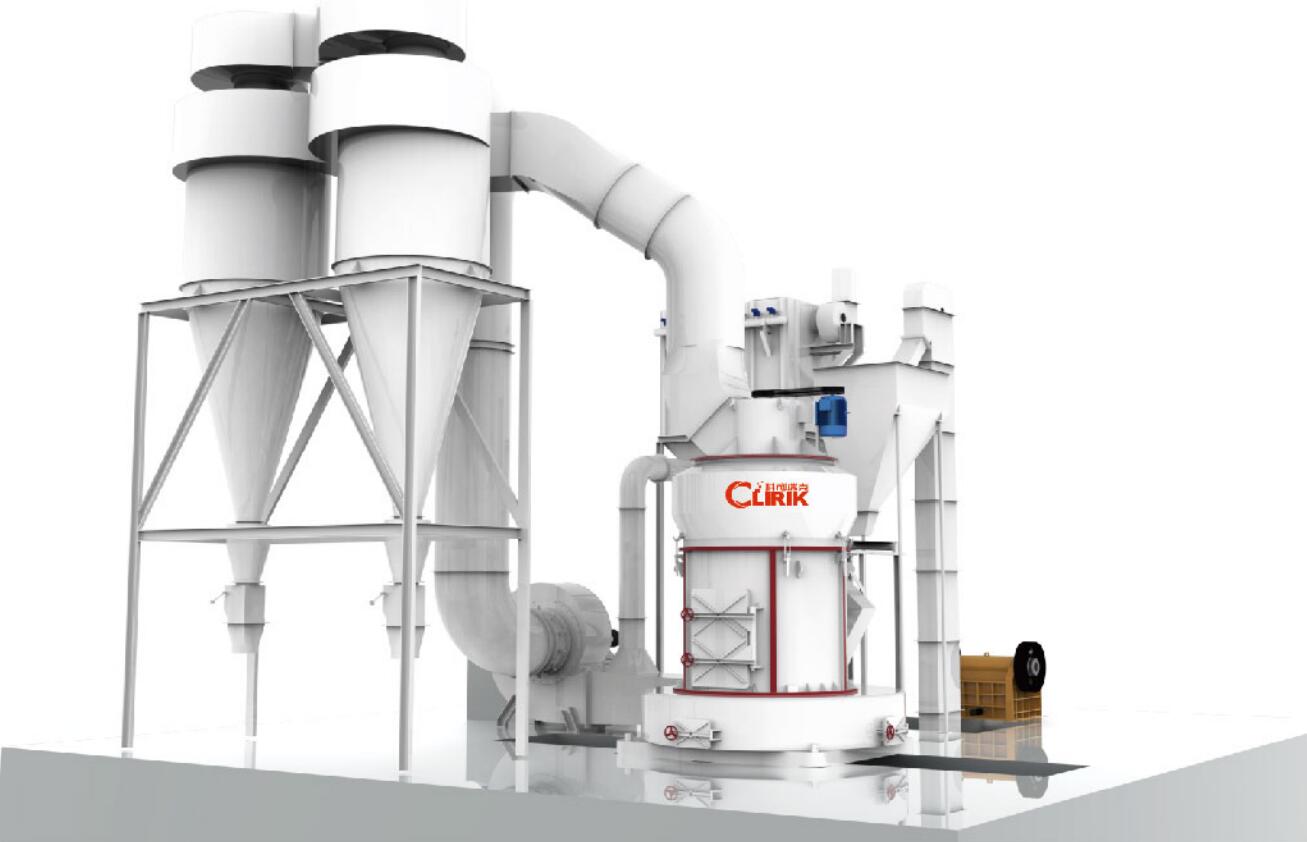
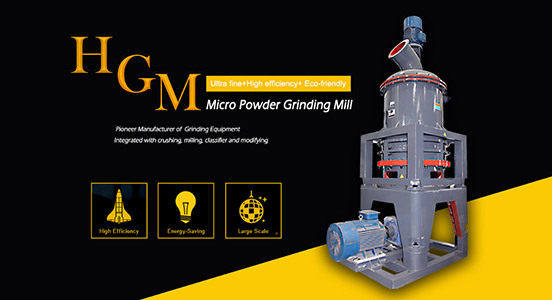
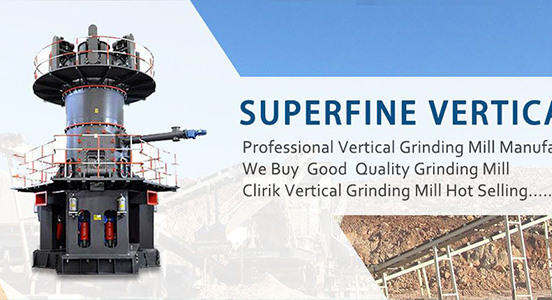
As a typical representative of the new generation of ultrafine grinding equipment, the HGM calcium carbonate grinding mill fully aligns with this technical evolution trend.
The new generation of calcium carbonate grinding mills generally adopts a closed-circuit circulation structure of “grinding host + built-in high-precision dynamic classifier”.
The classifier accurately screens the ground powder: fine powder with qualified particle size enters the collection system, while unqualified coarse powder automatically returns to the grinding chamber for secondary grinding. This process fundamentally prevents large particle escape.
The HGM ultrafine calcium carbonate grinding mill adopts this classic closed-circuit design, equipped with an advanced variable-frequency cage classifier.
It can stably produce narrow-distribution ultrafine GCC from 800 mesh to 2500 mesh, with D97 particle size fluctuation controlled within 1μm.
The finished product has controllable particle size distribution, which can directly match the particle size index requirements of coatings, adhesives, degradable plastics and other fields.
It is also the core upgrading direction for existing production line technological transformation.
Aiming at the industry pain points of ultrafine powder agglomeration and poor modification effect, “integrated grinding and online dry modification” has become a widely recognized optimization scheme in the industry.
When the calcium carbonate grinding mill discharges materials, it carries waste heat generated during the grinding process.
The high-temperature powder directly enters the matched dry modification equipment, and completes surface coating treatment with stearic acid, coupling agent and other modifiers before obvious agglomeration occurs.
This process not only saves additional heating energy consumption in the modification link, but also significantly improves activation uniformity.
The activation degree of finished products can reach more than 92%, fully meeting the performance requirements of high-end polymer fillers.
The HGM ultrafine grinding system can be directly matched with an integrated online modification unit.
The whole process is completed in a closed pipeline, which avoids secondary agglomeration caused by intermediate transfer and greatly improves the qualification rate of high-end activated GCC products.
Field production data shows that the HGM calcium carbonate grinding mill achieves exactly this energy consumption level for calcite and limestone processing.
For a production line with an annual output of 100,000 tons, it can save millions of yuan in electricity bills every year, with remarkable economic benefits.
It can also meet the ecological compliance assessment of overseas markets.
Combined with the fully enclosed negative-pressure production structure and pulse dust collection system, ultra-low dust emission can be realized, with measured emission ≤ 10 mg/m³.
It complies with domestic environmental protection standards and green mine supporting requirements, and is also suitable for high-value utilization scenarios of quarry tailings and low-grade ore.
In terms of noise control, the HGM mill is equipped with a standard acoustic insulation housing, and there are no rolling bearings or loose screws inside the grinding chamber to avoid mechanical oscillation.
The operating noise is 76–82 dB, which can meet factory boundary noise standards without additional sound insulation construction.
Downstream customers in mature markets such as Europe and North America have extremely high requirements for the stability of powder batch indicators.
The fluctuation of D50, D97 and oil absorption value between different batches of the same grade product must be controlled within a very small range.
The new generation of calcium carbonate grinding mills can be equipped with an online particle size monitoring system, which detects finished particle size parameters in real time, and automatically adjusts classifier speed, fan air volume and host load to realize dynamic closed-loop control of particle size.
This greatly reduces index fluctuation between different batches and adapts to the procurement standards of high-end supply chains.
The HGM ultrafine mill is equipped with a complete PLC control system as standard, and supports extended configuration of online particle size detection and remote operation monitoring.
It ensures stable product quality under long-term continuous operation, which is especially suitable for export-oriented production enterprises and high-end filler suppliers.
Yes. The HGM ultrafine grinding system can be matched with an online dry modification unit.
Using the waste heat of grinding, it completes surface activation directly without secondary heating, with activation degree above 92%.
For stable mass production of 1250-mesh and finer products, the HGM closed-circuit ultrafine mill is a more reliable solution.
Yes. It adopts fully enclosed negative-pressure structure with multi-stage pulse dust collection, and dust emission ≤ 10 mg/m³.
Equipped with standard acoustic insulation housing, its noise performance meets industrial park environmental requirements.
Ultrafine ground calcium carbonate is widely used in degradable plastics, high-end silicone sealants, water-based industrial coatings, rubber masterbatch, paper coating and other fields, with higher added value than ordinary building materials grade GCC.
A calcium carbonate grinding mill is the core industrial equipment that converts limestone and calcite ore into powder products of different grades.
In the early stage of industry development, the evaluation criteria for grinding equipment were highly unified: higher output and lower procurement cost meant stronger equipment competitiveness.
However, as the global GCC industry enters a stage of structural differentiation, the mismatch between excess low-end general powder capacity and insufficient high-end functional powder supply continues to intensify, rendering the traditional equipment evaluation system ineffective.
Energy Consumption and Environmental Indicators Fail to Meet Compliance Requirements
Old dry production lines generally have a unit power consumption of 110–140 kWh/t when producing 1250-mesh GCC.
Against the background of rising domestic energy costs and narrowing profit margins, high energy consumption directly erodes enterprise profits.
For powder enterprises exporting to Europe, production energy consumption is a hard access indicator for product eco-credentials.
Non-compliant energy consumption will directly lead to loss of downstream supply chain qualification.
In addition, the dust emission problem of some open old production lines cannot meet increasingly strict environmental protection standards, becoming a risk point for enterprise compliance operation.
1.Core Technical Directions of the New Generation of Calcium Carbonate Grinding Mills
In response to the demand pain points under industrial mismatch, a clear technical upgrading path is taking shape for global calcium carbonate grinding equipment.The core direction is shifting from “simply grinding ore finer” to “stably producing functional powder”.
As a typical representative of the new generation of ultrafine grinding equipment, the HGM calcium carbonate grinding mill fully aligns with this technical evolution trend.
1.1Closed-Circuit Grinding + Dynamic Classification: Stable Mass Production of Narrow-Distribution Ultrafine Powder
High-precision particle size control is the basic requirement for functional powder.The new generation of calcium carbonate grinding mills generally adopts a closed-circuit circulation structure of “grinding host + built-in high-precision dynamic classifier”.
The classifier accurately screens the ground powder: fine powder with qualified particle size enters the collection system, while unqualified coarse powder automatically returns to the grinding chamber for secondary grinding. This process fundamentally prevents large particle escape.
The HGM ultrafine calcium carbonate grinding mill adopts this classic closed-circuit design, equipped with an advanced variable-frequency cage classifier.
It can stably produce narrow-distribution ultrafine GCC from 800 mesh to 2500 mesh, with D97 particle size fluctuation controlled within 1μm.
The finished product has controllable particle size distribution, which can directly match the particle size index requirements of coatings, adhesives, degradable plastics and other fields.
It is also the core upgrading direction for existing production line technological transformation.
1.2 Grinding-Modification Integration: Improving Activation Efficiency With Waste Heat
Aiming at the industry pain points of ultrafine powder agglomeration and poor modification effect, “integrated grinding and online dry modification” has become a widely recognized optimization scheme in the industry.
When the calcium carbonate grinding mill discharges materials, it carries waste heat generated during the grinding process.
The high-temperature powder directly enters the matched dry modification equipment, and completes surface coating treatment with stearic acid, coupling agent and other modifiers before obvious agglomeration occurs.
This process not only saves additional heating energy consumption in the modification link, but also significantly improves activation uniformity.
The activation degree of finished products can reach more than 92%, fully meeting the performance requirements of high-end polymer fillers.
The HGM ultrafine grinding system can be directly matched with an integrated online modification unit.
The whole process is completed in a closed pipeline, which avoids secondary agglomeration caused by intermediate transfer and greatly improves the qualification rate of high-end activated GCC products.
3.3Low-Energy Design and Fully Enclosed Structure: Adapting to Green Production Trends
By optimizing the flow field of the grinding chamber, improving classification efficiency and reducing useless energy consumption, advanced closed-circuit grinding production lines can reduce unit product power consumption to 75–90 kWh/t at 1250 mesh fineness, which is 20%–30% lower than traditional production lines.Field production data shows that the HGM calcium carbonate grinding mill achieves exactly this energy consumption level for calcite and limestone processing.
For a production line with an annual output of 100,000 tons, it can save millions of yuan in electricity bills every year, with remarkable economic benefits.
It can also meet the ecological compliance assessment of overseas markets.
Combined with the fully enclosed negative-pressure production structure and pulse dust collection system, ultra-low dust emission can be realized, with measured emission ≤ 10 mg/m³.
It complies with domestic environmental protection standards and green mine supporting requirements, and is also suitable for high-value utilization scenarios of quarry tailings and low-grade ore.
In terms of noise control, the HGM mill is equipped with a standard acoustic insulation housing, and there are no rolling bearings or loose screws inside the grinding chamber to avoid mechanical oscillation.
The operating noise is 76–82 dB, which can meet factory boundary noise standards without additional sound insulation construction.
3.4Intelligent Online Monitoring: Ensuring Batch Consistency
Downstream customers in mature markets such as Europe and North America have extremely high requirements for the stability of powder batch indicators.
The fluctuation of D50, D97 and oil absorption value between different batches of the same grade product must be controlled within a very small range.
The new generation of calcium carbonate grinding mills can be equipped with an online particle size monitoring system, which detects finished particle size parameters in real time, and automatically adjusts classifier speed, fan air volume and host load to realize dynamic closed-loop control of particle size.
This greatly reduces index fluctuation between different batches and adapts to the procurement standards of high-end supply chains.
The HGM ultrafine mill is equipped with a complete PLC control system as standard, and supports extended configuration of online particle size detection and remote operation monitoring.
It ensures stable product quality under long-term continuous operation, which is especially suitable for export-oriented production enterprises and high-end filler suppliers.
FAQ
Can a calcium carbonate grinding mill be integrated with surface modification equipment?
Yes. The HGM ultrafine grinding system can be matched with an online dry modification unit.Using the waste heat of grinding, it completes surface activation directly without secondary heating, with activation degree above 92%.
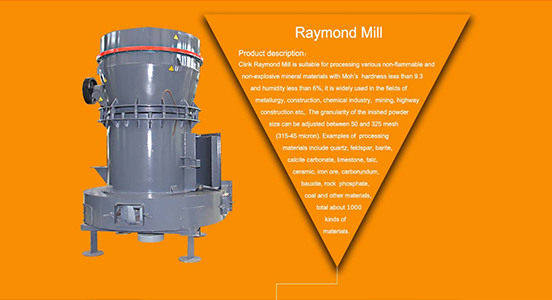
Can traditional Raymond mills be upgraded to produce ultrafine GCC?
Partial upgrading is possible by replacing the high-precision classifier, but the upper limit of fineness and output efficiency are still limited.For stable mass production of 1250-mesh and finer products, the HGM closed-circuit ultrafine mill is a more reliable solution.
Is the HGM calcium carbonate grinding mill environmentally compliant?
Yes. It adopts fully enclosed negative-pressure structure with multi-stage pulse dust collection, and dust emission ≤ 10 mg/m³.
Equipped with standard acoustic insulation housing, its noise performance meets industrial park environmental requirements.
What industries is ultrafine GCC powder suitable for?
Ultrafine ground calcium carbonate is widely used in degradable plastics, high-end silicone sealants, water-based industrial coatings, rubber masterbatch, paper coating and other fields, with higher added value than ordinary building materials grade GCC.
Related Newsmore >>
- Calcium Carbonate Grinding Mill: Equipment Iteration and Selection Logic2026-08-27
- Carmine Grinding Mill: How CLCM Coarse Powder Mill Supports Carmine Powder Processing2026-08-26
- CLIRIK to Exhibit at CHINACOAT & SFCHINA 2026 | Guangzhou Canton Fair Complex This November2026-08-25
- From Basalt to High-Value Products:Powder Processing Solutions for Fiber Cloth and Ultra-Fine Fiber2026-08-24
- Perlite Ultrafine Processing: New Zealand Case Study and Material Comprehensive Analysis2026-08-21
- How Ultrafine Grinding Mills Address Structural Imbalance in Ground Calcium Carbonate Industry?2026-08-20