Solutions for Grinding Tire Pyrolysis Carbon Black and Coconut Shell Carbon Black
Source:yutao
Posted:2026-08-17
I. Scope of This Article
analyzing their unique properties and grinding solutions, while sharing a real-world CLIRIK project case from Canada. For purchasing inquiries (e.g., detailed equipment specifications and pricing), please refer to Carbon Black Grinding Mill Manufacturer | HGM, CLRM, CLCM & CLJM-L Solutions.
II. Raw Material 1: Waste Tire Pyrolysis Carbon Black
2.1 Source and Preparation
Waste tires are pyrolyzed at high temperatures under anaerobic conditions, transforming them into pyrolysis oil, combustible gas, and solid products. One ton of waste tires produces approximately 0.3 tons of coarse carbon black powder, with a particle size of about 50-60 mesh (about 0.355-0.28 mm) and a very low bulk density (about 0.04-0.08 g/cm³). If the temperature deviates from the 400-500°C range or the residence time is insufficient, cracked oil and volatile organic compounds will remain on the surface of the coarse carbon black, and coke will be deposited on the particle surface, reducing its surface activity.
2.2 Lack of quality—Why It Cannot Be Used Directly
Compared to original carbon black, crude pyrolysis carbon black has three major defects: Excessive ash content caused by inorganic additives such as silica (SiO₂) and zinc oxide (ZnO) from tire formulations. These pollutants remain in it, resulting in an ash content as high as 10%-21%. It consults far exceeding the conventional standard for rubber-grade carbon black (≤0.7%); The residual oil and gas and the coke layer make it significantly more flammable and explosive than ordinary carbon black, while also weakening its bonding ability with the rubber matrix. The aggregate structure is destroyed, which damages the original morphology of the carbon black and results in a reinforcing effect that only reaches the N774 level, which is lower than the N330 virgin carbon black grade.2.3 Necessity of Grinding and Value Enhancement
Ultrafine grinding is a key pre-process for unlocking the high-value applications of pyrolysis carbon black. When grinding to 325 mesh (approximately 44 μm) or finer, the product can reach the N-grade quality standard. Studies have confirmed that pyrolysis carbon black can replace 50% of N234 virgin carbon black in natural rubber without affecting performance; and can replace 20% of N660 in styrene-butadiene rubber. After grinding, it can be used as a substitute for carbon black of grades N330, N550, N660, and N774, and is widely used in rubber products such as tire treads, tire sidewalls, conveyor belts, hoses, and seals. When grinding to 1000 mesh (approximately 13μm) or finer, it can also be used in the field of ultrafine fillers such as coatings and high-performance rubber products. Processed pyrolysis carbon black can reach the range of $250 to $400 per ton (according to a 2025 QYResearch report), representing several times the added value compared to coarse powder raw materials.III. Raw Material 2: Carbonized Coconut Shell Carbon Black
3.1 Source and Preparation
Coconut shells are a renewable biomass resource. After selecting, washing, and drying, the coconut shells are placed in a carbonization furnace for high-temperature oxygen-free carbonization and then naturally cooled to room temperature to obtain coconut shell carbonized material. The carbonized material is hard and exists in the shapes of lumps or granules. It requires crushing and grinding processes to yield a uniform, fine carbon powder product. Studies have shown that the carbon content of carbonized coconut shell can be increased from about 50% to over 70% of the raw material, which holds potential to produce high-quality carbon materials.
3.2 Distinctive Grinding Characteristics
The grinding characteristics of coconut shell carbonized material are quite different from those of tire pyrolysis carbon black: its fibrous structure makes primary crushing difficult, and excessively large feed particles can easily cause material jamming; its high brittleness leads to a high risk of over-crushing; and its high hardness needs strict requirements on the wear resistance of the equipment. After being processed into fine carbon powder of 400 to 3000 mesh through ultra-fine grinding, it can be widely used in high-value fields such as activated carbon raw materials, electrode material additives and food and pharmaceutical refining.3.3 Surface Modification—A Key Step for Enhancing Product Value-Added
Ground coconut shell carbon powder possesses a low content of surface functional groups, often resulting in insufficient dispersion and bonding strength when used directly in high-end composite materials. Surface modification is a crucial step for further enhancing the product's value. Our company provides specialized equipment such as horizontal modification machines, which can achieve uniform coating and functional modification of powder surfaces.Coupling agent modification: Surface chemical modification using silane coupling agents (e.g., Si69, KH550) or titanate coupling agents. Processing temperatures range from 80–120°C with treatment times of 15–30 minutes. This process introduces organic functional groups onto the carbon particle surface, significantly improving interfacial bonding with matrix materials such as rubber and plastics.
Acid washing modification: Acid treatment removes ash and inorganic impurities (reducing ash content to below 5%) while introducing oxygen-containing functional groups to enhance surface activity.
Composite modification: Combining coupling agent treatment with methods such as acid washing and mechanochemical modification to achieve synergistic effects.
Our modification equipment supports various processes; by precisely controlling modification temperature (adjustable from room temperature to 200°C), stirring speed, and additive dosage, we ensure a coating efficiency of over 99%. This enables customers to transition from selling basic carbon powder to selling functionalized carbon materials, thereby significantly increasing product value-added.
IV. Environmental and Sustainability Value
The massive environmental cost of original carbon black. Global carbon black production totals approximately 15 million tons annually, with over two-thirds used in tire manufacturing. Producing one ton of original carbon black consumes 1.8–1.83 tons of fossil fuels and emits about 2.5 tons of CO₂. Global carbon black production emits tens of millions of tons of greenhouse gas emissions each year.Compared to virgin carbon black, recovered carbon black (rCB) can reduce CO₂ emissions by up to 80%. Life cycle analysis by the Swedish Environmental Research Institute (IVL) shows that CO₂e emissions from rCB are 79–84% lower than those of virgin carbon black. Industry benchmark data indicate that rCB results in an approximately 81% reduction in carbon emissions per tonne compared to conventional virgin carbon black. Processing one tonne of waste tires via thermolysis avoids approximately 1.1 tonnes of CO₂ emissions. Life cycle assessments demonstrate that pyrolysis is the most effective waste tire treatment technology, offering the lowest global warming potential (−1,298 kg CO₂-eq/tonne).
Recovered carbon black has evolved from a niche innovation into a commercially viable alternative, capable of replacing between 20% and 100% of fossil-based carbon black depending on the application. The global market for recovered carbon black is valued at approximately $218.8 million in 2025 and is projected to reach $3.5453 billion by 2034, representing a compound annual growth rate (CAGR) of 36.2%. Industry estimates suggest that at least 30% of traditional carbon black is expected to be replaced by recycled carbon black in the future.
V. Featured Case Study: CLIRIK's Pyrolysis Carbon Black Deep Processing Project in Canada
In 2021, a Canadian environmental technology company launched a deep processing project for pyrolysis carbon black. The goal was to process crude carbon black (50–60 mesh)—derived from waste tire pyrolysis—into ultrafine powder for supply to local manufacturers of coatings and rubber products. CLIRIK participated in the project as the equipment supplier.The available space in the client's new facility was extremely limited; both ceiling height and floor area were strictly constrained. The equipment required installation within a compact layout while integrating seamlessly with other production line machinery. Furthermore, due to residual oil and gas content, pyrolysis carbon black poses a significantly higher risk of dust explosion during processing compared to standard carbon black, necessitating rigorous safety system design.
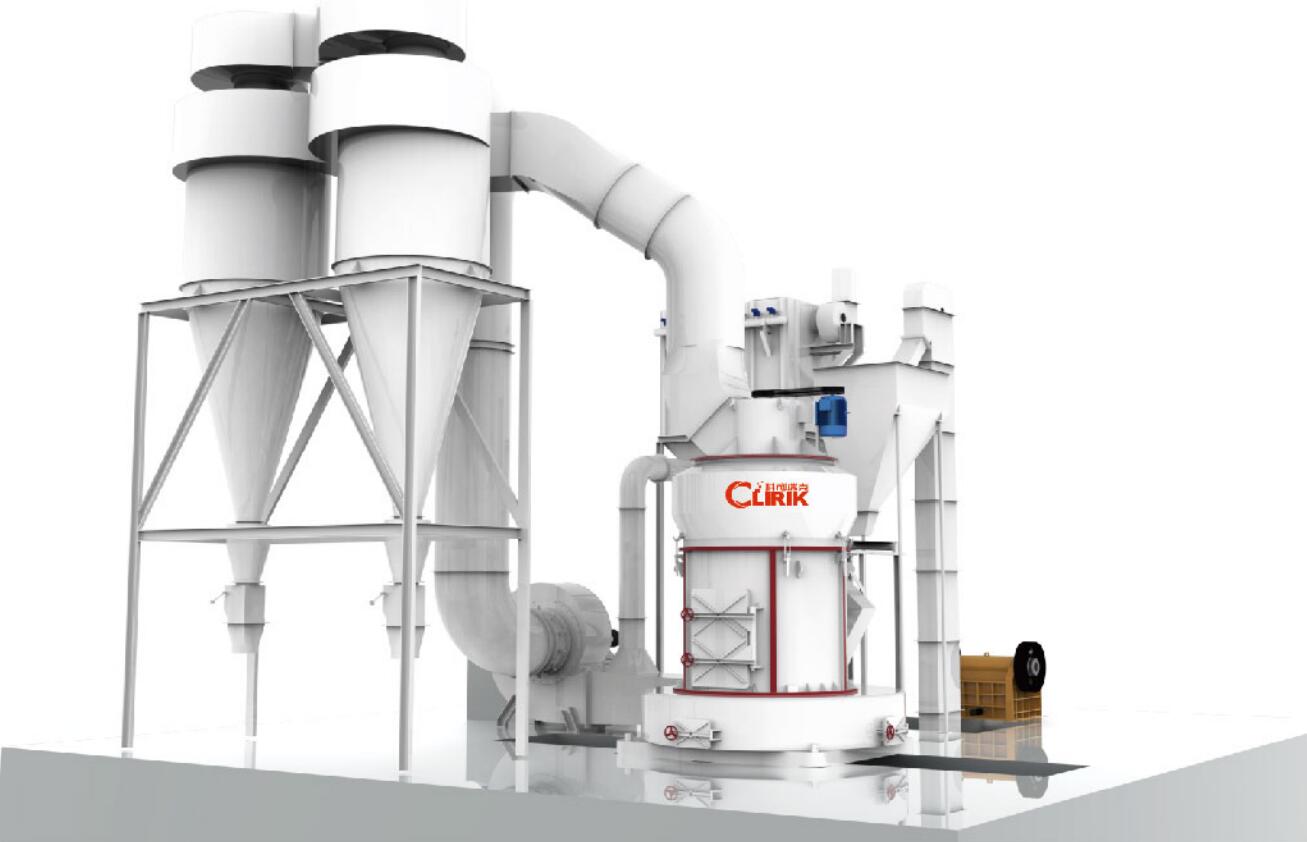
Following preliminary technical validation and delays in the client's facility construction, CLIRIK completed the installation and commissioning of the HGM100P ultrafine grinding mill in 2024. The equipment features a modular design that supports flexible on-site assembly, allowing it to fit into non-standard layouts within confined spaces. The system is equipped with explosion-proof venting ports and isolation valves to manage combustion and explosion risks. It operates under a sealed negative-pressure environment and utilizes a pulse dust collector to achieve 99.9% filtration efficiency, meeting zero-emission standards.
Since entering production, the equipment has consistently processed crude carbon black to a fineness of D97 = 10–15 μm (approximately 1000–1250 mesh) with a stable hourly output of 1 ton. The finished product features a uniform particle size distribution, meeting application requirements for coating colorants and rubber reinforcing fillers. According to customer feedback, the equipment has operated continuously and stably since commissioning, with no unplanned downtime.
The project manager noted that the CLIRIK team's flexible installation strategy—designed to accommodate a compact workspace—was key to the project's successful implementation, with equipment reliability and operational stability meeting or exceeding expectations. Spanning from the project's inception in 2021 to its official commissioning in 2024, this case study validates the technical feasibility of achieving high-value utilization of pyrolytic carbon black through ultrafine grinding.
VI. Equipment Selection Guide
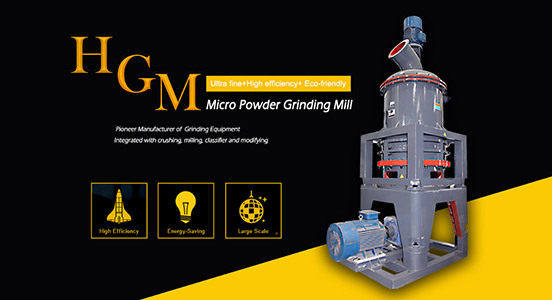
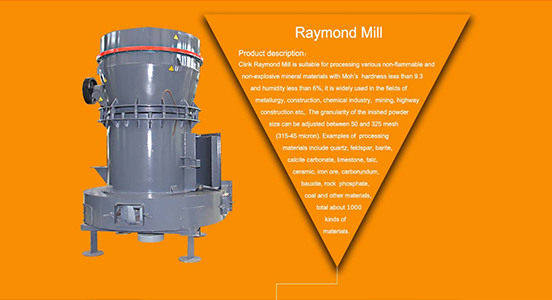
For the processing of tire pyrolysis carbon black and carbonized coconut shell materials, the following are typically selected based on fineness and capacity requirements: the YGM/CLRM Raymond mill(80-325mesh); the HGM series ultrafine mill (200–2500 mesh; 0.5–45 t/h) or the CLQM series jet mill (150–3000 mesh).For specific technical parameters and pricing, please consult the Carbon Black Grinding Mill Manufacturer | HGM, CLRM, CLCM & CLJM-L Solutions. For questions regarding equipment selection, please refer to the How to Choose a Carbon Black Grinding Mill?CLIRIK's technical team can provide customized grinding solutions tailored to your raw material characteristics and operational conditions; please feel free to contact us for a consultation.
Related Newsmore >>
- Carmine Grinding Mill: How CLCM Coarse Powder Mill Supports Carmine Powder Processing2026-08-20
- Solutions for Grinding Tire Pyrolysis Carbon Black and Coconut Shell Carbon Black2026-08-17
- A Quantitative Comparison Raymond Mill vs. HGM Ring Roller Mill of Maintenance Downtime and Life-cyc2026-08-13
- Carbon Black Grinding Mill Manufacturer | HGM, CLRM, CLCM & CLJM-L Solutions2026-08-11
- How to Choose a Pulverizer Machine? | Raymond Mill & Ultrafine Pulverizer2026-08-06
- How to Choose a Carbon Black Grinding Mill?2026-08-05